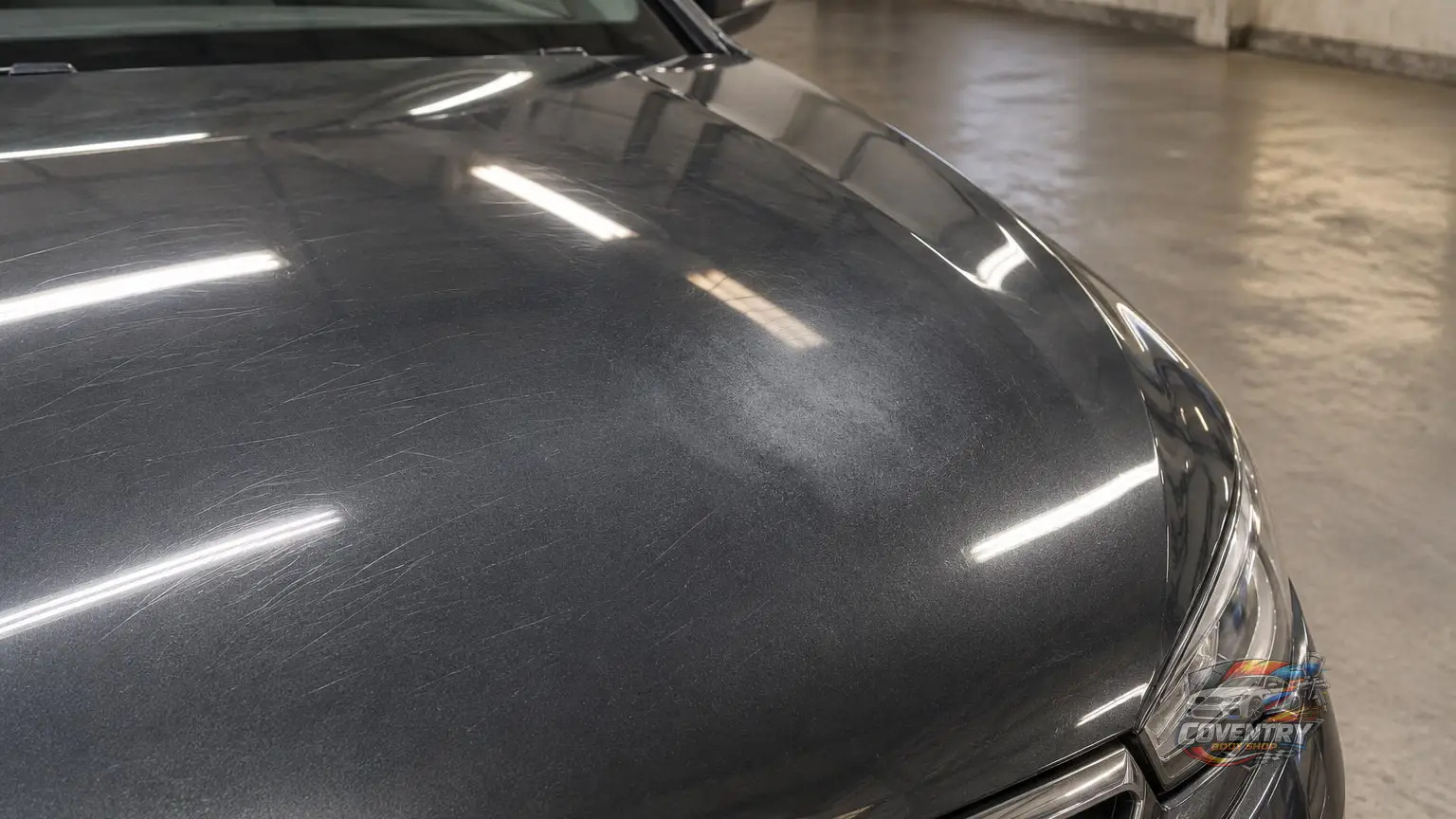
A white line can be a clear coat scratch or paint transferred from another object, while a dull spot may be etching left by contamination. A cloudy patch can signal clear coat failure. Appearance gives clues, but colour alone cannot tell you how deep the damage goes.
Why does a scratch look white or grey?
Clear coat is the transparent layer over the colour on many cars. A scratch creates uneven edges that scatter light, making the damaged area look white or grey. They can stand out against dark paint even when the colour underneath is intact.
White does not automatically mean exposed primer, and a faint line is not proof of shallow damage. Dirt on the surface can also change how a mark looks. Check a clean surface before deciding which paint layer you are seeing.
How can I check whether a scratch is only in the clear coat?
Wash gently, rinse, then inspect the dry panel in daylight. Avoid rubbing dirty marks: grit can add scratches and make the original damage harder to judge.
These checks can help you describe the mark:
- Move around the panel, comparing the line with surrounding reflections. A scratch may show from one direction and almost vanish from another.
- Wet a small area. Water can make a scratch less visible by temporarily reducing light scattering from its rough surface; this does not identify the damaged paint layer. If the line returns as it dries, the damage remains.
- Gently pass your nail across a clean, dry scratch. A catch suggests a deeper groove, but is a rough guide, not a depth measurement. Do not press or scrape.
- Exposed colour coat, grey primer or bare metal in the groove means damage through the clear coat. Seeing colour through transparent lacquer is normal; look for an actual surface break.
Neither the wet test nor the fingernail test shows for certain which paint layer is damaged, and neither proves that polishing will be suitable. A scratch can still be too deep to remove safely even if it becomes much less visible when wet.
Are swirls and wash marks the same as a deep scratch?
Swirls usually look like fine curved lines around a bright reflection. Wash marring is a haze of tiny scratches, often from grit moving across paint during washing or drying. Both commonly affect clear coat without reaching the colour.
Fine marks can make a panel look dull without an obvious deep groove. Check whether the haze resolves into individual lines from different angles. A deeper scratch among them can need a different repair.
Why is there still a mark after bird droppings, sap or water spots?
Bird droppings and tree sap can leave etching, which is damage to the paint surface rather than dirt sitting on top. After removing residue, a dull outline, ring or irregular patch may remain. More washing will not necessarily remove it.
Remaining sap can leave a raised or sticky deposit, so a patch is not always etching. Avoid scraping it. Describe whether it still feels sticky or is clean but dull.
Water spots often form rings where droplets dried. They may be surface mineral deposits, but some leave etching underneath. Shape alone cannot tell you whether cleaning will suffice or the clear coat is marked.
Does a cloudy or milky patch mean the clear coat is failing?
It can, particularly with fine cracks, lifting edges or flakes. Cloudiness alone is less conclusive because surface residue and fine scratches can also make paint look hazy.
A clean patch that stays milky, or shows fine cracks or lifting edges, needs inspection before polishing. Read about what causes clear coat peeling if the mark has a defined edge or the lacquer is beginning to lift. Polishing cannot repair clear coat that is turning cloudy because it is failing, cracking or separating from the paint underneath.
What does the type of mark mean for the repair?
Fine scratches, wash marring and shallow etching in sound clear coat on a gloss finish may polish out if enough clear coat remains. Polishing removes a little of that layer each time. Removing every trace is not sensible if it would leave the finish too thin.
We measure paint depth with a gauge to help assess whether a marked panel can be polished. A typical gauge measures the combined coating thickness on a metal panel, not the clear coat alone; plastic parts need a different measuring method. Readings need considering alongside the paint's condition and repair history. Our scratch removal and machine polishing service may suit marks confined to sound lacquer.
Damage through the clear coat needs paint repair. Paint touch-up for small chips may suit isolated chips; larger areas or extended scratches generally need a panel refinish. For repair choices, see whether clear coat can be repaired without repainting.
What if my car has older single-stage paint?
Some older finishes have colour and gloss in one paint layer, with no separate clear coat. A white-looking scratch or one that fades when wet can indicate surface roughness, but it cannot identify damage within a clear layer that is not there. Mention any known repainting when asking for an assessment, because different panels may have different finishes.
How can I get a clear coat mark assessed?
We recommend sending a photo of the clear coat mark by WhatsApp on +44 7903 105777 or the Send enquiry button. This can save a wasted trip to our workshop in Wyken, Coventry, if the job is outside the work we take on.
Tell us the cause if known, whether the mark changes when wet, and what you used to clean it. After booking, we advise everyone to bring the car in so we can inspect the damage in person.
The final price is set after inspection, and no deposit is needed. For polishing prices, see our scratch removal and machine polish page.
Leave a Comment
Comments
No comments yet.