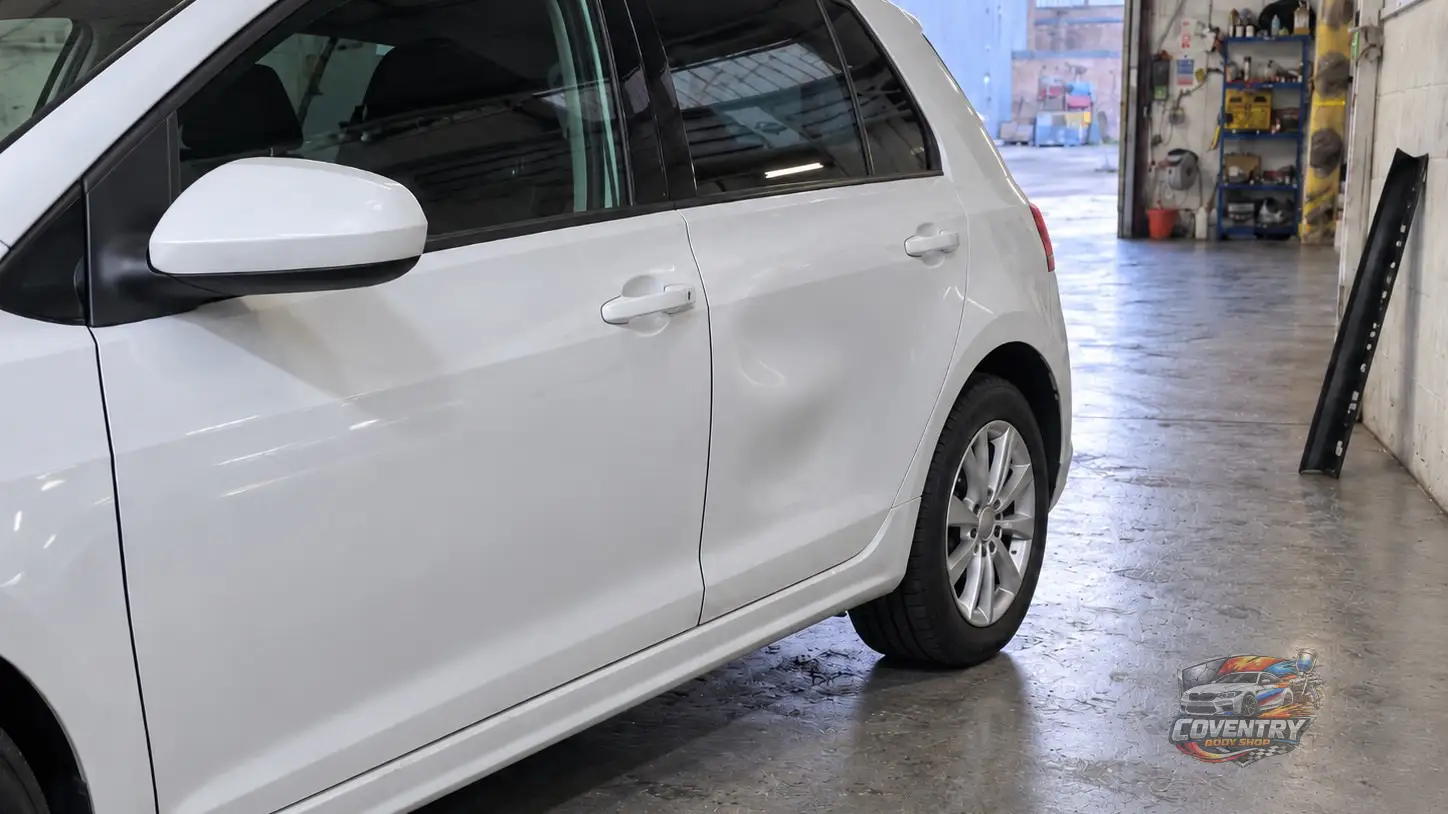
Car body repair covers the full range of work needed to restore a vehicle's panels, paintwork and structural components after cosmetic damage, scuffs or collision impact. In practice this means anything from a small SMART repair on a bumper scuff to a full strip-down, panel replacement and respray after an accident. The right bodyshop will assess the damage properly, explain the options and quote honestly before any work begins.
Most UK drivers will need bodywork at some point. Supermarket car parks, tight multi-storey bays and minor nose-to-tail bumps account for a large share of the work we see each week. Knowing what a proper repair involves helps you judge a quote, push back on poor quality and avoid the common traps that leave cars looking worse than they arrived.
What does car body repair actually include?
Car body repair is the umbrella term for restoring damaged exterior panels, paint and sometimes the underlying structure of a vehicle. It covers scratch and scuff removal, dent repair, panel beating, bumper repair or replacement, paint blending, full resprays, panel replacement, chassis straightening and the refit of trim, lights or sensors once the panel work is complete.
A reputable bodyshop will also handle the smaller things most drivers overlook, such as colour matching on adjacent panels, lacquer finish, anti-corrosion treatment on exposed metal and the recalibration of parking sensors or cameras removed during the repair. Skipping those steps is often where shortcuts show up weeks or months later.
What kinds of body damage do UK drivers deal with most?
Light scuffs, parking dints and kerbed alloys make up a large slice of daily bodyshop work. The next tier is more serious: rear-end shunts, side-swipes, pothole damage to wheels and arches, and broken or cracked bumpers from low-speed impacts.
Common causes include:
- Supermarket and car park knocks: trolley dings, door scuffs from neighbouring cars and bumper impacts on wings.
- Kerbed alloys and cracked wheels: sharp corners and hidden kerbs during parking or turning.
- Stone chips and road rash: gravel, motorway debris and winter gritting damaging bumpers, bonnets and wheel arches.
- Low-speed collisions: rear-end shunts and side impacts where panels crease or crack but the car still drives.
- Weather and corrosion: salt, moisture and age creating rust bubbles along seams, sills and wheel arches.
Each type calls for a different approach, which is why a quick photo assessment by a professional usually beats any online price list.
SMART repair or full repair: which option suits your car?
A SMART repair (Small to Medium Area Repair Technique) targets only the damaged zone, keeping cost and time down for minor scuffs, dings and small paint chips. A full repair involves stripping, prepping and refinishing a whole panel, or replacing the panel entirely, which is the right route for larger scuffs, deep scratches, crease damage or any area where blending into adjacent panels is needed for a proper finish.
For a tidy bumper scuff or a single parking dent, a SMART repair often costs a fraction of a full panel respray. For a long crease down a door, deep paint damage that has gone through to bare metal, or any damage affecting more than one panel, a full repair gives a cleaner, longer-lasting result. You can read more about the SMART approach on our smart repair service page.
How does a bodyshop handle a body repair from start to finish?
A proper repair follows a set sequence so nothing gets missed, from the first inspection to the final quality check. Skipping any of these stages is usually where poor finishes originate.
Typical repair stages include:
- Inspection and assessment: we check visible damage plus anything structural, electrical or sensor-related that may sit behind the panel.
- Estimate and approval: we provide a written quote covering labour, parts, paint, materials and any calibration or hidden damage findings.
- Strip-down and panel work: trims, lights, sensors and badges are removed so the damaged area can be accessed, repaired or replaced.
- Preparation: panels are sanded, filled where needed and masked before paint. Surface preparation is the difference between a finish that lasts and one that fails within months, which is covered in our guide on why proper surface preparation matters in auto painting.
- Paint, blending and lacquer: colour is matched to your vehicle, blended into adjacent panels where needed and sealed with lacquer for gloss and protection.
- Reassembly: trims, badges, lights and any removed sensors are refitted.
- Final checks: paint depth, finish quality, panel gaps and sensor function are all checked before handover.
Curing times between coats are part of the job too. Rushed paintwork is almost always the reason a repair looks dull or starts peeling far sooner than it should.
What affects the cost of a car body repair?
Repair cost depends on what is damaged, how deep it goes and how the panel is finished, not on a flat hourly figure. A bodyshop quoting without seeing the car can only ever give a rough guide, because the same "scuff" can mean anything from a quick buff to a full panel replacement once inspected.
Key cost factors include:
- Damage size and depth: surface scratches cost far less to correct than deep gouges through primer and metal.
- Repair versus replacement: a damaged panel can often be repaired, but extensive cracking or creasing usually means a new panel plus parts and alignment time.
- Paint type and colour match: solid colours are simpler to blend than metallics, pearls or tri-coats, which need extra stages and more skilled spraying.
- Vehicle make and model: parts availability, panel complexity and trim refit times vary widely between marques.
- Hidden damage: sensors, wiring, reinforcement bars or structural components behind a bumper can add cost once exposed.
- Insurance requirements: approved repairer schemes, parts policies and agreed rates all influence the final figure.
For a useful estimate, send clear photos of the damaged area, the registration or paint code, and a quick note about how the damage happened. We can usually give a sensible ballpark from that.
How long does a car body repair usually take?
Minor SMART repairs are often completed inside a working day, while full panel repairs or accident work usually take several days to a couple of weeks depending on parts, paint curing and any structural work needed. Timelines shift quickly once the panel is stripped and the true extent of the damage becomes clear.
What affects completion time:
- Damage severity: a small scuff is a one-day job; a multi-panel shunt needing structural straightening is not.
- Parts availability: common panels may be next day, while rare or imported parts can take weeks.
- Paint curing and quality control: proper drying between coats, plus final polish and checks, all take time.
- Insurance approval: claim authorisation and repairer approval arrangements can add days before work starts.
- Calibration and refit: ADAS cameras, parking sensors and radar units often need recalibration after panel work.
Ask your bodyshop for a realistic window at quote stage and what could push it out, so you can plan around a courtesy car or alternative transport.
Why does correct paint matching and blending matter?
Modern factory paint fades slightly with UV exposure and weather, so a fresh mix straight from a colour code rarely matches perfectly without adjustment. Good bodyshops blend new paint into adjacent panels and tweak the mix until it sits with the rest of the car.
Proper prep, paint and lacquer work is also what makes a professional finish hold up for years rather than months. You can see why in our guide to why professional paint jobs last longer, which walks through the stages that DIY kits and quick fixes usually skip.
Does insurance cover bodywork repairs?
If the damage is your fault, your comprehensive cover may still pay out subject to your excess and policy wording. If another driver is at fault, their insurer usually covers the repair. Either way, your policy terms, excess amount and any repairer approval requirements all affect how the claim works in practice.
Before authorising a repair through insurance:
- Check your policy wording: confirm cover, excess, courtesy car entitlement and whether you're required to use an approved repairer.
- Confirm parts policy: some policies specify manufacturer parts, recycled parts or pattern parts, which affects finish and value.
- Ask about the claim process: whether the insurer inspects, approves the quote directly or leaves it with the bodyshop.
- Keep records: photos, the third party's details, accident circumstances and any medical information help the claim progress faster.
You always have the right to choose your own bodyshop for non-fault claims, even if an insurer suggests otherwise. Check your own policy wording before agreeing to anything.
What happens if you delay bodywork or choose the cheapest quote?
Small damage left unattended often turns into bigger bills. Exposed metal corrodes, scuffed plastic holds dirt and moisture, and a cracked bumper lets water into fixings that were never meant to get wet. A cheap repair can also fail early if prep, paint matching or blending are rushed, leaving you paying twice.
Risks to be aware of:
- Hidden structural damage: a panel that looks bent may also have reinforcement, sensor or alignment damage behind it.
- Corrosion spreading: stone chips and scratches that breach the clear coat allow water in, which can bubble paint within months.
- ADAS and sensor faults: radar units, cameras and parking sensors refitted without recalibration can give false readings or fail entirely.
- Resale value: poor repairs are easy for buyers and dealers to spot, and they affect trade-in offers.
If a vehicle has had any structural, airbag, suspension or sensor damage, get a qualified professional to confirm it is safe to drive before you continue using it.
Body repair across Coventry and nearby towns
Coventry drivers deal with the usual mix of urban knocks: tight retail park bays, ring road junctions and busy commuter traffic through Canley, Tile Hill and the city centre. Our bodyshop handles the full range from SMART repairs through to complete collision work, and you can see finished projects on our before and after gallery.
We also cover nearby towns including Northampton, so drivers across the wider region have a local option for proper accident and cosmetic repairs without sending the car to a main dealer.
Getting an accurate quote for your repair
The fastest way to a realistic quote is a few clear photos, the registration or paint code and a short description of how the damage happened. From there we can usually tell you whether a SMART repair, a full panel repair or an insurance route is the right fit, and book the car in at a time that works for you.
Leave a Comment
Comments
No comments yet.