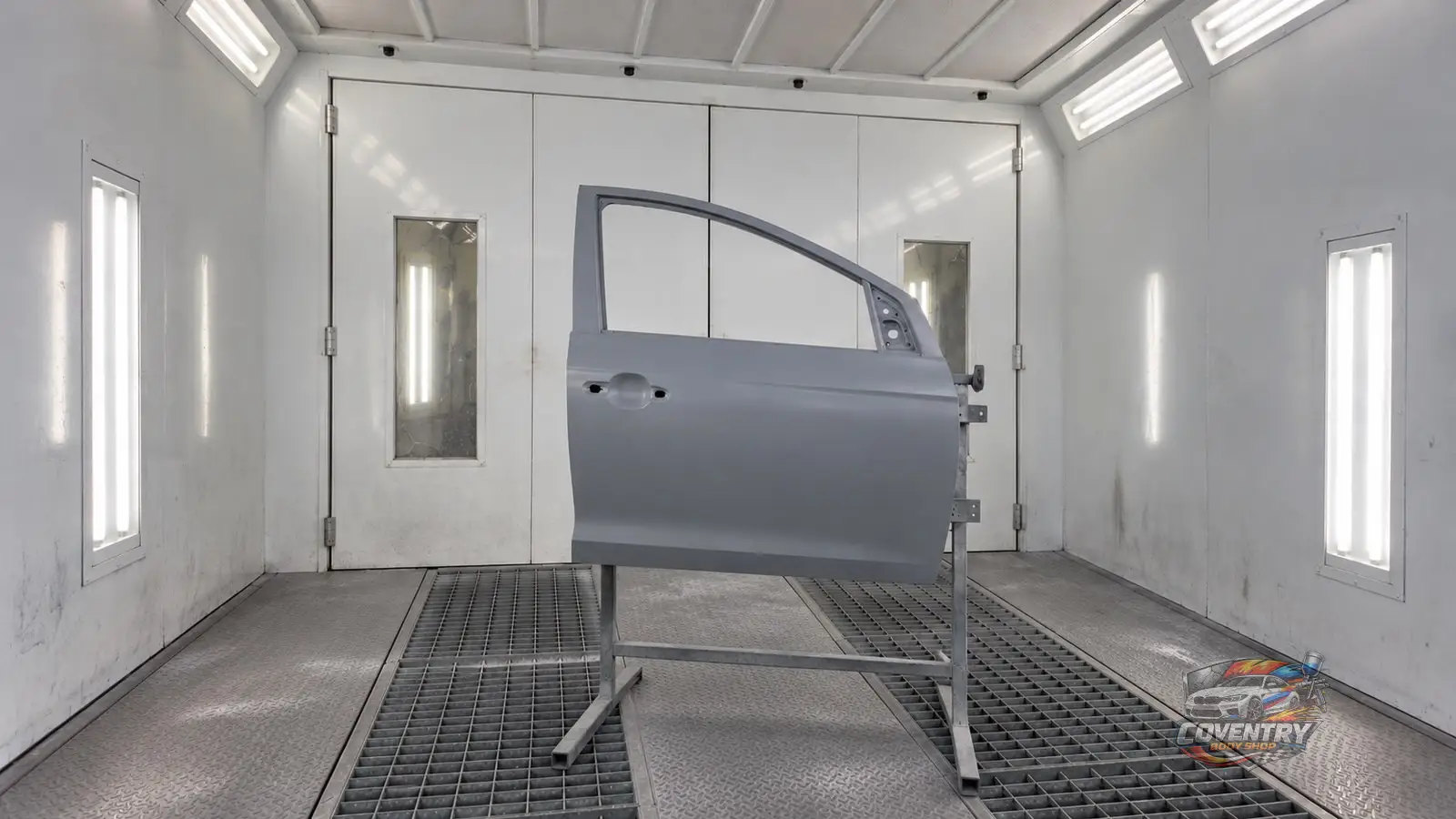
Car respraying is subject to product VOC limits and site authorisation rules, alongside worker protection and waste duties. Health and Safety Executive (HSE) guidance requires air-fed breathing apparatus when spraying isocyanate paint. Full panels sprayed with isocyanate paint need a booth or spray room.
Which rules cover which part of car painting?
The rules address different parts of the job, from the product supplied to the waste left afterwards.
- VOC limits control the solvent content of listed vehicle refinishing products placed on the market.
- In England and Wales, council permits control emissions to air from respraying installations meeting the relevant solvent-use criteria.
- HSE guidance explains the controls needed to protect people from isocyanate paint mist.
- Hazardous waste duties require businesses to prevent harm to people or the environment from waste they produce or handle.
When does a respraying site need a council permit?
In England and Wales, a respraying site needs a permit if it is likely to use one tonne or more of organic solvents in any 12-month period. The calculation includes solvent in coatings and cleaning products, with specified deductions for solvent removed for reuse or recovered for reuse. This is a Part B permit, meaning the local council controls the activity's emissions to air.
A required permit must be obtained before the respraying installation starts operating. Operating without one is an offence. In Coventry, the city council's Environmental Protection team can confirm whether a proposed respraying activity needs a permit. Scotland uses SEPA registration, while Northern Ireland uses NIEA permits, subject to their respective solvent-use thresholds; NetRegs explains these arrangements.
What do the VOC limits on refinishing products control?
The Volatile Organic Compounds in Paints, Varnishes and Vehicle Refinishing Products Regulations 2012 control listed products placed on the market. VOC means volatile organic compound. Vehicle refinishing products have their own maximum VOC content limits under these Regulations.
For ordinary vehicle refinishing, listed products cannot be sold if their VOC content is over the applicable limit; the rules allow narrow exceptions for some regulated industrial sites. The label must identify the product subcategory and applicable limit in g/l, alongside its maximum VOC content when ready to use. This includes any thinner or hardener added before application.
Buying a product that meets its VOC limit does not answer whether the premises need a permit: the label concerns the product, the permit concerns the site and its solvent use.
Why is two-pack isocyanate paint sprayed in a booth?
Spraying two-pack isocyanate paint, often called 2K paint, creates a fine, invisible airborne mist that can cause occupational asthma. HSE identifies isocyanates as a leading cause of occupational asthma reported in Great Britain. Skin contact can also cause dermatitis.
Once a worker becomes sensitised, even tiny amounts of exposure can trigger an asthma attack.
HSE's exception for small smart repairs outside a booth depends on limited paint quantities and short spraying times. Suitable equipment and exclusion of unprotected people are also needed. HSE's SMART spraying guidance sets out the controls; the repair's name alone does not establish that it qualifies. Air-fed breathing apparatus is still needed for isocyanate spraying.
The booth's clearance time must be measured and marked at its entrance. Anyone inside must keep air-fed breathing protection on until the isocyanate mist has cleared.
Is waste paint thinner hazardous waste?
Waste paint thinner can be hazardous because of its constituents and hazardous properties. Businesses must classify their waste; harm does not have to occur first.
In England, hazardous waste duties include safe separation and storage, using registered carriers and authorised destinations, and completing consignment notes. Businesses must keep the required records for three years.
What should you ask before booking paintwork?
A useful question is: "Where will my car be sprayed?" At our Wyken workshop, all paintwork is sprayed in our spray booth.
When discussing repainting a single panel, establish whether the proposal covers the whole panel or a smaller repair area.
For a full body respray, confirm which surfaces are included in the price.
How can you find out what your paint repair involves?
For damaged paintwork, we advise sending photos on WhatsApp at +44 7903 105777 or through the Send enquiry button. They are optional and can save a wasted trip if we cannot take on the repair. After booking, we advise everyone to bring the car in for an inspection.
A small inspection is free. If the paint damage needs a deeper inspection, it costs from £240 including VAT (£200 plus VAT); that charge comes off the repair bill if you go ahead. The final repair price is set after inspection. No deposit is needed.
Leave a Comment
Comments
No comments yet.