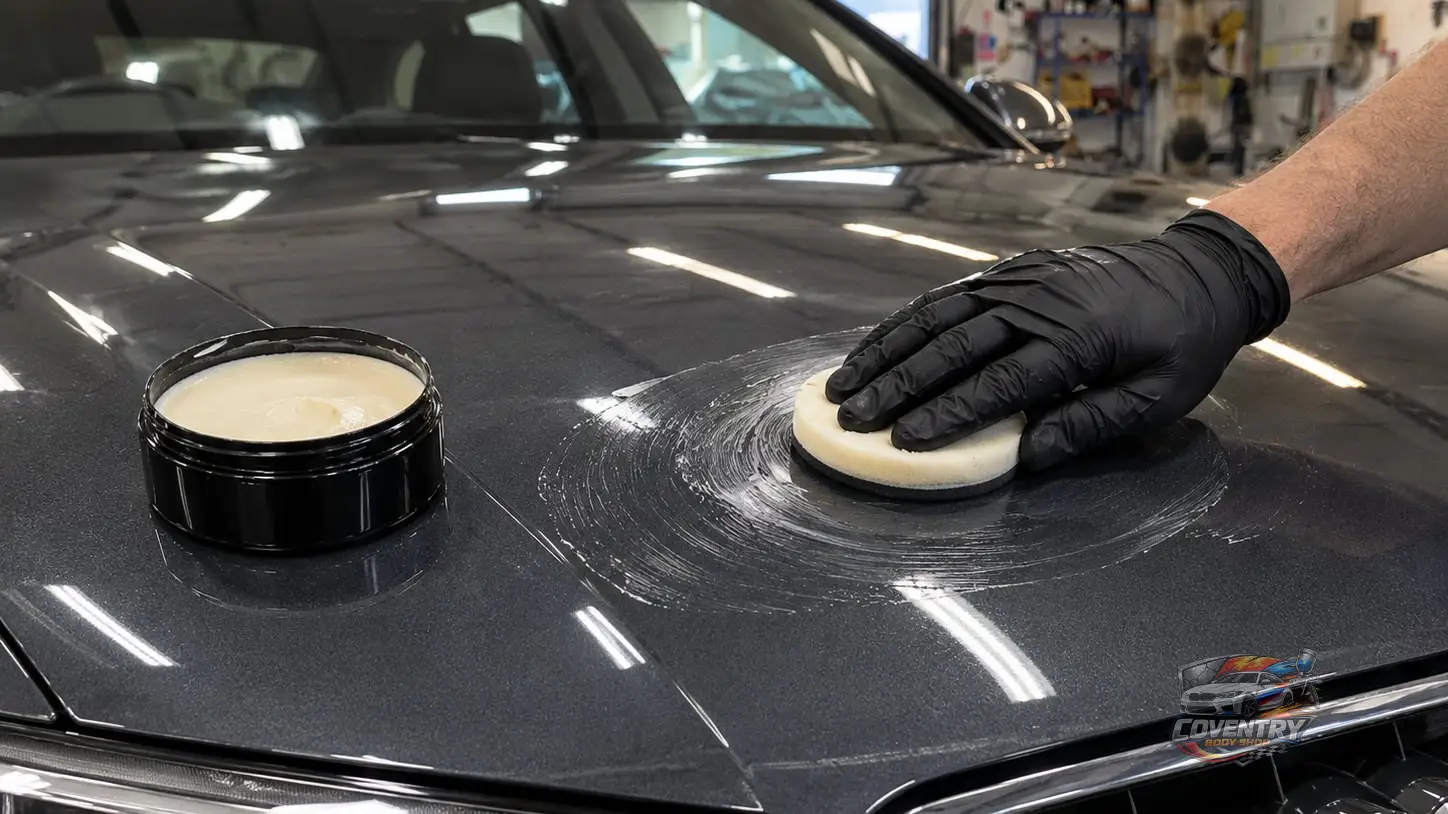
There is no single waiting time for waxing after a paint job. Around 30 days is a common rule of thumb, but some paint systems and air-dried repairs need longer, so the painter’s instructions for the products used on your car come first. Gentle washing is usually fine much sooner than waxing, once your painter says it is safe.
Why wait if the paint already feels dry?
New paint and clear coat keep releasing solvent for a while after the surface feels dry, and the clear coat keeps hardening over the same period. Wax or sealant puts a layer on top. Applied too early, that layer can get in the way of solvent still leaving the paint, and rubbing it on and off can mark a finish that is still hardening. Feeling dry or hard to the touch is not the same as being fully cured, so pressing the surface with a finger will not tell you whether it is ready.
What changes how long you should wait?
The paint system and the painter’s product guidance come first. The advice for another car, or even a previous repair on your own car, may not apply to this job.
How the paint was cured also matters. A booth bake speeds up curing, but does not by itself mean the paint is ready for wax the same day. Air-dried repairs may need longer before protection can be applied. Our explanation of how curing lamps speed up drying gives more background on that method.
The thickness of the clear coat and the extent of the work can also affect the advice. A small repair blended into older paint, a single panel repaint and a full respray should each be assessed on their own details. A smaller painted area does not automatically mean a shorter wait.
At our workshop in Wyken, Coventry, our director, a former Aston Martin technician and painter, is the only person who paints the cars. When you pick up your car, ask us for the earliest date you can wax it, so you do not have to count the days yourself.
Does the same advice cover wax, sealant and ceramic coating?
Wax puts a protective layer on top of the finish, so it should wait until the painter says the new paint is ready. Permission to wash the car does not also mean permission to wax it.
Sealant also leaves a layer on the surface and needs its own timing confirmed. Switching from wax to sealant is not a way to start sooner, so ask about the product you plan to use.
A ceramic coating comes with its own instructions from the coating maker, and it usually involves preparing the surface first. Ask the painter whether the new paint is ready for that preparation as well as for the coating. Before booking one, check both the painter’s advice for the new paint and the coating instructions, and do not assume the wax timing applies to the coating.
Matte and satin finishes are a separate case. Many ordinary waxes and gloss products are not meant for them at any age, so ask what is safe for that finish before using anything on it.
How can you keep the repaired area clean while waiting?
You do not need to leave dirt sitting on the car until it is ready for wax. Keep care gentle and follow these precautions:
- Hand washing: Once your painter says it is fine, use plenty of water and a clean mitt.
- Water pressure: Do not use a pressure washer close to the repaired panel.
- Brushes: Avoid automatic car washes with brushes.
- Polishing: Do not polish or machine compound the fresh finish yourself.
- Contamination: Rinse bird droppings and tree sap off soon with plenty of water, without hard rubbing or scraping. If they will not come off, ask the workshop before trying a stronger cleaner.
For care beyond the first weeks, read our guide to looking after your paint after a respray.
What if you have already waxed too early?
Do not panic. Early wax does not mean the paint is damaged, but a clear-looking finish does not prove it was ready either. Tell the workshop what you applied and when, so they can advise on the next step.
If you see haze, smearing or dull patches, stop adding layers and ask the workshop to look at the finish. Do not try to polish the marks out yourself or scrub the wax away.
What about older paint around a small repair?
If a small repair was blended into older paint, ask which panels were painted and where fresh clear coat was applied. The fresh clear coat may extend beyond the original scratch or scuff. Panels that were not painted at all can be waxed as normal. Any surface with fresh paint or fresh clear coat should wait until the painter says it is ready.
Ask us when your paint is ready for wax
If your car was painted with us, message us on WhatsApp at +44 7903 105777 or use the Send enquiry button on this page. Say which panels were painted and when, and we will tell you when it is safe to wax.
If you need paint work, send photos the same way for a written, itemised estimate first, with no deposit. A small inspection is free. A deeper inspection costs from £240 including VAT (£200 plus VAT), deducted if the repair goes ahead.
Leave a Comment
Comments
No comments yet.