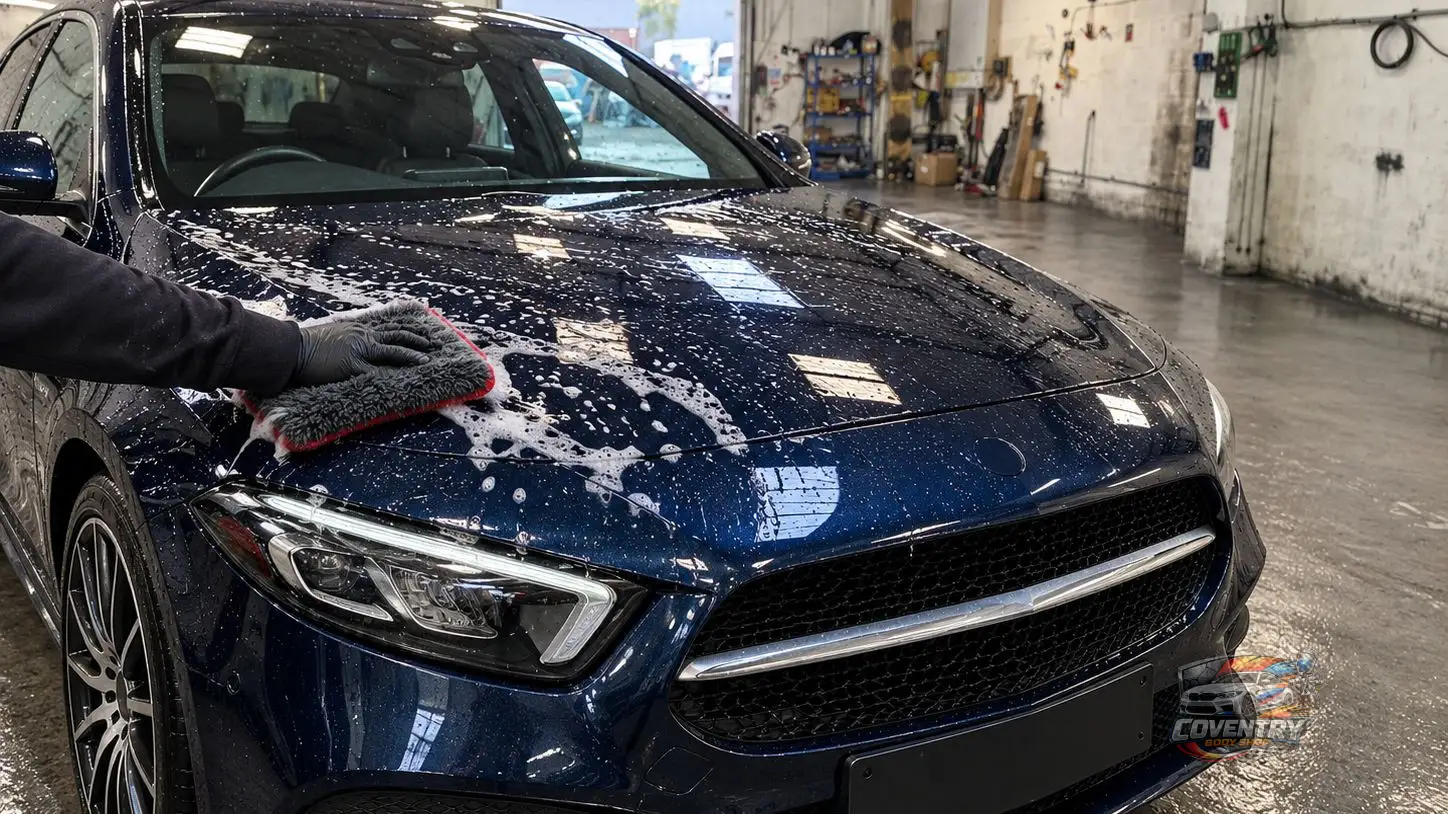
Understanding the Importance of Proper Car Care for New Paint
Fresh paint can feel dry to the touch long before it has fully cured. Until it has fully hardened, it marks more easily than older paint, and strong chemicals or rough cloths can leave scratches or dull patches. The safe time to first wash or wax the car depends on the products used, so ask the bodyshop before you do either.
This applies whether the car has had a full body respray or a single panel repair. The repaired area is new paint even if the rest of the car is years old, and it needs the same care until it has cured.
Choosing the Right Car Shampoo for New Paint
Choose a pH-neutral car shampoo with no added wax, polish or cutting agents, and dilute it as the label says; a stronger mix is not needed for normal dirt. Washing-up liquid is not made for car paint and can remove wax, so keep it away from the car.
A shampoo label cannot confirm that a product suits the paint system used on your repair, so ask us which shampoo to use on new paint.
Waxing and Sealing: Enhancing Paint Protection
Wax and paint sealants add a thin protective layer over the lacquer. Carnauba wax adds gloss but wears away with washing. Synthetic sealants often last longer than wax, depending on the product. Wait to apply either until the bodyshop says the paint has cured.
Do not machine polish new paint yourself. Once the paint is ready, light marks that wax cannot hide can sometimes be removed, depending on their depth, with scratch removal and machine polish. We measure paint depth as part of our checks. On a metal panel a typical gauge reads the total coating thickness, not the lacquer on its own, so it cannot show how much clear coat is left.
Microfibre Cloths: The Unsung Heroes of Car Care
Use a soft, clean wash mitt and rinse it often, because any mitt or sponge that holds grit can drag it across the paint. The two-bucket method helps further: one bucket holds the shampoo, the other holds clean water for rinsing the mitt before it goes back in the shampoo. A grit guard in the bottom of each bucket helps keep loose dirt off the mitt.
Rinse the car first. That takes off the loose grit before the mitt ever touches the paint. Dry it with a large, clean microfibre drying towel, laid on the paint and patted or drawn across it, not rubbed hard.
Wash microfibre on its own. Fabric softener can clog the fibres, so leave it out. A towel that has been dropped on the ground should be washed before it touches the paint again.
Detailing Sprays: Quick Shine and Protection
A detailing spray, also sold as a quick detailer, is used with a microfibre cloth to lift light dust and fingerprints between washes. Many add a little gloss and a light layer of protection that does not last long. Some contain waxes or silicones, so check that the spray suits fresh paint, and use it only on a car that has just been washed. On a dusty or gritty car, wiping drags the dirt across the paint and can leave fine scratches, so wash it first.
Clay Bars: Deep Cleaning for New Paint
Tar spots and tiny iron particles from brake dust can stick to the paint and stay after washing. A clay bar, glided over the paint with plenty of lubricant, can lift some of this. Tar often needs a tar remover, and a fallout remover is a spray that reacts with iron particles to help remove them and often changes colour as it works.
Clay can leave light marring on soft paint, and tar and fallout removers contain chemicals that may not suit a fresh repair, so check with us before using any of them on new paint.
Understanding Paint Protection Films and Coatings
A ceramic coating forms a thin, cured coating over the lacquer and can last longer than wax or a sealant, depending on the product and the care it gets. Many make water bead and the car easier to wash, though it still needs regular washing. We do not apply ceramic coatings, but our paint protection and detailing service can protect the paint after a respray once it has cured.
Paint protection film is a clear film laid over the panels that take stone chips, such as the bonnet and front bumper. It is fitted by specialist installers, and the paint under it needs to have cured first, so ask about timing before booking it on a new repair.
Maintaining New Paint: Long-Term Care Tips
Keep these away from fresh paint:
- Washing-up liquid and household cleaners: many are not made for car paint and can remove wax and dry out some trim.
- Cutting compounds and abrasive polishes: they remove some of the top layer, so keep them off new paint.
- Automatic brush washes: the brushes can leave fine swirl marks, which tend to show up more on dark paint.
- Pressure washers held close: keep the nozzle at the distance the washer maker advises, and do not aim it at the edges of a repair.
Small chips found later can often be dealt with by a paint touch-up, and scuffs on a plastic bumper by a bumper repair. A chip that reaches bare steel should be treated before rust starts.
If you find a mark on fresh paint, book an inspection at our workshop in Wyken, Coventry. A small inspection is free; a deeper inspection costs from £200 plus VAT (£240 including VAT), deducted if the repair goes ahead. We give you a quote before any work starts, and our workmanship guarantee runs for 6 months from collection.
Leave a Comment
Comments
No comments yet.