A good car paint repair is usually indistinguishable in normal light, but it is not molecularly identical to the original paint. The repair uses a fresh paint mix, while your car's existing finish may have changed through weathering, and the way paint is applied also affects its appearance.
Does the paint code guarantee the right colour?
Your manufacturer's paint code identifies the original colour specification. It gives a starting point for mixing repair paint, but there can be several colour variants within one code. These are slightly different versions of the same colour, reflecting differences in factory paint production and application.
The code also cannot describe fading or paint from an earlier repair. Two cars with the same code can therefore need different colour adjustments. Choosing paint by its colour name alone tells you even less: a name such as silver or pearl white does not identify the shade or finish your repair needs.
How do we match your car's paint?
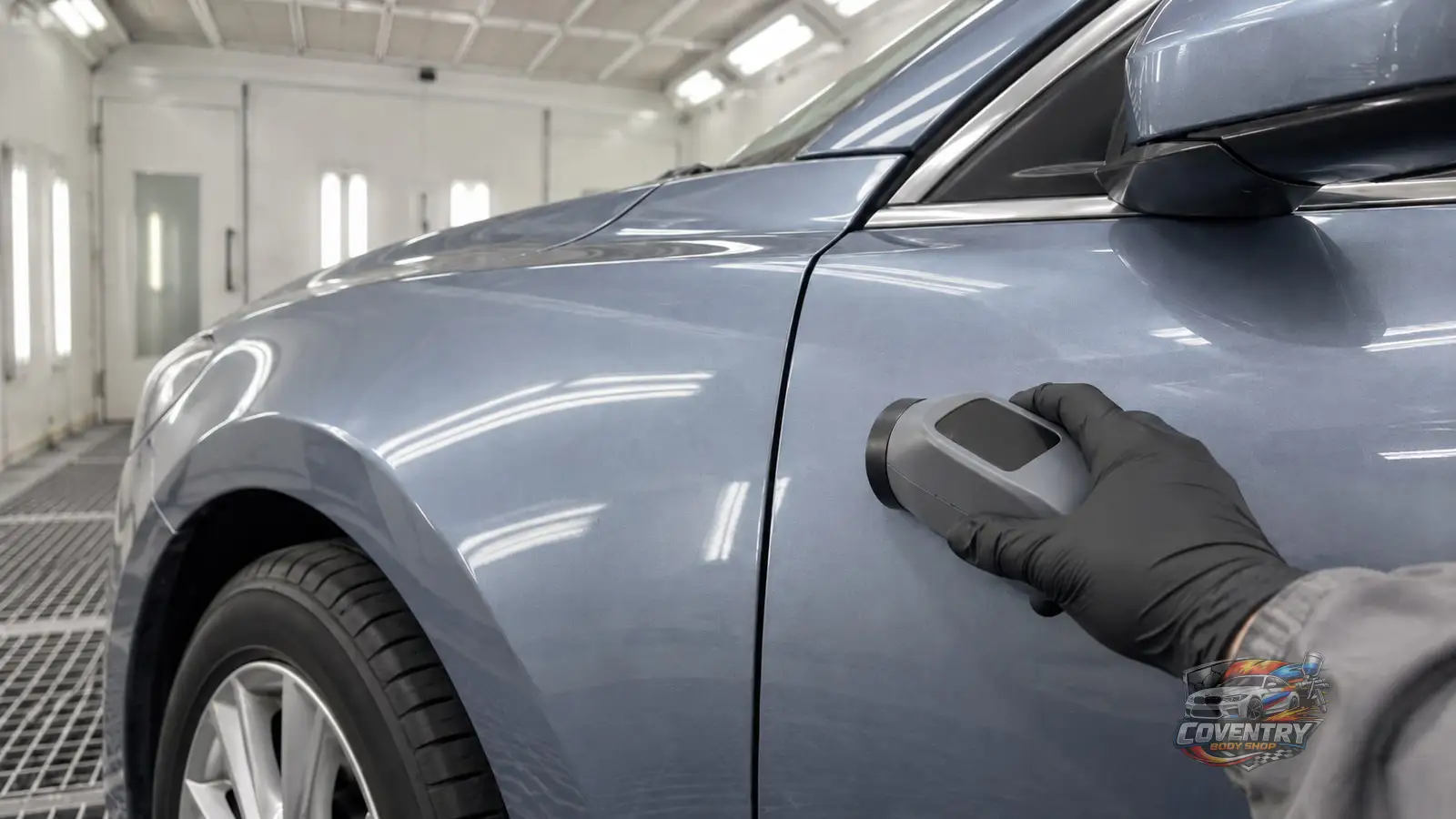
At our workshop in Wyken, Coventry, paint is mixed to the manufacturer's paint code and matched with a spectrophotometer. This instrument reads how the existing paint reflects light, helping identify a close match to the colour on your car. It adds information that the code alone cannot provide.
Our director, a former Aston Martin technician and painter, is the only person who paints the cars. Your repair is sprayed in our workshop's spray booth.
The colour reading is one part of the result. Paint application affects how the finish reflects light, particularly with metallics and pearls. Surface preparation, gloss and texture also matter: even a close colour can stand out if its finish looks different from the neighbouring panel.
What makes a paint match harder?
The condition of the surrounding paint also matters, not only the colour being mixed. These are the main complications:
- Faded or weathered paint: sunlight and exposure can change the original finish unevenly. A bonnet and a door may no longer look quite alike, leaving more than one shade around the repair.
- Metallic colours: tiny reflective flakes affect brightness as you move around the car. How those flakes settle during spraying influences whether the repair looks lighter or darker at an angle.
- Pearl and three-coat colours: pearl effects change with the light. Three-coat finishes use a ground colour, an effect layer and a clear topcoat, so the effect layer's thickness can alter the appearance.
- Plastic bumpers beside metal panels: these can look slightly different even before a repair. Their shape and the way they were painted can affect the comparison, so an existing difference needs to be considered.
- Previous repairs: an earlier respray may differ from the original colour or texture. Matching one previously painted panel could leave a contrast with another panel beside it.
These factors do not automatically mean a poor result. They mean the repair needs to be judged against the actual surrounding paint, with realistic expectations about any differences already present.
When does the next panel need blending?
Blending may be needed when stopping the new colour at a panel edge would leave a noticeable contrast. This is particularly relevant when damage sits close to a neighbouring panel or the colour changes strongly with viewing angle.
It spreads the colour transition over a wider area, so an undamaged neighbouring panel may form part of the paintwork estimate. It is not necessary for every repair. Our guide to blending in car paint repair explains the process in more detail.
How can you check the match on collection?
Look at the whole repaired area before concentrating on individual details. A reflection from a wall or another car can make one panel appear a different colour, so change your position before deciding there is a mismatch.
Use these checks when you collect your car:
- Look in daylight: view the repair outside where possible. Indoor lighting alone may hide or exaggerate a colour difference. Two paints can look identical in daylight and slightly different under street lights or workshop lamps, because their pigments reflect each light source differently.
- Change your angle: look straight at the panel, then along the side of the car. Check whether its brightness and colour change in a similar way to the surrounding paint.
- Compare across panel gaps: look at the painted surfaces on either side of the gap. The dark gap itself creates a shadow, so compare the broader areas too.
- Check the finish: look for a noticeable change in gloss or surface texture, as well as colour. Reflected lines can help you see differences in the surface.
If something looks wrong, point out the exact area and viewing angle before leaving. A clear colour step deserves discussion; it should not simply be dismissed because the paint code was correct.
What should you send for an estimate?
Send a close photo of the damage, a wider photo showing the whole panel, and a view including the neighbouring panels. Use clear daylight and avoid filters. Include your car's make and model, say what happened, and mention any previous paint repairs you know about.
Send your photos on WhatsApp to +44 7903 105777 or use the Send enquiry button on this page. Photos help show the likely scope, but an inspection may be needed to assess the paint and damage properly.
You get a written, itemised estimate first. No deposit is required, and a small inspection is free. If a deeper inspection is needed, it costs from £240 including VAT (£200 plus VAT), deducted if the repair goes ahead.
Leave a Comment
Comments
No comments yet.