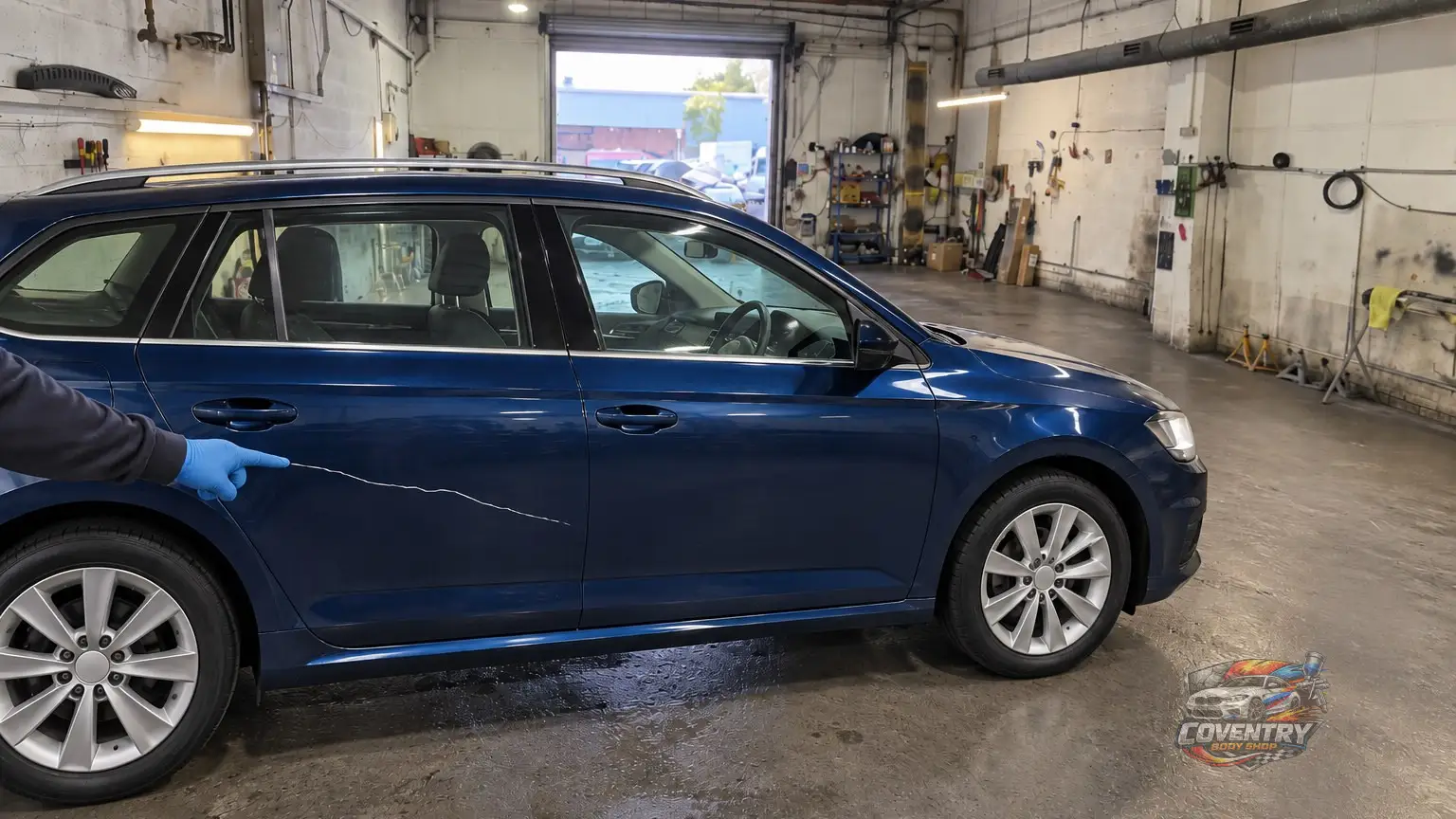
Yes, comprehensive car insurance usually pays for paint damaged in an accident, by vandalism or in a storm, less your excess. Policies usually exclude fading, weathered lacquer and other wear and tear. Whether a claim is worth making depends on how the repair cost compares with your excess.
The cause matters more than the appearance of the mark. A fresh scrape from a collision and peeling paint on an ageing bonnet can both need repainting, yet the insurance position can be different.
Which type of insurance covers your own paintwork?
Comprehensive insurance generally includes cover for accidental damage to your own car, subject to the policy's exclusions. That can include paint scratched when you scrape a wall or damage caused by another vehicle.
Third-party insurance covers your liability for damage to other people's property. It does not pay to repair your own paintwork. Third-party, fire and theft cover adds protection for specified fire and theft losses, but generally excludes accidental damage to your own car.
If another driver caused the damage, you can seek the repair cost from their insurer, whatever cover you hold yourself. That depends on the evidence and whether responsibility is accepted. Your own insurer can explain how to report the incident and which claim route applies.
Check the policy schedule alongside the wording. The schedule identifies your cover and excesses, while the wording explains exclusions and conditions. A separate scratch-and-dent policy, if you have one, will have its own repair limits and claim procedure.
How the cause of paint damage affects cover
Describe what happened as accurately as you can. The insurer needs to connect the damage with an event covered by the policy. These situations can lead to different decisions:
- Accidental scrapes: a bumper scraped against a post or a door damaged in a collision may fall under comprehensive accidental damage cover.
- Vandalism: deliberately keyed paintwork may be covered. Ask what evidence is required and whether the insurer needs a police reference.
- Storm damage: paint scratched by falling debris is usually covered by comprehensive insurance, subject to the policy's exclusions.
- Gradual deterioration: faded colour, weathered lacquer and corrosion that develops over time count as wear and tear, which policies usually exclude.
Peeling paint alone does not establish the cause. It could involve an older repair or deterioration in the existing finish. A repair inspection can assess the condition and the work needed, but the insurer decides whether the policy covers it.
Compare the repair estimate with your excess
Your excess is the amount you contribute towards a covered claim. Check the total that applies to this incident, including any compulsory and voluntary amounts. Some policies also apply an additional excess when you choose a repairer outside the insurer's network.
If the repair costs less than the excess on your own policy, a claim under that policy pays nothing towards the repair. When another driver was at fault, the cost can be claimed from their insurer instead, and an excess you paid through your own insurer may be recovered as part of that claim. Where the estimate is only slightly higher, consider the amount the insurer would contribute before deciding to proceed.
A claim may affect your no-claims discount or future premium. Protected no-claims discount does not guarantee that the renewal premium will stay the same. Ask your insurer how the incident would be recorded and what its protection terms cover.
Use an estimate for the actual damage in this comparison. A starting price for a small touch-up cannot tell you the cost of repairing a deep scratch across several panels. Paint type and the preparation needed can change the amount of work considerably.
Paying for repairs yourself does not remove the need to report the incident if your policy requires it, and some insurers take a reported incident into account at renewal even when no claim is made. Check your policy's reporting requirements and deadline before deciding.
Record the damage before arranging repairs
Collect the evidence before the damaged area is polished or repainted. Photograph in daylight without filters, and keep the original files.
Prepare the following before speaking to the insurer or requesting an estimate:
- Photograph the whole affected side of the car, then take closer pictures of each damaged area. Include the edges of nearby panels so the location is clear.
- Write down when and where the incident happened. If you discovered the damage later, record when you found it and when you last saw the car undamaged.
- Keep the other driver's details and any witness information, where available. Preserve relevant footage if you have access to it.
- Say which marks are new and point out any older damage on the same panel, since the claim covers only the damage from this incident. Say if you do not know the cause.
A photograph can show the spread of a scratch, but it may not reveal its depth or damage beneath a bumper. Avoid booking a repair solely on the assumption that every visible mark will polish out.
If the incident also left loose bodywork or damaged lights, have the car checked before you drive it again, because loose parts and broken lights can make it unsafe or illegal on the road. The visible paint damage may be only part of the repair needed.
What a paint repair estimate should explain
The estimate should identify the affected panels and describe the proposed repair. Ask whether it includes preparation and repainting, and whether work on adjacent paintwork is needed. The total should make the VAT position clear.
Some marks are confined to the clear protective lacquer over the colour. Depending on their depth, they may be suitable for scratch removal and machine polishing. At Coventry Body Shop, this service starts from £144 including VAT (£120 plus VAT) per panel. An inspection determines whether polishing is suitable.
Where colour has been removed, polishing cannot replace the missing paint. A small, isolated mark may suit a paint touch-up, from £58.80 including VAT (£49 plus VAT). Touch-up work has different finish expectations from repainting a panel, so ask what improvement is realistic for your damage.
A localised SMART repair may be suitable for some minor damage. Deeper scratches or damage spread across a panel can need more preparation and repainting. The final price is set after inspection and depends on the paint chosen and the work required.
For panel repaints, preparation can include filler where needed, followed by primer, colour and lacquer. Blending extends the colour gradually into surrounding paintwork to help manage the transition, and the lacquer usually has to cover a wider area again, often out to the edge of the panel. This is why an estimate can include work well beyond the narrow line of a scratch.
Ask for unrelated cosmetic work to be listed separately. That helps you see which repairs are being put forward for the claim and which you would be paying for yourself.
Confirm authorisation and repairer arrangements
Before work begins, ask the insurer whether it has accepted the claim and authorised the proposed repairs. An estimate gives the insurer something to assess; submitting it does not mean payment has been agreed.
If you want to choose your own body shop, check the conditions first. Ask whether the choice changes your excess or courtesy-car entitlement. Also establish whether the insurer needs another estimate or an inspection before giving approval.
Authorisation is normally agreed between you and your insurer. When the insurer sends the car to us, or chooses to deal with the garage directly, it asks us for a full repair report. It varies, but insurers usually pay the garage directly rather than the car's owner, so confirm who will pay the repairer and when your excess is due. Keep the claim reference and written authorisation with the estimate. If additional damage is discovered during repair, further approval may be needed before the extra work proceeds.
Insurance assessment and workshop time are separate parts of the wait. Ask when the car needs to be dropped off and whether authorisation is still outstanding before making transport arrangements.
Getting a paint repair estimate in Coventry
Coventry Body Shop has repaired cars for customers claiming on their insurance. We can deal with the insurer if you want us to; our insurance and accident repair support page explains how that works. We are not an insurer-approved repairer, so confirm your policy's repairer conditions before booking.
A small inspection is free. If a deep inspection is needed, it costs from £240 including VAT (£200 plus VAT). That inspection charge is deducted from the repair bill if you go ahead; otherwise, you pay for the inspection and any work done.
Call +44 7903 105777 or use contact form to arrange an inspection at our Wyken workshop. Photographs can be sent using the Send enquiry button; the contact and booking forms do not accept photographs. Customers drop off and collect their cars at the workshop.
Leave a Comment
Comments
No comments yet.