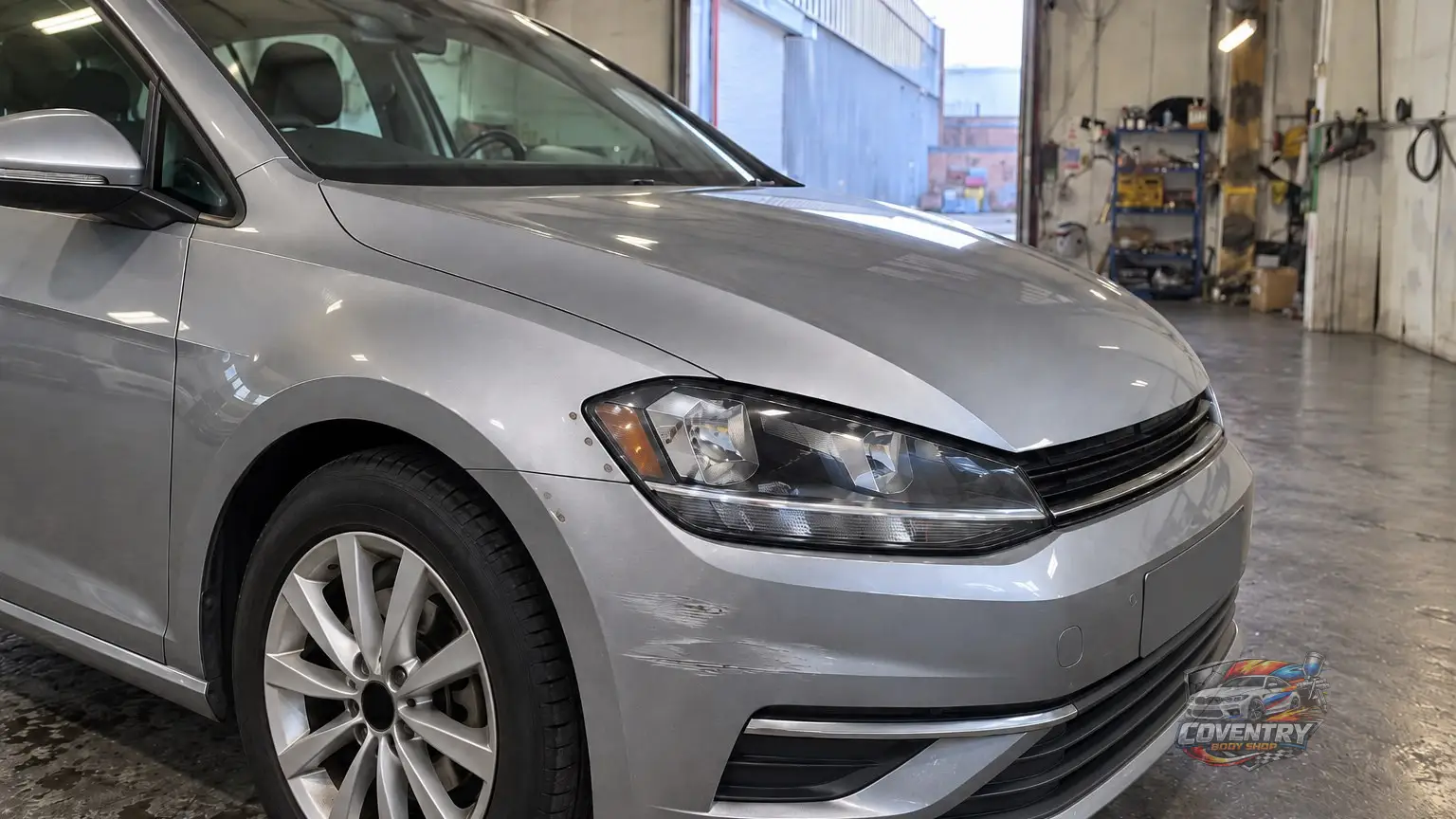
Why Paint Condition Affects What a Car Is Worth
Paint is one of the first things a buyer sees on a used car. Scratches and faded panels are easy to spot, and a buyer who sees them may expect to pay less. Trade buyers valuing a part-exchange may note each damaged panel and allow for the cost of putting it right.
A dent or a mismatched panel can also make a buyer suspect an accident, even when the cause was minor, and wonder what else has been hit.
Types of Paint Damage a Buyer May Notice
- Light scratches and swirl marks: fine marks that often sit only in the clear lacquer, and washing with a dirty mitt or brush can cause them. They show up more in direct sunlight, and polishing can remove many of them.
- Stone chips: common on the bonnet and front bumper of cars that do motorway miles. A chip down to bare steel can start to rust if it is left.
- Deep scratches: marks that go through the clear lacquer into the colour, or down to the primer or the metal. Polishing will not remove them. The options are a touch-up or painting the area, and which suits the damage is judged at inspection.
- Dents with broken paint: for a full repair the dent is dealt with as well as the paint, so the work is bigger than a paint job alone.
- Fading and peeling lacquer: sun exposure can break lacquer down, and a badly done earlier repair can also make it peel. A panel with peeling lacquer usually needs repainting.
Poor Previous Repairs
A badly done old repair can also put buyers off. The signs are a colour that does not quite match the next panel, a different texture to the paint, overspray on rubber seals or trim, and edges that show where the repair stops.
Some trade buyers use a paint depth gauge. On a metal panel, a typical gauge reads the total coating thickness. A reading well above the rest of the car can point to a repaint, even when the repair cannot be seen, though one reading on its own proves nothing. We measure paint depth as part of our own checks.
Matching the Repair to the Damage
Marks that sit only in the lacquer may come out with Scratch Removal & Machine Polish, from £120 plus VAT (£144 including VAT). Polishing needs care where the total reading is low, because the gauge cannot show how much clear coat is left.
A stone chip may need only a paint touch-up, from £49 plus VAT (£58.80 including VAT). A small scuff may suit a SMART repair, from £75 plus VAT (£90 including VAT). SMART repair is meant for small, localised damage, which can avoid repainting the whole panel.
Wider damage, or several marks on one panel, may call for a whole-panel repaint. Car Body Paint (Single Panel) is from £150 plus VAT (£180 including VAT). On a panel repaint, the colour is mixed from the manufacturer's paint code, and filler, primer, blending and lacquer are used where the repair needs them. Every price here is a from price, and the final price is confirmed after inspection.
Is a Repair Worth It Before You Sell?
Compare the cost of the repair with what the damage is likely to take off the price. For a part-exchange, ask the dealer whether the damage changes their offer and by roughly how much, then compare that with a repair estimate. If the repair would cost more than the damage takes off, leaving it and adjusting the asking price can make more sense. A private buyer may not knock off a precise figure, but obvious damage gives them a reason to offer less.
Lease companies usually inspect a car on return and may charge for damage beyond their fair wear and tear standard. Check your contract, and compare their charge with the cost of a repair before the car goes back.
Keep the quote and the invoice from the repair, because a buyer may ask what was done.
Insurance and Paint Damage
Paint damage from an accident or from vandalism may be covered by your insurance, depending on your policy. Before you claim, weigh the repair cost against your excess and the effect a claim could have on your no-claims discount, and check your policy wording for what is covered.
Keeping Paint in Good Condition
Regular washing with a pH-neutral shampoo and a soft mitt removes dirt that can dull paint over time, and bird droppings should be washed off soon, because they can mark the paint quickly. Wax adds a thin layer that wears away with washing and needs putting back on. A ceramic coating can last longer than wax, depending on the product and the care it gets, and can make the car easier to clean. Our paint protection and detailing service offers machine polishing and paint protection, but not ceramic coating.
Getting a Repair Estimate
Send photos of the damage by WhatsApp or through the Send enquiry button, and ask for an inspection at our workshop in Wyken, Coventry. A small inspection is free; a deeper inspection costs from £200 plus VAT (£240 including VAT), deducted if the repair goes ahead. We give you a quote before any work starts.
Leave a Comment
Comments
No comments yet.