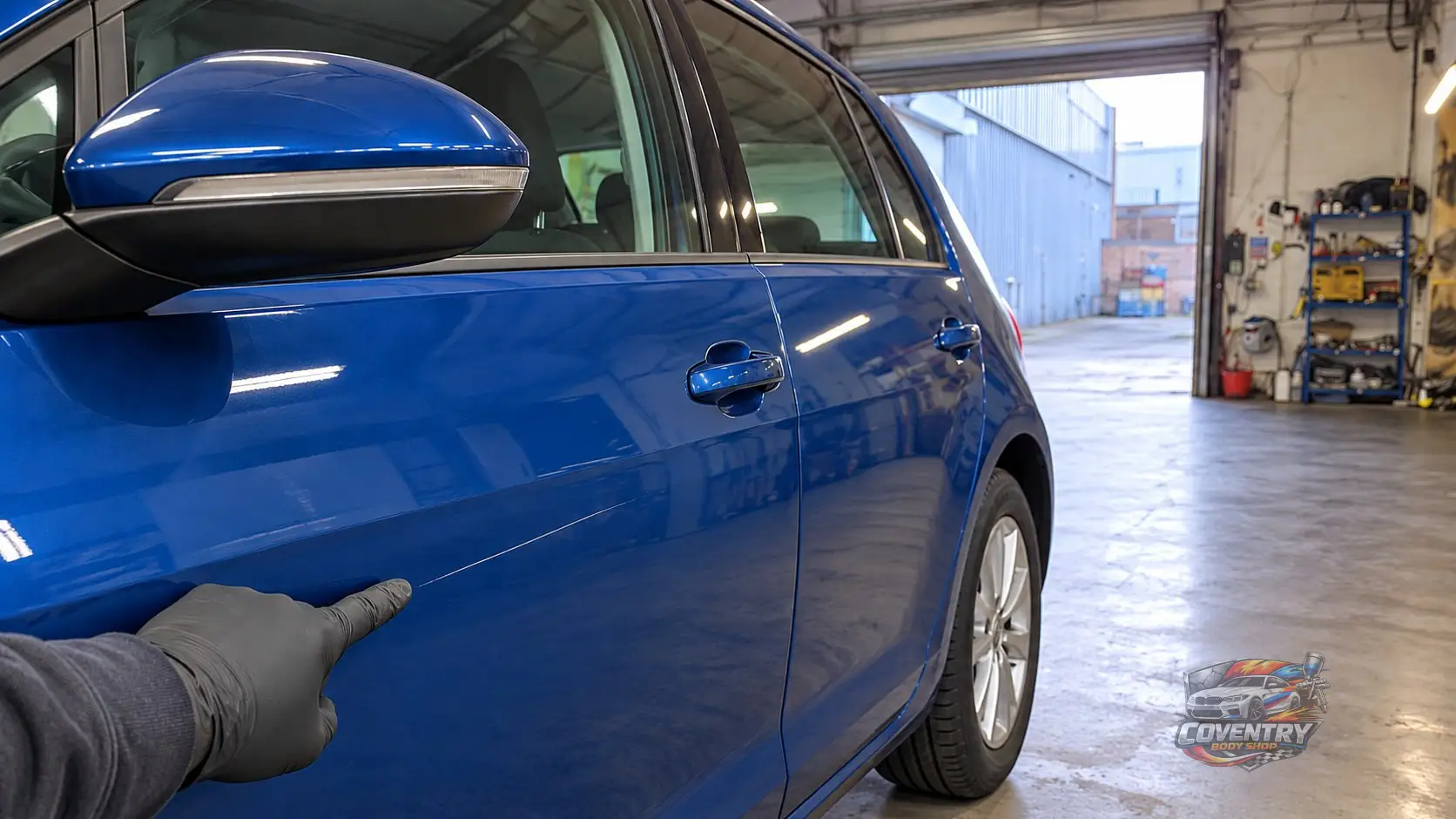
Understanding the Nature of Car Scratches
Car scratches can vary significantly in depth and severity, affecting the approach needed for repair. As a seasoned UK bodyshop owner, I often encounter clients who are unsure about the extent of damage and the best course of action. Scratches can be classified into three main categories:
- Surface Scratches: These are minor abrasions that only affect the clear coat. They are often caused by car wash brushes or minor contact with objects.
- Paint Scratches: These penetrate the clear coat and reach the base paint layer. They are usually the result of more significant impacts.
- Deep Scratches: These go through the paint layer and expose the metal or plastic underneath, often requiring more intensive repair methods.
Identifying the type of scratch is crucial as it determines the repair method. For instance, surface scratches can often be polished out, while deeper ones may need more comprehensive treatment. Understanding the nature of the scratch helps in choosing the right repair strategy, ensuring both cost-effectiveness and durability.
Preparation and Assessment
Before any repair work begins, a thorough assessment of the scratch is essential. This involves cleaning the affected area to remove any dirt or debris that could interfere with the repair process. In our bodyshop, we use a gentle car shampoo followed by a clay bar treatment to ensure the surface is pristine.
Once clean, we assess the scratch under proper lighting conditions. This helps in determining the depth and extent of the damage. A magnifying glass or a paint depth gauge can be used for a more detailed inspection. This step is crucial as it informs the subsequent repair process, ensuring that the chosen method is both efficient and effective.
Preparation also involves masking off surrounding areas to protect them during the repair. This is particularly important when using abrasive compounds or polishes, as these can inadvertently damage adjacent panels if not properly shielded.
Choosing the Right Repair Method
The choice of repair method depends on the scratch's severity. For surface scratches, a simple polish with a machine buffer might suffice. We use a dual-action polisher with a fine abrasive compound to gently remove the scratch without affecting the underlying paint. This method is effective for restoring the original gloss and shine.
For deeper scratches, a more involved approach is necessary. This might include using a touch-up paint to fill the scratch, followed by careful sanding and polishing to blend the repair with the surrounding area. It's important to use the correct manufacturer paint codes to ensure a perfect colour match. This attention to detail is what sets professional repairs apart from DIY attempts.
In some cases, a SMART repair might be the best option. This involves localised repair techniques that minimise the need for a full panel respray. Our SMART Repair service is ideal for minor dents and scratches, offering a cost-effective solution without compromising on quality.
Paint System Selection and Application
When paint application is necessary, selecting the right paint system is crucial for achieving a durable and seamless finish. We adhere to OEM standards, using high-quality paint systems that ensure longevity and resistance to environmental factors.
In our workshop, we follow a meticulous process for paint application. This includes:
- Priming: Applying a primer to ensure proper adhesion of the paint to the substrate.
- Base Coat Application: Carefully applying the base coat, ensuring even coverage and colour consistency.
- Clear Coat Application: Sealing the paint with a clear coat to protect against UV rays and environmental damage.
Each step is followed by a curing period, allowing the paint to harden and set properly. This is crucial for ensuring the repair's durability and longevity.
Blending and Finishing Techniques
Blending is a critical step in the repair process, especially when dealing with visible panels. The goal is to make the repair invisible to the naked eye. This requires skill and experience, as well as the right tools and materials.
We use a combination of wet sanding and machine polishing to blend the repaired area with the surrounding paint. This involves gradually reducing the abrasive level of the sandpaper and polish until the repair is indistinguishable from the original finish.
Quality control checks are performed throughout the process to ensure the repair meets our high standards. This includes visual inspections under various lighting conditions and tactile checks to ensure a smooth finish.
Quality Control and Longevity Considerations
Ensuring the longevity of the repair is a top priority. We conduct thorough quality control checks at each stage of the process. This includes verifying the colour match, checking for any imperfections, and ensuring the paint has cured properly.
We also consider environmental factors that could affect the repair's durability. For instance, we use UV-resistant clear coats to protect against sun damage, and ensure all repairs comply with BSI refinishing standards for maximum resilience.
Our commitment to quality is reflected in the satisfaction of our clients, who can trust that their vehicle will look as good as new for years to come.
Cost Considerations and Insurance Implications
Cost is a significant factor for many clients when considering scratch repairs. Fortunately, repairing a scratch without a full respray is often more economical. The cost will depend on the scratch's severity and the chosen repair method.
For minor scratches, a simple polish might suffice, keeping costs low. More extensive repairs, such as those involving touch-up paint or SMART repairs, may incur higher costs but are still more affordable than a full respray.
It's also important to consider insurance implications. In some cases, scratch repairs might be covered under your policy, particularly if the damage was caused by an accident. Through our insurance and accident repair support, we can help with your claim and keep the repair process as smooth as possible.
Conclusion: Achieving a Flawless Finish
Repairing car scratches without repainting the entire vehicle is not only possible but also practical with the right approach. By understanding the nature of the scratch, choosing the appropriate repair method, and ensuring meticulous quality control, you can achieve a flawless finish that restores your vehicle's appearance.
If you're dealing with a scratch and unsure of the best course of action, consider consulting with a professional bodyshop. Our team is here to provide expert advice and high-quality repair services tailored to your needs. Whether it's a scratch removal and machine polish or a more involved repair, we're committed to delivering results that exceed expectations.
Contact us today to discuss your repair needs and discover how we can help restore your vehicle to its former glory.
Leave a Comment
Comments
No comments yet.