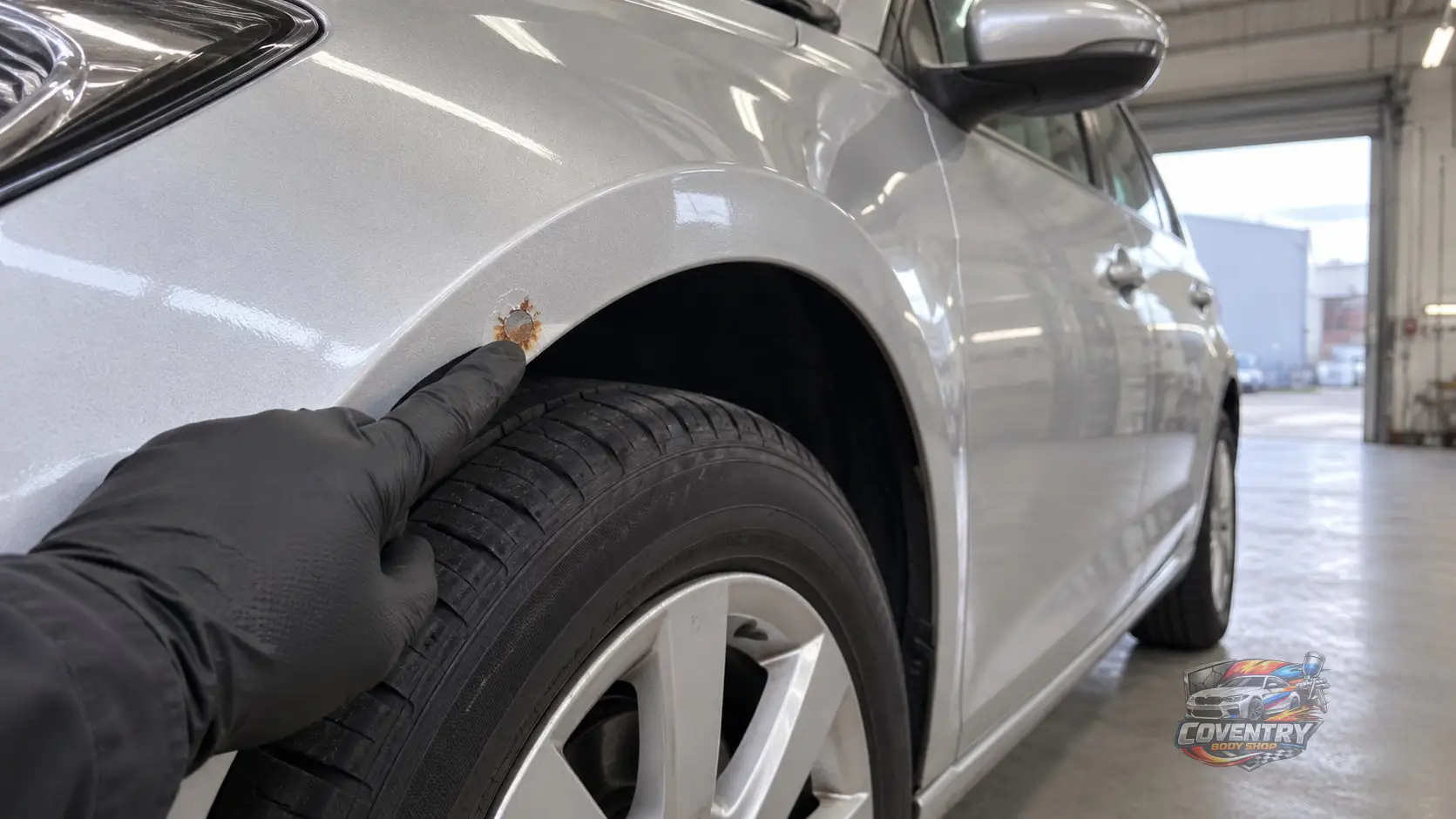
Understanding the Causes of Paint Damage
Paint damage on vehicles is a common issue that can lead to rust if not addressed promptly. The causes of paint damage are varied, including minor accidents, environmental factors, and general wear and tear. As a professional bodyshop owner, I’ve seen how even small scratches can escalate into significant rust problems if not treated correctly.
Common causes of paint damage include:
- Stone Chips: These are often unavoidable, especially if you frequently drive on motorways or gravel roads.
- Scratches and Scrapes: These can occur from minor collisions or even from brushing against bushes or other vehicles.
- Environmental Factors: Acid rain, bird droppings, and tree sap can all degrade paint over time.
- UV Exposure: Prolonged exposure to sunlight can fade and weaken the paint, making it more susceptible to damage.
Understanding these causes is the first step in preventing rust. By identifying the source of paint damage early, you can take appropriate measures to protect your vehicle.
Initial Assessment and Damage Evaluation
Before any repair work begins, a thorough assessment of the damage is crucial. This involves inspecting the vehicle for visible scratches, chips, and any underlying rust that may have already started to form. In our bodyshop, we use a combination of visual inspection and specialised tools to assess the extent of the damage.
Key steps in the assessment process include:
- Visual Inspection: Carefully examining the vehicle under good lighting to identify all areas of damage.
- Depth Measurement: Using tools to measure the depth of scratches and chips, which helps in determining the repair method.
- Rust Check: Looking for any signs of rust, which may require additional treatment before repainting.
Accurate assessment ensures that the repair process addresses all issues, preventing future rust development. It also helps in providing an accurate estimate for the repair work, which is crucial for insurance claims and customer satisfaction.
Preparation: The Foundation of Effective Repair
Preparation is key to a successful repair and involves several critical steps. Proper preparation ensures that the new paint adheres well and provides long-lasting protection against rust.
Our preparation process includes:
- Cleaning: Thoroughly washing the vehicle to remove dirt, grease, and contaminants that could affect paint adhesion.
- Sanding: Carefully sanding the damaged area to create a smooth surface for the new paint. This step is crucial for blending the repair with the existing paintwork.
- Masking: Protecting surrounding areas with masking tape to prevent overspray and ensure a clean finish.
Each of these steps is performed with precision to ensure the highest quality repair. Proper preparation not only enhances the appearance of the repair but also its durability, preventing rust from developing in the future.
Priming: Essential for Rust Prevention
Priming is a critical step in the repair process that cannot be overlooked. A high-quality primer provides a strong base for the paint and acts as a barrier against moisture, which is essential for rust prevention.
In our workshop, we use primers that meet BSI refinishing standards, ensuring compatibility with the vehicle's original paint system. The priming process involves:
- Choosing the Right Primer: Selecting a primer that matches the vehicle's paint type and the specific repair needs.
- Application: Applying the primer evenly and allowing it to cure properly. This step is crucial for achieving a smooth, durable finish.
- Quality Checks: Inspecting the primed area for any imperfections and making necessary corrections before proceeding to painting.
Proper priming is essential for the longevity of the repair. It ensures that the new paint adheres well and provides effective protection against rust.
Paint Application: Achieving a Seamless Finish
Once the primer has cured, the next step is applying the paint. This process requires skill and precision to ensure a seamless finish that matches the vehicle's original colour.
Our paint application process includes:
- Colour Matching: Using manufacturer paint codes and advanced colour matching technology to ensure an exact match with the existing paintwork.
- Layering: Applying multiple layers of paint, allowing each to dry before applying the next. This builds up a strong, durable finish.
- Blending: Carefully blending the new paint with the existing paintwork to ensure a seamless transition.
Achieving a perfect paint finish requires expertise and attention to detail. Our team is trained in the latest techniques and uses state-of-the-art equipment to deliver outstanding results.
Curing and Lacquer Application
After the paint has been applied, it needs to cure properly to ensure durability. Curing allows the paint to harden and bond effectively with the primer and underlying layers.
Key steps in the curing process include:
- Controlled Environment: Using a spray booth that complies with HSE standards to control temperature and humidity during curing.
- Time Management: Allowing sufficient time for the paint to cure fully, which is essential for achieving a hard, durable finish.
- Lacquer Application: Applying a clear coat of lacquer to protect the paint and enhance its gloss. This step also provides an additional layer of protection against rust.
Proper curing and lacquer application are crucial for the longevity of the repair. They ensure that the paint remains vibrant and resistant to environmental damage.
Quality Control and Final Inspection
Once the repair work is complete, a thorough quality control check is essential. This ensures that the repair meets our high standards and provides long-lasting protection against rust.
Our quality control process includes:
- Visual Inspection: Checking the repaired area for any imperfections or inconsistencies.
- Durability Testing: Assessing the adhesion and hardness of the paint to ensure it can withstand environmental challenges.
- Customer Approval: Inviting the customer to inspect the repair and providing them with care instructions to maintain the finish.
Quality control is a critical step that ensures customer satisfaction and the effectiveness of the repair. It is our commitment to providing the highest quality service.
Long-Term Rust Prevention Strategies
Preventing rust is an ongoing process that extends beyond the initial repair. Implementing long-term strategies can help maintain the vehicle's appearance and value.
Recommended strategies include:
- Regular Washing: Keeping the vehicle clean to remove dirt and contaminants that can lead to rust.
- Paint Protection: Applying a protective wax or sealant to enhance the paint's resistance to environmental damage.
- Prompt Repairs: Addressing any new damage quickly to prevent rust from developing.
By following these strategies, you can extend the life of your vehicle's paintwork and prevent rust from becoming a problem.
If you're dealing with paint damage and want to prevent rust, consider our Scratch Removal & Machine Polish service for expert care and protection.
Conclusion: Trust the Experts for Lasting Results
Preventing rust after paint damage requires expertise, precision, and the right techniques. As a professional bodyshop owner, I understand the importance of each step in the repair process and the impact it has on the final result.
Whether you need a Bumper Repair or a Full Body Respray, trusting the experts ensures that your vehicle receives the highest quality care. Our team is dedicated to providing exceptional service and long-lasting results.
Contact us today to learn more about our services and how we can help protect your vehicle from rust and other damage.
Leave a Comment
Comments
No comments yet.