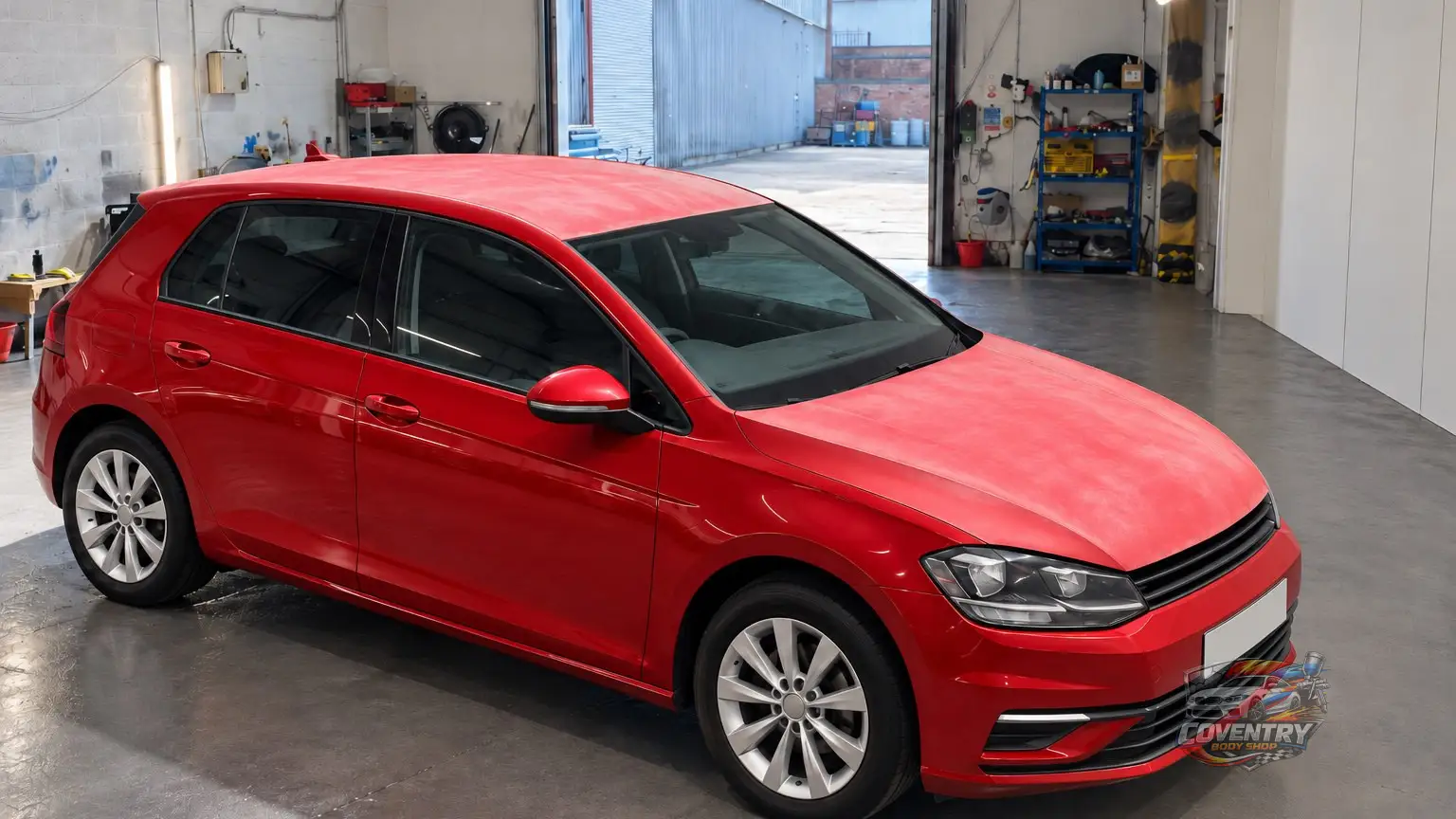
What UV protection in modern car paint actually does
UV protection in modern car paint is a layered defence built into the clear coat and pigment system that filters or absorbs harmful ultraviolet radiation before it breaks down resin, pigment, and gloss. Water-based basecoats and high-solids clear coats contain UV-absorbing additives that slow fading, chalking, and clear-coat failure, but those additives do wear down over time.
Think of it as suncream for your panels. The basecoat gives the colour, and the clear coat seals it with a tough, glossy barrier. Inside that barrier, light stabilisers and UV absorbers, often hindered amine light stabilisers plus benzotriazole-type absorbers, soak up the most damaging wavelengths and neutralise free radicals before they can crack the resin. Without them, the same paint that looks showroom-fresh at 3 years old would go hazy and dull by year 5 on a car parked outside daily.
The protection is not optional. Every factory paint system on the road in the UK, from solid whites to metallics and pearlescents, includes some form of UV defence. What differs between manufacturers is the concentration of additives, the thickness of the clear coat, and the cure quality of the film.
How sunlight damages clear coat and base layers
UV damage to car paint starts at the surface and works downward, and horizontal panels always suffer first because they catch the most direct sun. Bonnets, roofs, and boot lids go chalky, dull, and patchy long before vertical panels like doors and quarter panels show the same signs.
The damage happens in 3 recognisable stages:
- Oxidation: the clear coat loses oils and resin density, leaving a powdery haze that will not wash off.
- Fading and colour shift: pigments break down under prolonged exposure, especially reds, blues, and blacks, which can drift lighter or take on a milky cast.
- Clear-coat failure: the clear layer loses adhesion to the basecoat, leading to peeling, flaking, or a cracked pattern that no polish will fix.
Heat makes the problem worse. UK summers rarely feel extreme, but a dark bonnet sitting in July traffic can reach 60 to 70 degrees, which accelerates the chemical breakdown that UV started. Bird droppings, tree sap, and industrial fallout then etch into already-weakened paint and the damage speeds up further.
Which paint systems resist UV rays best
Not all paint systems age the same way. The 2 factors that matter most are the resin chemistry and how much clear coat was applied at the factory.
Solid colours, especially whites, silvers, and greys, tend to hold up better than dark or saturated colours because their pigments reflect more light and absorb less heat. Metallics and pearlescents use reflective flakes that scatter UV, but the pigments underneath still degrade, which is why a pearl white can look dull while a solid white still looks fresh after a decade.
Factory water-borne basecoats with high-solids 2K clear coats, the standard across most manufacturers since the late 2000s, outperform older solvent-heavy systems. They lay down a denser, more uniform clear layer with more room for UV additives to do their job. Premium marques often apply a thicker clear coat than mass-market cars, which is one reason their paint seems to age more gracefully.
Aftermarket paint jobs vary wildly. A proper water-based system from a modern sprayer, properly baked and finished with a quality 2K clear, will match or exceed factory UV performance. A cheap single-stage synthetic respray will fade noticeably within a few years on a sunny driveway, which is one of the clearest signs of cut corners. Our guide on why professional paint jobs last longer covers the prep, products, and process steps that make the difference.
How bodyshops restore UV-damaged paintwork
The right repair for UV damage depends on how far the breakdown has gone. We grade it the same way we grade accident damage: surface, mid-layer, or structural failure of the paint film.
For light oxidation on solid colours, a 2-stage machine polish with a cutting compound followed by a finer finishing polish can bring back gloss and remove the chalky surface layer. We seal the work with a wax or sealant to add a fresh UV buffer, but the original clear coat is still thinner than it was when new.
For mid-stage fading or clear coat that has gone cloudy but not yet peeled, polishing will not fix the colour shift. The only proper repair is a repaint of the affected panel. Our smart repair service in Coventry can target a single bonnet or roof where the rest of the car is still sound, blending the new paint into the adjacent panel so the colour match is invisible. SMART works well here because UV damage is usually confined to horizontal panels.
For full clear-coat failure with peeling or flaking, the panel needs to be stripped back to bare metal or primer, prepared properly, and resprayed. Skipping prep is the fastest way to get a respray that fails again within a year, which is why surface preparation matters so much in any quality repair. A respray only restores UV protection if the new film is thick enough, properly cured, and finished with a quality clear coat loaded with fresh stabilisers. You can see the result of a full strip and refinish on a classic project in our Porsche before-and-after gallery.
What drivers can do to extend paint life
You cannot stop UV damage, but you can slow it down significantly with a few realistic habits.
- Park smart where possible: a garage, carport, or even shade from a tree cuts direct exposure dramatically over years.
- Wash regularly but gently: dirt and grit hold moisture against the paint and create micro-scratches that thin the clear coat faster.
- Wax or seal every 6 months: a quality paste wax or synthetic sealant adds a sacrificial UV layer on top of the factory clear coat.
- Deal with fallout quickly: bird droppings and sap are acidic and will etch into weakened paint within hours on a warm day.
- Avoid cheap machine polishes: compounding too often thins the clear coat, and once it is gone, no amount of polish will bring it back.
None of these steps replace the original UV protection, but they buy years of extra life on a car that lives outside. For drivers in and around Leamington Spa who commute daily, even a covered workplace parking space makes a measurable difference over a 5-year ownership period.
When UV damage means a respray rather than a polish
A polish is the right answer only when the clear coat is still intact and the surface is hazy. Once the clear coat starts peeling, or the colour has visibly shifted under direct light, no amount of cutting compound will fix it. At that stage the panel needs a respray, and the sooner the better, because flaking clear coat will continue to lift and expose bare metal to corrosion.
Common signs a respray is the only option:
- Rough, chalky surface that does not improve after washing and claying.
- Visible white or milky patches on coloured panels.
- Edges of doors, boots, and bonnets showing early clear-coat lifting.
- Colour mismatch between horizontal and vertical panels on the same car.
If you spot any of these, send clear photos of the affected panel in good daylight to your bodyshop. We can usually tell from a bonnet shot whether a polish, a SMART repair, or a full panel respray is the honest answer, and we'll tell you which one without upselling work you don't need.
How we assess UV damage from photos
A reliable UV damage assessment starts with clear, well-lit photographs of the affected panel in direct daylight, ideally with an overall shot of the car for comparison. From those images we can usually grade the damage as surface haze, mid-layer fading, or full clear-coat failure, and recommend the right fix.
Send 3 to 4 shots: one straight-on of the damaged panel, one at an angle in sunlight, one close-up of the worst area, and one full car photo. We'll come back with a clear recommendation and an honest quote, whether that's a polish, a SMART repair, or a panel respray.
Leave a Comment
Comments
No comments yet.