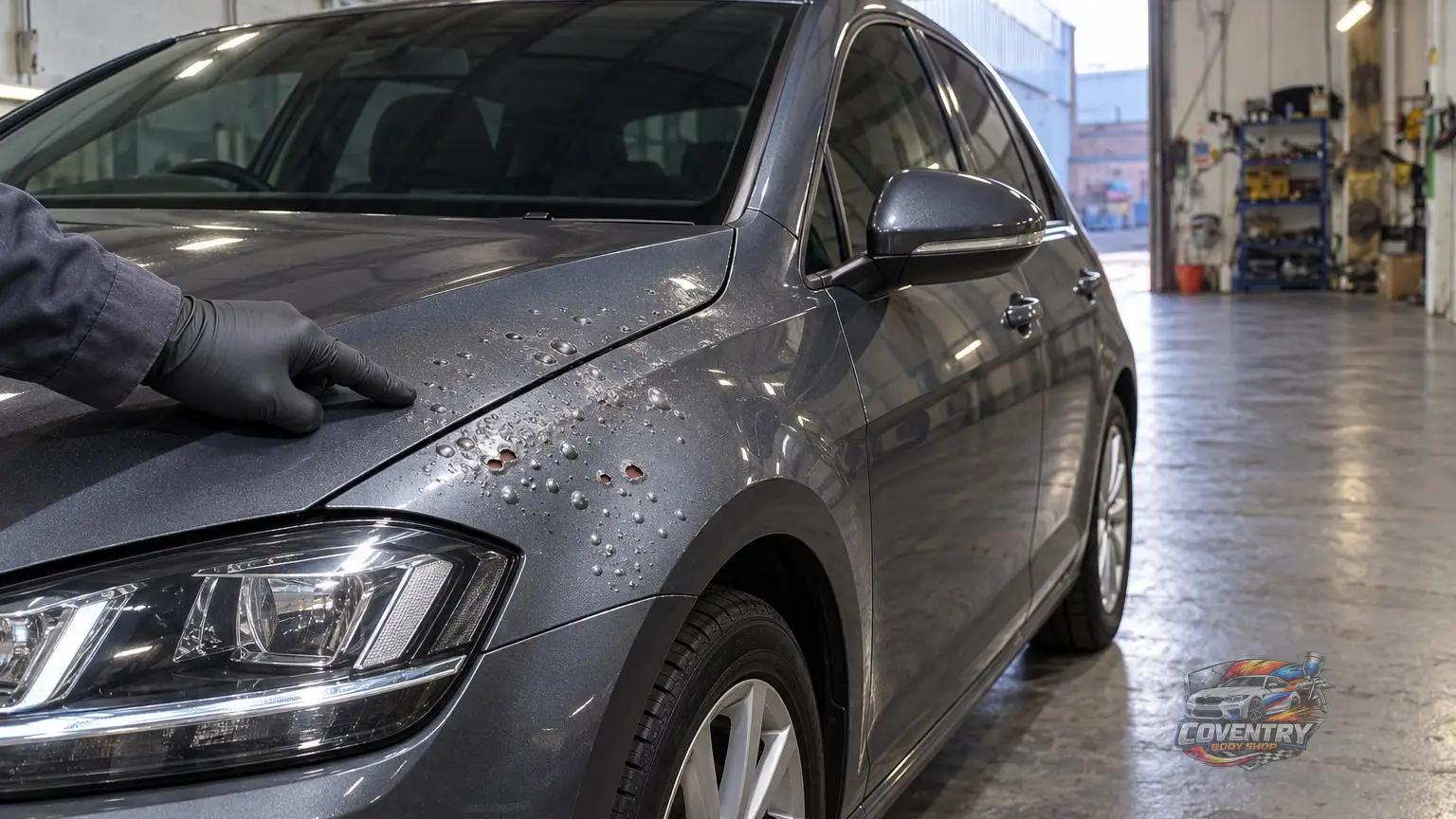
Paint blistering is one of those issues that starts small but can quickly undermine your vehicle's finish if ignored. You might notice tiny bubbles forming under the paint surface, often in patches on a panel or along edges. Left untreated, these blisters can burst, exposing the metal underneath to moisture and accelerating corrosion. It’s rarely just a surface issue. Understanding what causes paint blistering is the first step toward fixing it properly and preventing it from coming back.
What causes paint blistering on vehicles?
The most common cause of paint blistering is moisture or contaminants trapped beneath the paint film during application. Trapped moisture or retained solvent can cause the paint film to lift, forming blisters. This often happens if a panel wasn’t properly cleaned or dried before painting, or if humidity was high during the spray process. In older repairs, blistering can also stem from inadequate rust treatment: if corrosion wasn’t fully removed or neutralised, it continues underneath the paint and can lift or damage the coating.
Environmental exposure plays a role too. Vehicles parked near coastal areas or exposed to industrial fallout may develop blistering from salt or chemical contamination that penetrates microscopic flaws in the paint over time. Similarly, using incompatible products, like applying a modern urethane topcoat over an old enamel layer without proper sealing, can lead to adhesion failure and blistering as the layers react.
How can you tell if paint blistering needs professional repair?
Not all blistering requires a full panel respray, but it’s unwise to assume it’s just cosmetic. If the blisters are small, isolated, and the paint hasn’t cracked or lifted significantly, a repairer can assess whether paint touch-up or a localised sprayed repair is appropriate. However, if blistering is widespread, spreading, or you can see rust staining through the paint, the affected coating and substrate need assessing to determine how far the surface needs stripping back.
A repairer can check adhesion around the blistered area by gently probing with a plastic tool: if the paint lifts easily or feels spongy, it’s a sign the bond has failed. In such cases, a localised repair needs to address the underlying cause and remove the affected coating. A professional assessment helps determine whether you need a localised repair or a full panel refinishing.
Why does proper surface preparation prevent paint blistering?
Blistering issues can trace back to inadequate surface prep, either during the original factory finish or a previous repair. As detailed in our guide on why proper surface preparation is crucial in auto painting, the metal must be completely clean, dry, and free of oils, salts, or oxidation before any primer is applied. Any contamination left on the surface creates a barrier that prevents adhesion, trapping moisture or solvents that later cause blistering.
We use a multi-stage cleaning process involving degreasing, water-based cleaning, and final wipe-down with tack cloths to remove residue. For panels with rust, we treat the corrosion and apply a suitable primer to seal the area. Skipping necessary preparation might save time initially, but it can lead to premature paint failure.
Can paint blistering be fixed without repainting the whole panel?
Yes, in certain cases, localised paint blistering can be repaired without respraying the entire panel, but only if the damage is superficial and confined. Small blister patches on doors, wings, and bumpers may be treated by carefully sanding through the blistered layer, feathering the edges, and preparing the exposed substrate with compatible filler and primer where needed, following the product instructions, before applying colour-matched basecoat and blending into the existing finish. This approach works best when the blistering hasn’t spread and the underlying substrate is sound.
However, if the blistering is extensive or appears in multiple areas, the cause and extent of the damage need assessing before choosing a repair. In those cases, repairing individual spots may leave other affected areas untreated. A full panel strip and refinish, though more involved, may be appropriate where the damaged coating needs removing before the surface can be properly prepared and sealed.
What role does paint type play in blistering risk?
Modern water-based basecoats need application conditions suited to the product. If the panel temperature or humidity of the surrounding air is unsuitable during spraying, water entrapment can occur, increasing blistering risk.
How can you prevent paint blistering after a repair?
Prevention starts with choosing a repairer who follows strict preparation protocols and uses quality materials. Ask about their cleaning process, whether they check humidity levels in the spray booth, and how they keep surfaces clean and dry before painting. After a repair, follow the paint maker's washing instructions, including any restrictions on pressure washing while the paint hardens.
Long-term, regular washing and waxing help maintain the paint’s integrity by reducing contaminant buildup. If you live near the coast or drive on gritted roads in winter, rinsing the underside and lower panels frequently can slow salt accumulation. Most importantly, address any chips, scratches, or dents promptly: even minor damage can become a pathway for moisture if left untreated, potentially leading to blistering around the edges over time.
When should you get a professional inspection for paint blistering?
If you notice blistering spreading, feel rough textures under the paint, or see discolouration like orange rust staining through the bubbles, it’s time to book an inspection. These signs often indicate active corrosion or delamination that won’t resolve on its own. Even if the blistering seems minor, getting it checked early can save you money: small repairs can be less expensive than fixing widespread paint failure or treating rust that has spread to structural areas.
A small inspection is free; we examine the blistering and explain your options clearly. An assessment can give you a clearer picture of what’s happening beneath the surface and what it would take to fix it properly. Whether you’re in Coventry, Northampton, or nearby, catching paint issues early helps protect your vehicle’s appearance, resale value, and long-term durability.
Leave a Comment
Comments
No comments yet.