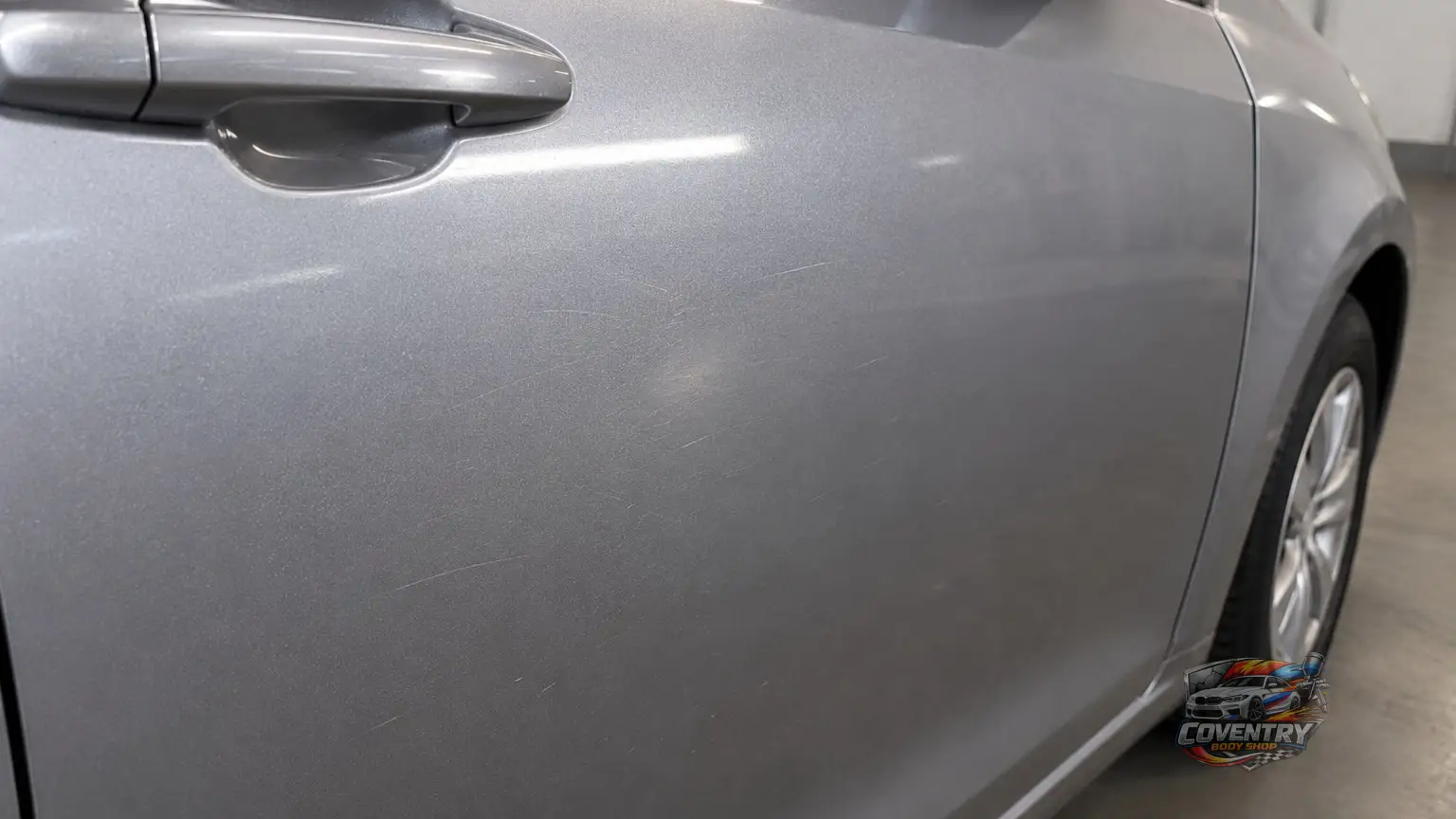
Silver, light grey, champagne, and beige are widely regarded as the best colours to hide scratches because they scatter light and mask shallow scuffs in the clear coat. Mid-tone metallics follow close behind. Deep blacks, bright reds, and dark blues tend to expose every mark because light reflects uniformly off their surfaces, so even a small scuff in a car park shows up clearly under street lighting.
If you're choosing a new car or thinking about a respray, colour choice has a real impact on how often you'll need touch-up work and how visible age-related wear becomes over time. Below I'll walk through which colours perform best, why they work, and what to do when a scratch is too deep for camouflage.
Which car colours are best at hiding scratches?
Light, low-contrast metallic colours are the strongest performers. Silver sits at the top because its metallic flakes scatter light in many directions, which breaks up the straight reflection a scratch normally produces. The same logic applies to champagne, light gold, beige, and most pale greys.
Mid-tone colours do reasonably well too. A medium grey or muted bronze is forgiving for clear-coat scratches and light swirl marks from automatic car washes. What these colours all share is a busy visual texture that distracts the eye from a single bright line of exposed paint.
Solid whites also hide scuffs reasonably well, particularly on the lower doors and bumper edges where shopping trolley dings tend to land. The white shows dust, but shallow scratches sit below the visual threshold most of the time.
Why do dark colours show every scratch?
Dark colours, especially solid black, reflect light as a single clean image across the whole panel. Anything that interrupts that reflection, even a small nick in the lacquer, becomes instantly visible because the scratch catches light differently from the surrounding paint.
Three things make dark paint particularly unforgiving:
- Mirror-like reflections: the eye reads any distortion as damage.
- High contrast: exposed primer or grey undercoat shows white against the dark top coat.
- Swirl marks: fine wash scratches become obvious under direct sunlight or street lighting.
Metallic dark colours perform slightly better than solid dark colours because the flake helps break up the reflection, but they still show more than silver or grey. Deep reds and dark blues sit in the same camp as black for visibility.
Do metallic and pearlescent paints hide scratches better than solid paint?
Yes, in most cases metallic and pearlescent finishes hide minor scratches better than solid finishes of the same colour. The metallic flakes diffuse light across the panel, so a small scuff doesn't produce one clean bright line, it produces a broken, less obvious line.
Pearlescent finishes add another layer of camouflage through colour shift. As the viewing angle changes, the panel appears to change colour, which helps mask uneven surfaces. Solid paint, by contrast, reflects light in a uniform way and shows every imperfection.
There's a trade-off though. Metallics and pearlescents are more expensive to repair because colour matching takes longer and blending into adjacent panels is critical. Our single panel respray in Coventry covers this kind of work, where we blend the new colour into neighbouring panels so the repaired area doesn't read as a patch.
What scratch depths can colour disguise and which need a respray?
Colour choice only helps with the shallowest damage. Here's a practical breakdown of what each level looks like and how to handle it.
- Clear coat scuff: a hazy mark with no colour transfer. Light metallics, silver, and beige hide these well. Often buffable by hand or with a machine polish.
- Colour coat scratch: the scratch shows white because it has cut through the colour layer but not the primer. Visible on all colours, though silver and grey still disguise it more than black or dark blue.
- Primer or metal exposed: bright white or grey shows at the base of the scratch. No colour hides this. Needs filling, primer, base coat, and lacquer.
- Deep gouge with bent metal: needs panel beating or panel replacement before any paintwork. Colour is irrelevant at this stage.
If the scratch catches your fingernail when you run it across, it's through the clear coat and will need more than a polish. For anything below that threshold, good washing and a light machine polish can restore the finish on forgiving colours.
Do matte and satin finishes hide scratches?
Matte and satin paints are a separate category and they don't hide scratches in the same way. They have low reflectivity, so scratches don't reflect light as a bright line, but they also can't be polished out because polishing changes the sheen and leaves a visible glossy patch.
Matte repairs require specialist reapplication of the textured clear coat and are usually more involved than standard gloss repairs. If you own a matte-finished car, scratches tend to be more noticeable in oblique light than in direct light, which is the opposite of gloss paint.
How do bodyshops colour match when scratches need a respray?
Even forgiving colours need accurate matching when the damage goes beyond what polish can fix. Modern colour matching uses the vehicle registration or paint code to look up the manufacturer's formula, then a spectrometer measures the actual panel under different light sources to fine-tune the mix.
We tint by eye against the adjacent panel, then spray test cards until the colour sits right under daylight and under fluorescent workshop lighting. The new paint is applied past the damaged panel and feathered into the area around it, a process called blending, so there's no hard edge between old and new paint. For a closer look at the prep work behind a long-lasting finish, our guide on why proper surface preparation is crucial in auto painting explains the steps that decide whether a respray lasts five years or five months.
On metallic and pearlescent colours, blending is essential. On solid colours, a small repair can sometimes be confined to the damaged panel if the paint is aged and faded evenly across the car.
Can SMART repair fix light scratches without a full respray?
Yes, for localised damage SMART repair (Small to Medium Area Repair Technique) is often the right answer. It's a targeted process that addresses the scuff, scratch, or chip on a single area rather than respraying an entire panel.
SMART works well on bumpers, wing mirrors, door edges, and lower panels where damage is concentrated. It usually costs less than a full panel respray and can be completed in a few hours. The result depends on the damage being contained, the paint code being available, and the surrounding paint being in good condition.
Common mistakes drivers make with scratch repair
A few habits we see regularly make scratches worse or create new visibility problems.
- Using T-Cut or compound too aggressively: it removes clear coat, which thins the protective layer and makes the panel more vulnerable next time.
- Touching up deep scratches with a pen only: this seals the scratch but leaves a visible blob because there's no build-up of colour and lacquer to match the surrounding finish.
- Polishing over stone chips: the chip stays but the surrounding clear coat thins, which can lead to lifting around the chip later.
- Ignoring scratches near plastic trim: trim edges collect damage and moisture, which leads to flaking paint if left.
If a respray is needed, the workmanship matters as much as the colour. Our article on why paint jobs fail covers the most common shortcuts and how to spot them before booking.
Does car colour choice affect insurance or resale value?
Colour doesn't usually affect insurance premiums directly, though some colours are statistically associated with higher claim rates, which insurers may factor in. Resale value is more directly affected. Neutral colours like silver, grey, black, and white hold their value better because they appeal to a wider pool of used car buyers. Bright or unusual colours narrow that pool and can reduce resale value by several hundred to a few thousand pounds depending on the model.
For drivers who plan to keep the car long-term, the daily visibility of scratches may matter more than the eventual resale hit. A silver or grey car is simply easier to live with between washes and polishes.
Scratch repair for drivers in Coventry and the surrounding area
If a scratch has gone beyond what polish can fix and you're weighing repair options, send us clear photos of the damaged panel in daylight, plus the registration so we can pull the paint code. That lets us give a realistic estimate before the car comes in. We handle everything from bumper scuffs to full panel resprays, with blending into adjacent panels so the finish reads as original. We also cover car body repair work in Northampton and the surrounding villages for drivers who'd rather not travel.
Send clear photos for a realistic repair estimate
Choosing a forgiving colour helps with daily wear, but once a scratch has gone into the colour coat or the primer, only proper repair will restore the finish. Send us a few clear photos of the damage along with your vehicle registration and we'll come back with a realistic estimate, paint match plan, and timeline. For single panel work like a bumper, door, or wing, our single panel respray service covers the full process from prep through to lacquer and polish, with blending into the adjacent panels so the finish reads as original.
Leave a Comment
Comments
No comments yet.