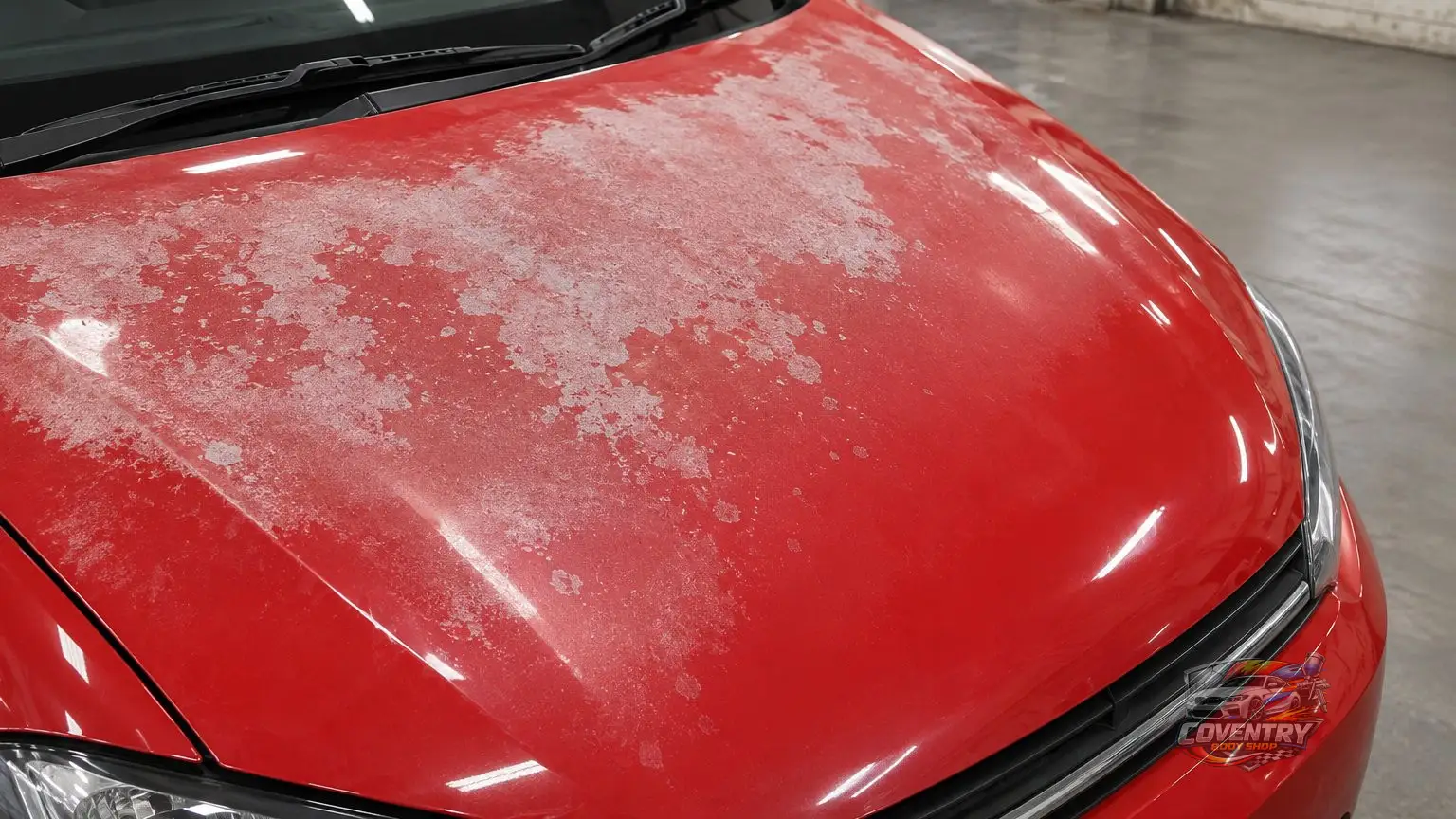
Early sun damage may leave gloss paint dull but suitable for polishing. Chalkiness can be surface oxidation, while cracking or peeling clear coat usually means repainting the affected panel. Surface dullness and faded colour beneath a sound clear coat need different repairs. The paint type and remaining thickness also affect whether polishing is suitable.
Why is the roof more faded than the sides?
Over years, ultraviolet light and heat can break down clear coat and paint binder, the material holding paint together. This can reduce gloss, change the colour and eventually weaken the coating. Accumulated exposure can damage UK cars even without constant hot weather.
Your roof, bonnet and boot lid usually receive more direct sunlight than upright panels, so may deteriorate while doors remain bright. Different exposure and previous repairs can leave panels ageing at different rates.
What should I check before asking for a quote?
Check clean, dry paint in daylight. Dirt and deposits can hide the finish, while reflections obscure haze from some angles. These comparisons help you describe the damage:
- Exposed paint against sheltered paint: Compare an outer panel with a door shut. A stronger colour in the sheltered area can suggest fading outside, although previous repairs may explain the difference.
- Upper panels against the sides: Check whether dullness follows surfaces most exposed to sunlight or appears in isolated patches.
- The centre and edges of each patch: Cloudiness, fine cracks, flakes or lifting edges help distinguish lost shine from coating breakdown.
Check each affected panel separately. Early dullness on one panel and failed clear coat on another may need different repair approaches.
Which signs show how far the damage has gone?
These signs can occur on different paint systems and do not follow a fixed sequence. Appearance alone cannot confirm sun damage: contamination and earlier paint problems can produce similar signs.
The shine has dropped, the colour stays even
Early deterioration can blur reflections without noticeably changing colour. Some dullness may polish back if the coating remains sound, without cracks or lifting edges; dullness alone does not prove repainting is needed. Matte and satin finishes are an exception because polishing can leave shiny patches.
Polishing removes some finish, so enough sound paint must remain. We use a paint depth gauge to help judge whether the dull finish is suitable for machine polishing. The reading gives total coating thickness on a metal panel and cannot establish a safe polishing depth on its own. A standard gauge does not measure clear coat separately, previous repairs can raise readings, and plastic parts need a different measuring method.
The colour looks chalky or washed out
Chalking is a dry, powdery, pale surface layer which can indicate oxidation. On older single-stage paint, the colour and protective finish are in the same layer, without a separate clear coat. Its oxidised surface can often be polished away if enough sound paint remains, with colour showing on the polishing cloth.
If the colour under a sound clear coat has faded, polishing cannot bring it back. It may improve gloss while leaving the washed-out shade unchanged. Restoring that faded colour means repainting. Badly oxidised single-stage paint, or paint too thin to polish safely, may also need refinishing.
Do not test an unknown finish with abrasive polish for colour transfer. Colour on a polishing cloth shows pigmented paint is being removed; on its own it proves neither oxidation nor that more polishing is suitable.
The clear coat is milky, hazy or finely cracked
A cloudy patch can sit within the clear coat rather than on top of it. Fine cracks may resemble a network of tiny lines, especially from different angles. Haze needs inspection because removable deposits can resemble deterioration, but cracking indicates more than lost shine.
Polishing cannot rebuild failed clear coat. Where the clear coat has failed, the affected panel needs refinishing, which may mean repainting a single panel when surrounding paint remains sound. The visible patch may not reveal the weakened coating's full extent.
Flakes or peeling edges are appearing
Flaking or peeling means the coating is separating. You may see irregular islands of clear coat, with a duller area exposed between them. Polishing cannot reattach those edges, and picking at them can enlarge the damaged patch.
If most panels have failed, a full body respray may be appropriate. The decision depends on condition across the car, rather than the worst patch's size. For the next stage, read how sun-damaged paint is repaired.
Could a repainted panel stand out beside faded paint?
Yes. Repair colour is matched to your car, but neighbouring panels may have faded unevenly. Fresh paint's different colour depth and gloss can remain visible beside ageing paint even after careful matching.
Blending colour into an adjoining panel can soften a colour difference, but cannot fix a neighbouring panel whose clear coat is failing; that panel needs refinishing too, which can enlarge the repair area. Before agreeing the repair area, ask which neighbouring panels remain sound and what differences may still be visible.
How can I slow further damage while the paint is sound?
Regular washing and gentle drying help remove contamination that can add to surface deterioration. Paint protection can help maintain sound paint, but products must suit the finish; matte and satin paint need products made for them. Shade reduces sunlight and heat exposure. Protection cannot replace missing clear coat or reverse faded pigment. Have cracked or peeling paint checked before applying more protection.
How can I get the damage assessed?
We recommend sending photos of the faded or peeling paint by WhatsApp on +44 7903 105777 or the Send enquiry button to help avoid a wasted trip for work we do not take on. After booking, we advise everyone to bring the car to Coventry Body Shop in Wyken, Coventry so we can inspect the paint in person.
For polishing prices, see our scratch removal and machine polishing page. The final price is set after inspection, and no deposit is needed.
Leave a Comment
Comments
No comments yet.