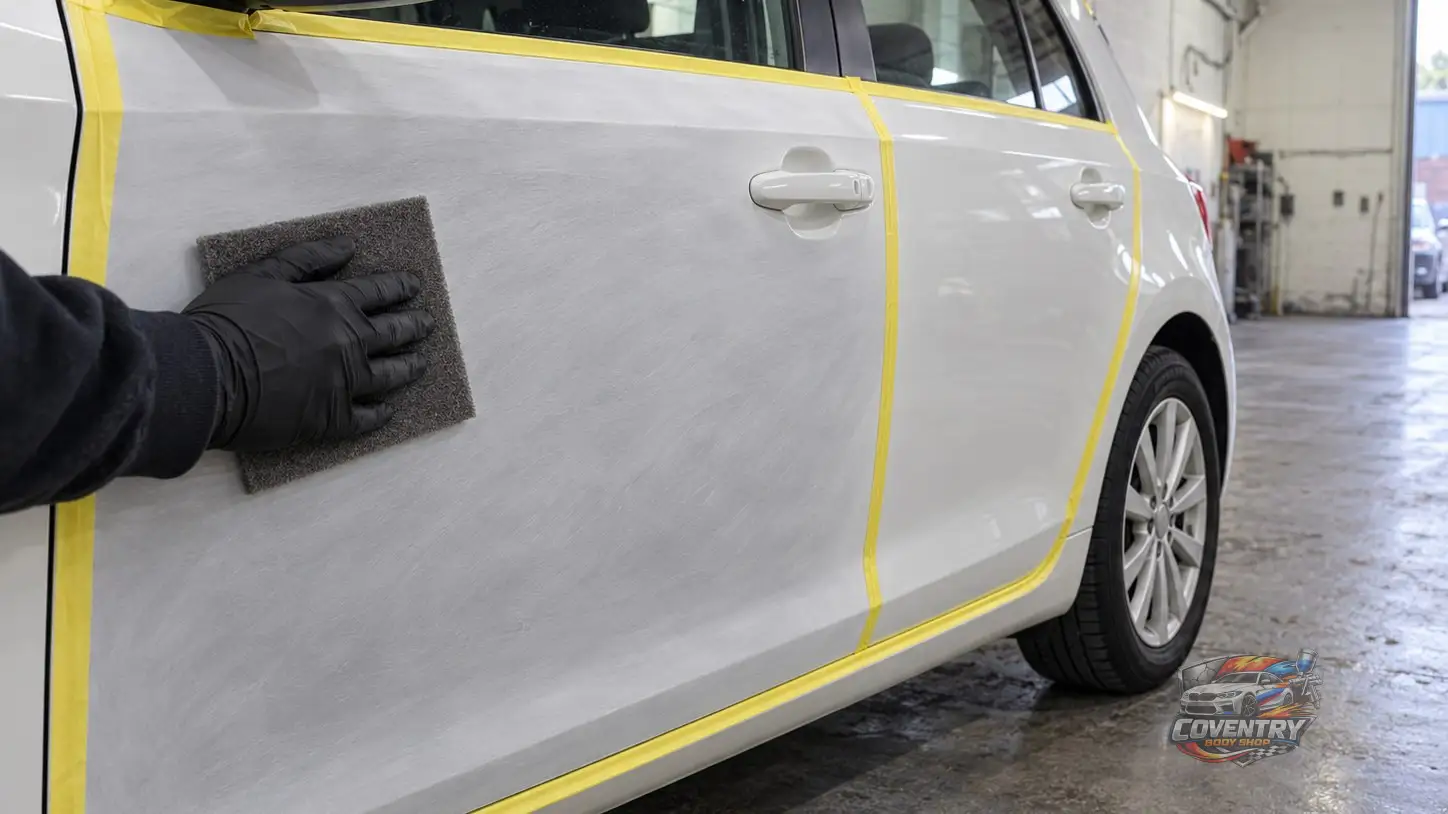
Yes, new paint can usually go over your car's existing paint if the old finish is sound, firmly attached and compatible with the new paint. It is cleaned, degreased and sanded to give the new coats grip, with any damage repaired first. Failed paint is taken back to a sound layer, which is not always bare metal; too thick a build-up of old coats or a coating that reacts with new paint can also need removing.
Can you paint straight over clear coat?
Clear coat, also called lacquer, is the transparent outer layer on many cars. Sound clear coat can usually remain beneath new paint, but it needs cleaning and sanding first. Spraying directly onto a glossy, untreated surface can leave the new coating with poor grip.
The distinction is between removing the shine and removing the entire finish. Sanding can create a suitable surface while keeping the firmly attached layers underneath. Clear coat that is peeling or separating from the colour below cannot provide that base.
After repairs, suitable primer is applied to bare or filled areas. Depending on the existing finish and the products being used, other areas may also need primer or a sealing layer. Colour and clear coat usually follow, although some finishes use a colour coat without separate lacquer.
Which old paint needs removing before a respray?
A fresh coating relies on the layers beneath it staying attached. If those layers are already breaking down, covering them can leave the same weakness beneath the new finish.
These signs need attention before repainting:
- Peeling or flaking: Loose paint needs removing until the remaining edges and underlying coating are firmly attached.
- Cracking: Cracks can extend through several layers, so sanding just the surface may leave the fault underneath.
- Blistering: Bubbles need investigating because moisture, corrosion or a problem between coatings can be involved.
- Rust: Corrosion needs assessing and addressing before new paint is applied. Covering it does not make the metal sound.
A local defect may need a local repair, while widespread failure can require much more removal. If corrosion is involved, our explanation of painting over rust on a car covers that separate repair decision.
Why did the new paint wrinkle over the old paint?
Wrinkling or lifting can happen when solvents in a fresh coating soften an older layer. An incompatible previous repair, paint that has not cured sufficiently, or too little drying time between coats can contribute. The surface may pucker even though it looked smooth before spraying.
Do not apply more paint over a layer that is lifting or wrinkling. The affected coating needs assessing and taking back to a stable base. A suitable sealing product may be part of the repair where the paint system allows it, but it cannot hold loose or failing paint together.
If your car has had an aerosol repair or a previous repaint, mention it when asking for an estimate. Knowing what was applied, if you have that information, can help assess compatibility. Appearance alone cannot establish whether an unknown old repair will accept new paint.
Can a panel have too much old paint on it?
Yes. Repeated repairs can leave a thick build-up, even when the visible surface still looks reasonably tidy. Excessive thickness can contribute to cracking or chipping and may be a reason to take the panel back further.
We use a paint depth gauge to assess how much coating has built up. Readings help assess the build-up on suitable panels, but they do not identify every layer or prove that the coatings are firmly attached. The panel material and the gauge's capabilities also affect what can be measured.
There is no useful rule that every car must be stripped after a set number of resprays. The condition, thickness and compatibility of the existing layers matter more than a simple count of previous paint jobs.
What about stickers, wax and silicone?
Stickers, vinyl lettering and adhesive residue need removing from the area being repainted. Painting over them can leave visible edges and makes the new finish dependent on the material underneath staying attached.
Wax and silicone contamination can cause small craters as wet paint pulls away from contaminated spots. These are sometimes called fisheyes. They are different from wrinkling, so the cause needs identifying before the affected finish is repaired. Contamination is cleaned off before sanding so sanding does not spread it. Sanding dust is then removed and the surface cleaned again as the paint system requires before coating.
Tell us about any protective coating or recent polishing treatment you know about. Avoid adding polish to disguise a defect before assessment, as it can make the surface harder to judge and adds material that needs removing.
Does changing colour mean stripping the original paint?
A different colour can usually go over a sound existing finish. The colour change itself does not normally require bare metal. However, the areas included in the job need agreeing before work starts.
Door shuts, areas under the bonnet and boot edges can show the old colour unless they are painted too. When discussing a full body respray, specify whether you want those less visible areas included. An exterior repaint and a colour change covering those areas involve different amounts of work.
Tell the DVLA about a colour change and check what your insurer needs. Cover depends on your policy. Read the rules on changing your car's colour before arranging the work.
If you are keeping the colour and the problem is limited to one panel, ask about repainting a single panel. Sound paint elsewhere does not automatically need replacing because one area has failed.
What should you send for a repaint estimate?
Tell us about any previous repairs or planned colour change. After booking, we advise you to bring the car in so we can see the existing finish in person.
We will tell you what the repair involves at our workshop in Wyken, Coventry. The final price is set after inspection, and no deposit is needed. For prices, see our full respray service page.
Leave a Comment
Comments
No comments yet.