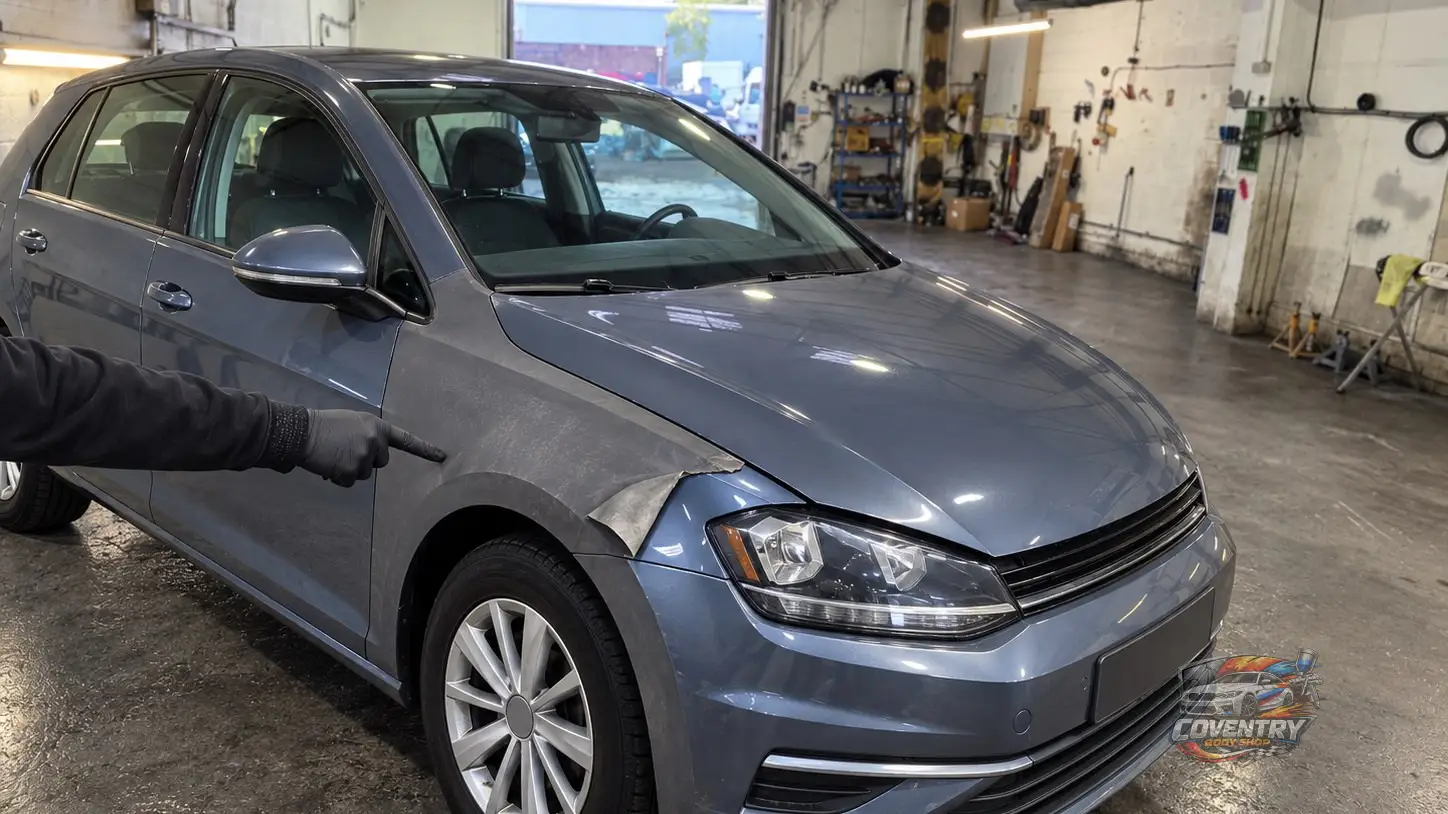
Choose paint for a permanent finish; have damaged paint assessed first, as some light marks polish out while deeper damage needs repair and repainting. Choose a wrap if the existing paint is sound and you want a removable colour change or effects such as brushed or carbon-look film that are hard to achieve with ordinary car paint. A wrap is film laid over the paint, so it cannot repair chips, scratches, dents or rust.
Are you changing the look or fixing the finish?
If you like your car's colour but dislike its damaged paintwork, start with the repair needed. Depending on the damage, a local repair may be enough.
Look at a physical sample in daylight, particularly if you are considering a textured finish.
For prices to renew the paintwork across your car or change its colour permanently, see our full body respray page. The final price is set after inspection and depends on the paint chosen and the work needed. Compare quotes covering the same surfaces and preparation, and allow for eventual wrap removal or replacement. Our full resprays take 3 to 7 days, depending on the work needed. Ask the wrap installer how long fitting and removal take.
Can you wrap a car with damaged paint?
A wrap needs a smooth, stable painted surface. Film follows the shape beneath it, so dents, chip edges and deeper scratches can remain visible. Peeling lacquer, which is the clear top layer on many cars, also gives the adhesive an unreliable surface.
Rust needs assessment and repair before any covering is considered. Film does not stop corrosion or replace the preparation needed to protect exposed metal. Putting it over bubbling paint can conceal deterioration without dealing with its cause.
If the damage is limited to one area, repainting a single panel may provide the repair needed before wrapping. Tell the painter that film is planned, and ask the wrap installer what surface condition they require.
A rushed home repair can leave raised edges or paint that is poorly bonded. Our guide to DIY versus professional paint explains the preparation issues to consider before attempting that work yourself.
Could removing a wrap damage the paint?
A suitable wrap can usually be removed from sound paint, but removal is not a guarantee that the surface will remain unchanged. Weak paint or a poorly bonded previous repair can lift with the adhesive. The condition of the film and the removal method also matter.
Previously repainted panels are not automatically unsuitable for wrapping. The repair needs to be sound and compatible with the intended film. Fresh paint must cure according to the paint manufacturer's instructions before wrapping, which may mean waiting after the workshop finishes. Share any repair history with the installer before fitting, including areas where lacquer has peeled or paint has flaked.
If you do not know whether a panel has been repaired, say so. An assessment may help identify concerns, although appearance alone cannot establish how firmly every paint layer is bonded.
How long will a wrap last compared with paint?
Paint life depends on the quality of the work and how it is cared for. It can still chip, scratch or fade, and a poor underlying repair can shorten its useful life.
Film life depends on the film itself, the fitting and exposure to sunlight and weather. Check the chosen finish's published durability for horizontal and vertical panels, and read the warranty separately. A durability rating does not guarantee the lifespan of a whole-car wrap. Film on the bonnet, roof and boot faces the most sun, especially when your car is parked outside.
Ask the installer what deterioration to watch for and when removal should be considered. Cracking, brittleness or lifting edges call for advice. Leaving ageing film in place indefinitely can make eventual removal more difficult.
Will washing and polishing need to change?
For either finish, regular gentle washing helps remove dirt before it becomes difficult to shift. Rinse away grit before touching the surface, use clean washing materials and deal with bird droppings promptly. Avoid scrubbing stubborn marks with an abrasive pad.
With a wrap, follow the care instructions for the particular film. Do not use abrasive polish on most films, and do not assume that a product intended for glossy paint is suitable for vinyl. Matte and textured films can develop unwanted shiny patches if treated incorrectly.
Gloss paint may be suitable for polishing when its condition and thickness allow it. Abrasive polishing removes a small amount of the surface, so it is not routine treatment for every mark. Fresh paint also needs its own aftercare advice before polishing or applying protective products.
Which areas should you cover, and what about resale?
Decide which surfaces you want covered. Door shuts, panel edges and areas beneath opening panels may retain the previous colour unless they are included in the work. Discuss those details before choosing either finish, especially when the old and new colours differ strongly.
A wrap offers the possibility of returning to the paint underneath. A painted colour change cannot be peeled away; returning to the earlier colour would require repainting. For resale, neither choice guarantees a higher value. Keep a record of the original condition and any repairs so you can explain what has changed.
Who should you tell about a colour change?
Tell the DVLA about a colour change and check what your insurer needs. Cover depends on your policy. Read the rules on changing your car's colour before arranging the work.
What should you send if the paint needs repairing first?
For peeling or damaged paint, we advise sending photos by WhatsApp on +44 7903 105777 or the Send enquiry button before travelling to our Wyken, Coventry workshop. They can save a wasted trip if we cannot take on the repair.
Include your car's make and model, any known previous repairs and whether you plan to have it wrapped. After booking, we advise everyone to bring the car in so we can inspect it in person. No deposit is needed.
Leave a Comment
Comments
No comments yet.