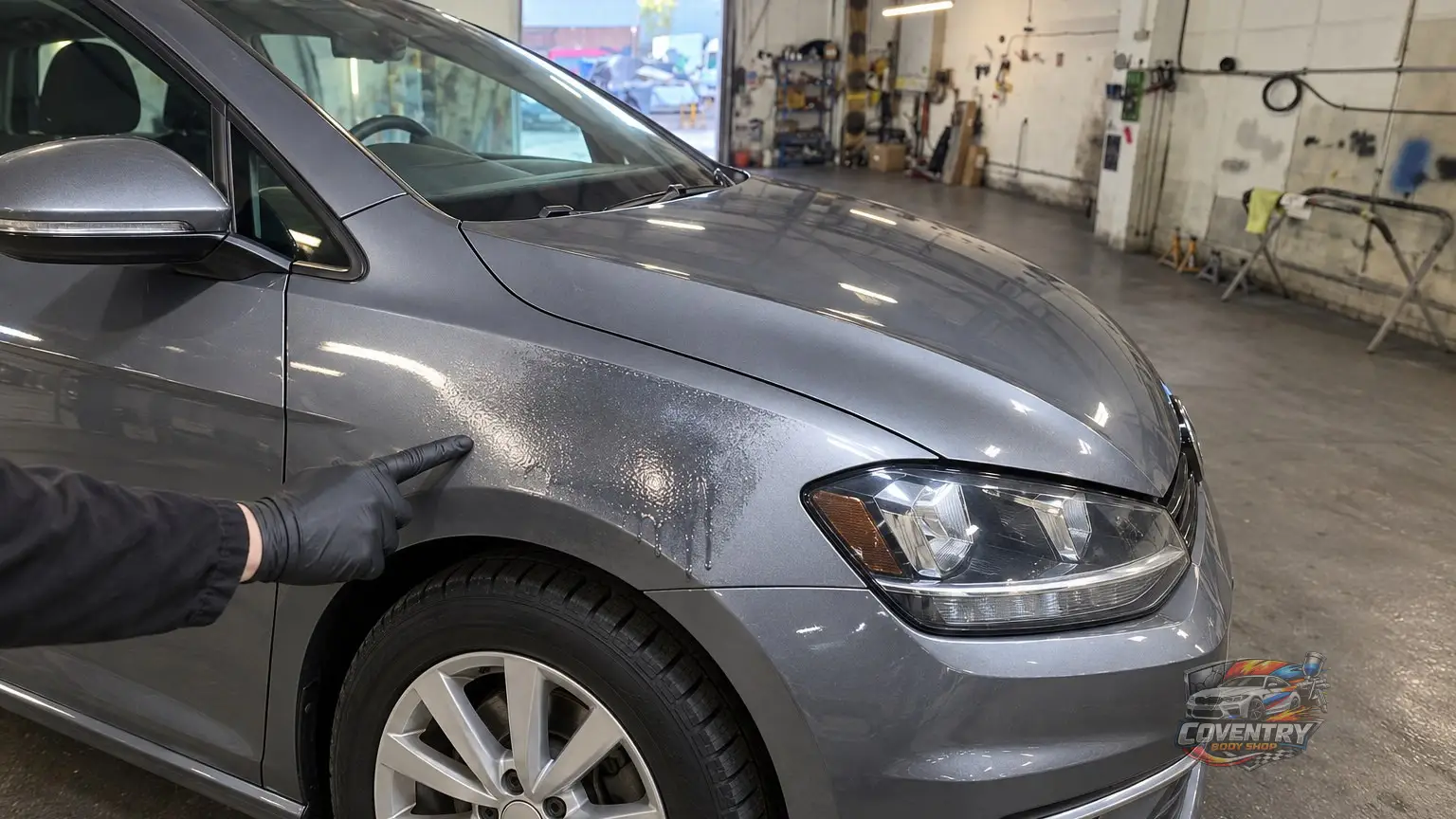
Understanding the Basics of Car Paintwork
Painting a car yourself and paying a bodyshop can give quite different results, and knowing how car paint works makes the choice easier.
Car paint protects the panel underneath as well as giving the car its colour, and a typical system has a primer to help the paint grip, a base coat for the colour and a clear coat on top for gloss.
Paintwork is judged first on how it looks and matches, then on how well it lasts. A bodyshop will usually spray trade paint in a booth, and the booth is the part that is hard to copy at home. Before you book, ask how the repair will be prepared and checked, and what the guarantee covers.
Without a booth, dust can settle in the wet paint, and even coats are harder to lay down. Skills such as blending also take a long time to learn.
The Cost Factor: DIY vs Professional Car Paint
Cost is often why people try it themselves. DIY looks cheaper at first, but the bill grows quickly if a mistake means sanding back and starting again.
A bodyshop's price depends on how much work the car needs and which paint is used. A Full Body Respray usually costs more than doing it yourself, but bodyshop work normally comes with a guarantee, which a home job does not. Ours covers workmanship for 6 months from collection.
Doing a full panel properly at home may mean buying or hiring a spray gun and compressor, and needing to redo the work adds to that cost.
A bodyshop already has the equipment and buys trade materials, so if a DIY job has to be redone, it can end up costing more than paying a bodyshop at the start.
Quality and Durability: What to Expect
The difference often grows with time. In a trade paint system, the primer, base coat and clear coat are made to work together.
In a professional setting, the paint is applied with spray equipment in an enclosed spray booth, which helps keep dust off the wet paint and gives a cleaner, more even finish. Each coat is given the drying time the paint maker sets before the next goes on, and the finished paint is then left to cure.
A driveway or home garage gives far less control. Dust and insects can settle in wet paint, and a coat that has not cured properly can fail early.
If only one panel is damaged, see our Car Body Paint (Single Panel) service.
Technical Aspects of Paint Application
Much of a good paint job happens before any colour goes on.
Preparation means cleaning and sanding the surface so the paint can grip. It is easy to rush at home, and paint that has not gripped often peels later.
Primer gives the paint a smooth base and, on bare metal, helps protect against corrosion, and the base coat and clear coat then go on over it in thin, even layers.
Blending new paint into the old finish is one of the hardest parts to get right at home.
Light scratches that have not gone through the clear coat can often be polished out, which is the job of our Scratch Removal & Machine Polish service.
Colour Matching and Blending Techniques
Colour matching is hardest on a partial respray or a repair, where new paint sits next to old. A bodyshop mixes the paint to the manufacturer's paint code and can check the mix against the car with a spectrophotometer.
Blending fades the new paint into the existing finish so the edge is hard to see, and it takes a practised hand.
At home, a shop-bought colour can look right in the tin and wrong on the car. A slight difference can show in daylight.
For small dents and scratches, our Smart Repair (Minor Dents & Scratches) service is meant for small, localised damage.
Safety and Environmental Considerations
Paint fumes are harmful to breathe, which is one reason paint is sprayed in a booth, where extraction draws the fumes and overspray away from the painter.
Two-pack lacquers often contain isocyanates, which should only be sprayed with air-fed breathing equipment, so spraying them at home without it puts you, and anyone nearby, at risk.
Some trade paint systems are also lower in VOCs (volatile organic compounds), so they give off fewer solvent fumes.
Insurance and Warranty Considerations
Insurance and warranty both come into the decision. If the damage is part of an insurance claim, ask the bodyshop for a written estimate and photographs you can send to your insurer.
After an accident, it is also worth asking whether the repair will follow the vehicle maker's repair methods, and check what your insurer needs before any work starts. Following the maker's methods can matter for the vehicle's warranty and its resale value.
If you repair the damage yourself first, it can be harder to show the insurer what it was, so if a claim is likely, speak to your insurer before doing any work.
If the damage is to a bumper, see our Bumper Repair service.
Making the Right Choice for Your Vehicle
Which way to go comes down to your budget and the finish you need. A DIY job can be fine on an older car, but small flaws are hard to hide on a bonnet or a door.
If the paint has to last and match the rest of the car, a bodyshop is usually the better option, for a full respray or a small touch-up.
If you would like a written, itemised estimate, contact us.
Leave a Comment
Comments
No comments yet.