Painted or vinyl racing stripes: the short answer
A painted stripe becomes part of the paintwork. It is masked out on the car, sprayed and lacquered, and after that it is washed like the rest of the body. A vinyl stripe is a film laid over the paint you already have. It usually costs less to fit and can come off again, but it sits on the surface and tends to wear out sooner.
Which one suits you comes down to how long you plan to keep the stripes and the condition of the paint underneath. Chips or scratches under a stripe can still show, so have them checked by a bodyshop before anything goes on.
How painted stripes are done
A painted stripe is spray work, usually done in much the same way as a panel repaint. Much of the time goes into preparation and masking rather than the spraying itself.
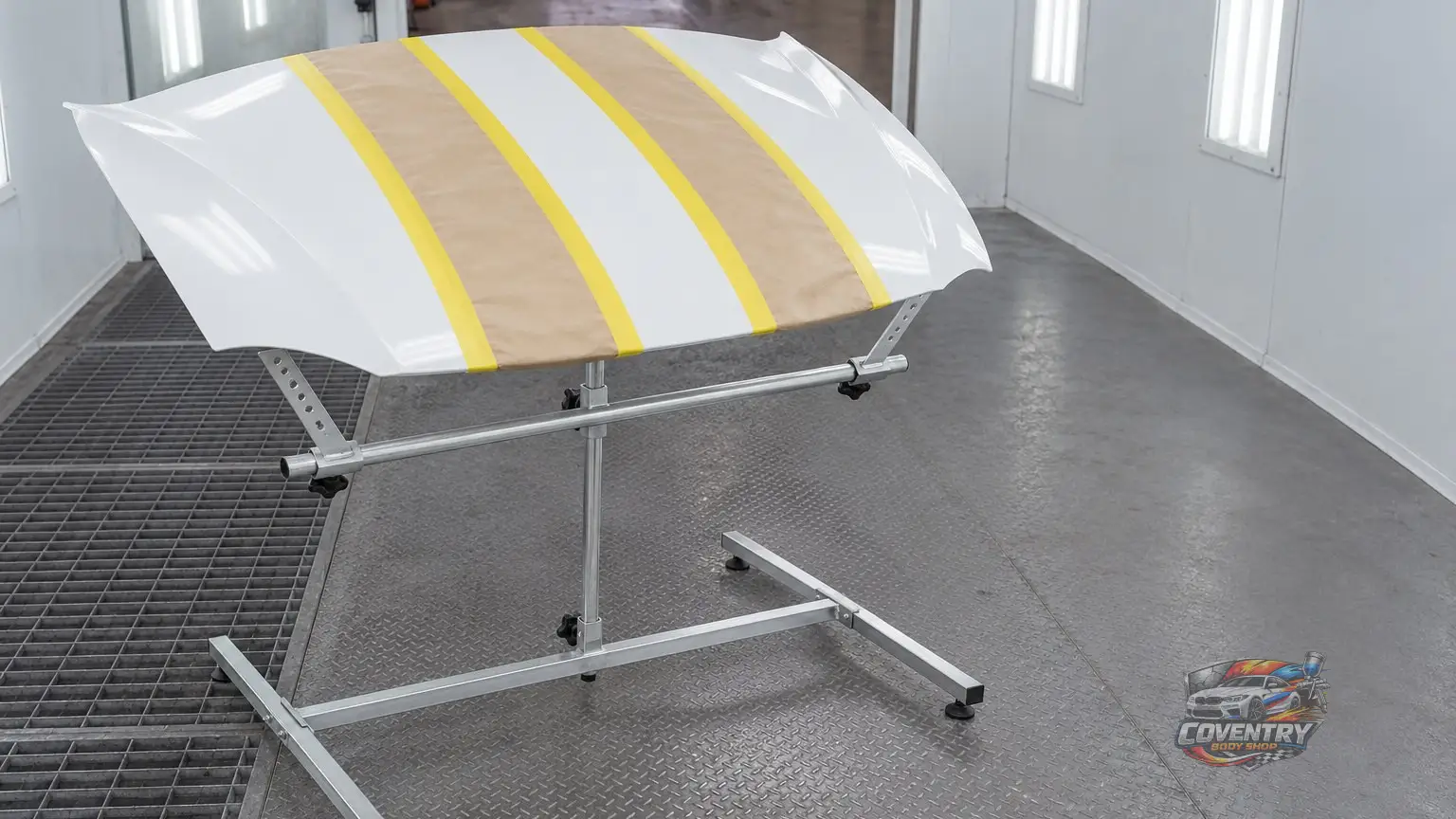
The panels are cleaned and degreased first, because wax or silicone left on the surface can cause fisheyes and poor adhesion. Next, the area that will take new paint and lacquer is keyed with a fine abrasive. After that, the stripe lines are measured and masked, for example along the bonnet and over the roof to the boot. On a long stripe, a line that starts slightly off-angle at the front ends up further out by the rear, so the masking is checked from several angles before any paint goes on.
Before spraying, the work usually covers:
- Checking the panels for old repairs, chips or other damage that should be put right first.
- Keying the surface that will be painted and lacquered.
- Masking clean, straight edges and protecting the rest of the car from overspray.
A stripe colour can be mixed from a manufacturer's paint code or made up as a custom shade. For a tone-on-tone look, the stripe is usually a shade lighter or darker than the body. The base colour goes on in thin coats, with time between coats for each one to flash off. On a gloss finish, lacquer then goes over the stripe, often across the whole panel, which helps keep the edge low. The paint is left to cure as the paint maker's instructions say.
A sheen contrast works differently. A gloss lacquer across the whole panel leaves both the stripe and the body gloss, so a satin or matte stripe on a gloss car needs its own satin or matte finish on the stripe area.
The lacquer over the stripe protects it from sunlight and washing, as it does the rest of the paint. Fuel splashes should still be wiped off soon, as on any paintwork. For more on choosing gloss, satin or metallic paint, see our guide on how to choose the right paint finish for your car.
How vinyl stripes are fitted
Vinyl is a printed or coloured film with an adhesive back. It goes on top of the existing lacquer and does not become part of the paint. Film comes in gloss and matte, with satin and metallic options as well, and it is quicker to fit than paint because there is no sanding, priming or spraying.
A typical fit involves:
- Deep cleaning the panels and removing tar and fallout so the adhesive sticks.
- Laying the film out and lining it up before it is pressed down.
- Warming the film so it follows curves, then pushing out air with a squeegee.
- Trimming the ends and folding them around panel edges where possible.
If you change your mind, vinyl can usually be peeled off without repainting, provided the paint underneath is sound. Removal is not always clean. Adhesive can be left behind, and the paint under the film may have faded less than the paint around it, which can leave a faint outline. On older or resprayed paint, the adhesive can sometimes lift weak paint as the film comes away.
What each option costs
Painted stripes usually cost more, mostly because of the labour. Preparation and masking can take several hours on a large car, and the booth time and materials come on top, along with the time the paint needs to cure. Two stripes running the length of the car take far more masking than a single stripe on the bonnet.
Fitting vinyl is usually cheaper, because there is no spraying and no curing time. The price of the film depends on its grade and finish, and lower-grade film can fade or shrink sooner.
Think about how long you will keep the car. A vinyl stripe that has faded may need peeling off and replacing, while a well prepared painted stripe under good lacquer tends to last longer. A painter will normally want to see the car before pricing painted stripes, since the size of the car, the number of stripes and the state of the paint all change the time involved.
How long each one lasts
Once a painted stripe is lacquered and cured, it copes with washing and road dirt like the rest of the paintwork. On a gloss finish, light swirls can be machine polished out with the panel, bearing in mind that each polish takes off a little lacquer. Matte and satin stripes should not be machine polished, because polishing changes the sheen.
Film is more exposed. Strong sun can fade it, and pressure washers aimed at the edges can lift it. Winter salt and grit also wear the surface. Edges often go first, curling at the front of the bonnet or around the boot lip. A painted stripe that picks up a stone chip can be touched in or repainted like any other paint, with the colour mixed to match the stripe as closely as possible, although a touched-in chip can still be seen close up.
For a car that lives outside all year or covers a lot of motorway miles, a painted stripe often keeps its looks for longer, though a good film that is well fitted and cared for can also last.
How each one looks
A gloss painted stripe usually sits under the same lacquer as the body. A metallic or pearl stripe catches the light much as the body colour does, and the join between stripe and body can be made hard to feel. Paint also gives you a choice of:
- Any colour that can be mixed, including a shade lighter or darker than the body for a subtle stripe.
- Metallic or pearl effects to sit with the rest of the car.
Vinyl can look sharp, especially in matte or satin on a gloss car, and it gives you finishes that are hard to spray. Up close, though, you can usually see and feel the edge of the film, because it sits on top of the paint rather than under the lacquer.
Looking after them
Once fully cured, painted stripes are cared for like the rest of the paintwork. On gloss paint, wash with a pH-neutral shampoo and add wax or a sealant now and then. Matte or satin stripes need products made for matte finishes, as ordinary wax can add shine. Go easy with abrasive polishes, which remove a little lacquer each time.
A vinyl stripe needs a gentler touch. Avoid strong solvents, do not machine polish it, and follow the film maker's care instructions. Keep the pressure washer lance away from the edges, and check them every few weeks so a lifting corner can be dealt with before dirt gets under it.
On both, wash off bird droppings and tree sap soon after they land. Left for days in summer, they can etch lacquer and stain vinyl film.
Which to choose
Painted stripes suit you if you want them to stay for as long as you own the car and to look like part of the paint. Vinyl is the better fit when cost now matters more, or when you may want a different look later.
If the car is leased, vinyl is often easier to undo than paint. Check the lease terms before any change, vinyl included, as some agreements restrict graphics, and the paint under a film still has to be in good condition on return.
Stripes draw the eye to the panel, so chips, scratches or a dull patch next to a stripe can stand out more than before. Get those repaired before a stripe goes on. If the paint is tired across the whole car, a stripe will not hide that, and a full body respray may be the better place to start.
Next steps
To have chips or scratches checked, or to ask about a respray, call or WhatsApp +44 7903 105777, send photographs with the Send enquiry button, or use our contact form.
Leave a Comment
Comments
No comments yet.