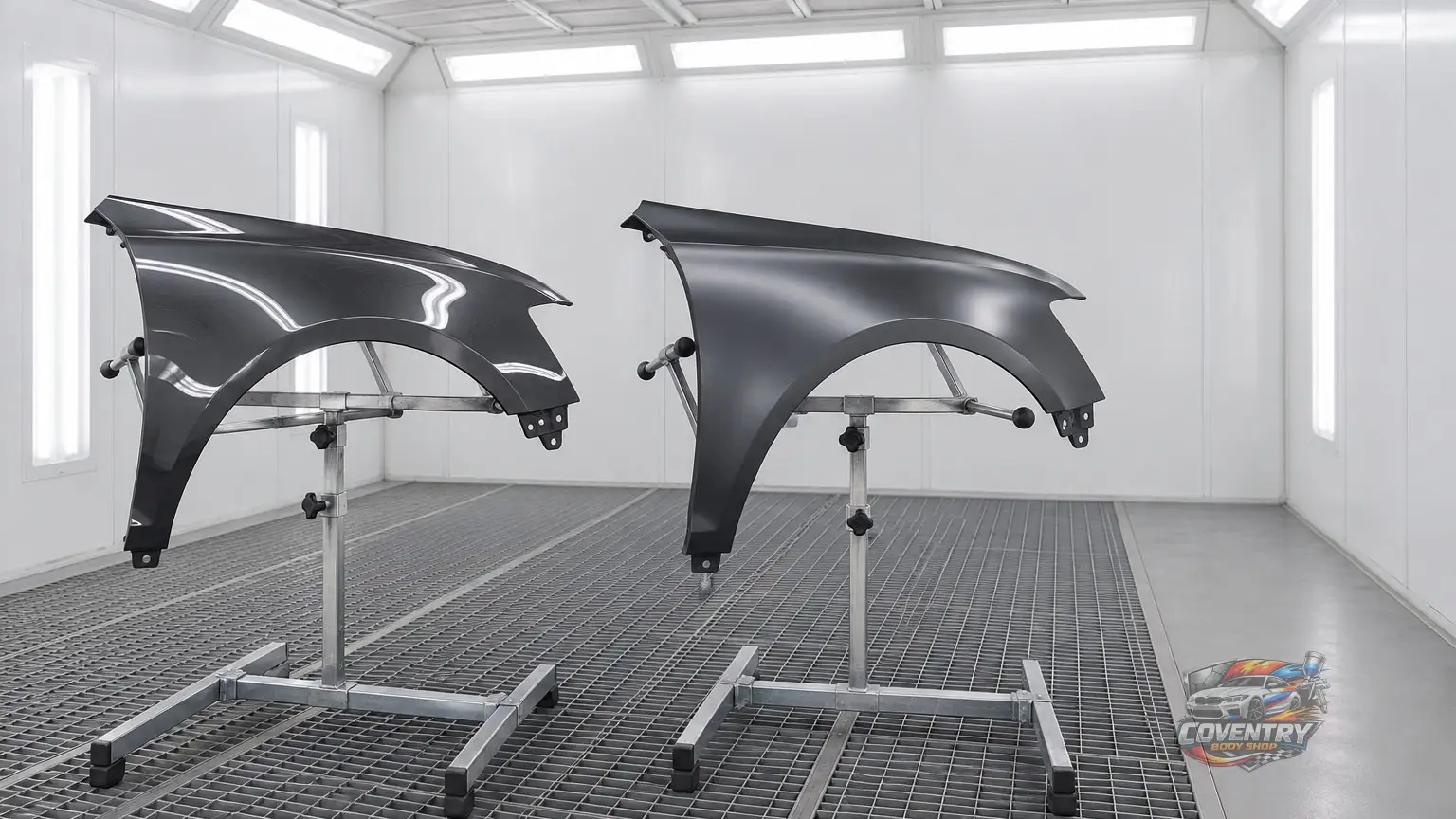
Understanding the Basics of Car Paint Finishes
The paint finish you choose changes how the car looks, and it also affects how the paint wears and how easy it is to repair.
The common choices are below. Matte describes the sheen rather than the colour effect, so a metallic paint can also be matte.
- Solid Paint: This is a plain colour, usually with a clear coat on top for protection. It generally costs less than the other finishes and is the simplest to apply and repair.
- Metallic Paint: Tiny metal flakes in the paint catch the light and give it a sparkle. Metallic paint can be harder to match and repair than a solid colour.
- Pearlescent Paint: Pearl pigments, often made with mica, give a deeper colour and a sheen that shifts with the light. It often costs more and needs a skilled painter.
- Matte Paint: This is a flat finish with no shine, and it needs special care when washing to keep its look.
If you plan to keep the car for years, think about how easily the finish can be looked after and repaired, as well as how it looks.
Preparation: The Foundation of a Perfect Finish
A lot of the work happens before any colour goes on.
The car is cleaned to remove dirt and grease, and the existing paint is sanded smooth. Dents and deep scratches are repaired and filled before any primer goes on. If the damage is small and you only want it put right, a SMART repair or, for some dents, paintless dent repair may be enough without repainting.
Primer then goes on the bare or repaired areas to help the paint bond, and it is given the drying time the paint maker sets.
Any flaw left in the surface at this point will show through the paint, so the surface has to be checked first.
Choosing the Right Paint System
Paint systems differ in durability and price, so ask the bodyshop which one it would use on your car and why.
Many modern cars leave the factory with a two-stage finish: a base coat for the colour and a clear coat over it for gloss and protection. A repaint follows the finish the car was built with, using the vehicle maker's methods.
Some colours, often pearlescent ones, use a three-stage system with an extra effect coat between the colour and the clear coat. They give more depth but take longer to apply and match, so they cost more.
We mix paint to the manufacturer's paint code and check the colour with a spectrophotometer, as one code can cover slightly different shades and older paint may have faded.
Application Techniques: Ensuring a Flawless Finish
We spray all paintwork in our spray booth, which helps keep dust and dirt off the wet paint.
The colour goes on in layers, following the paint maker's instructions for each coat. Once the base coat has flashed off, the clear coat goes on to protect the colour and give it gloss.
When only part of the car is repainted, as with a panel dent repair and respray, the new colour may be blended into the panels next to it so the join is harder to see.
Curing and Finishing: The Final Steps
The finished paint then needs time to harden before the car goes back on the road, and it keeps curing for a while after that, so it marks more easily at first.
When you collect the car, look at the new paint in daylight and check that it is smooth and even.
Ask how long to wait before the new paint is waxed or sealed.
Maintaining Your Car's New Paint Finish
Once it has cured, regular washing and waxing help protect gloss paint from the weather. Matte paint is different: wax and polish can leave it shiny in patches, so use products made for matte finishes.
Deal with chips early, before water gets under the paint. On gloss paint, light surface scratches can often be taken out with scratch removal and machine polish.
A ceramic coating or paint protection film adds a further layer of protection.
Cost Considerations and Budgeting
The price depends on the paint, how complex the job is and the size of the car, so ask for a breakdown of what you are paying for.
Our full body respray starts from £1,495 plus VAT (£1,794 including VAT). The final price is set after an inspection and depends on the paint chosen and the work the car needs. Tell the bodyshop your budget, and ask what can and cannot be done within it.
If the work follows an accident, your insurer may cover some or all of it. Ask your insurer what the claim involves, which documents it needs and who will settle the repair bill.
Conclusion: Making the Right Choice
If low running costs matter most, a solid colour is the simplest to look after and repair. A pearlescent or matte finish costs more and needs more care, so it suits an owner who is happy to give it that.
If you are thinking about a new finish, contact our Coventry workshop for a written, itemised estimate.
Leave a Comment
Comments
No comments yet.