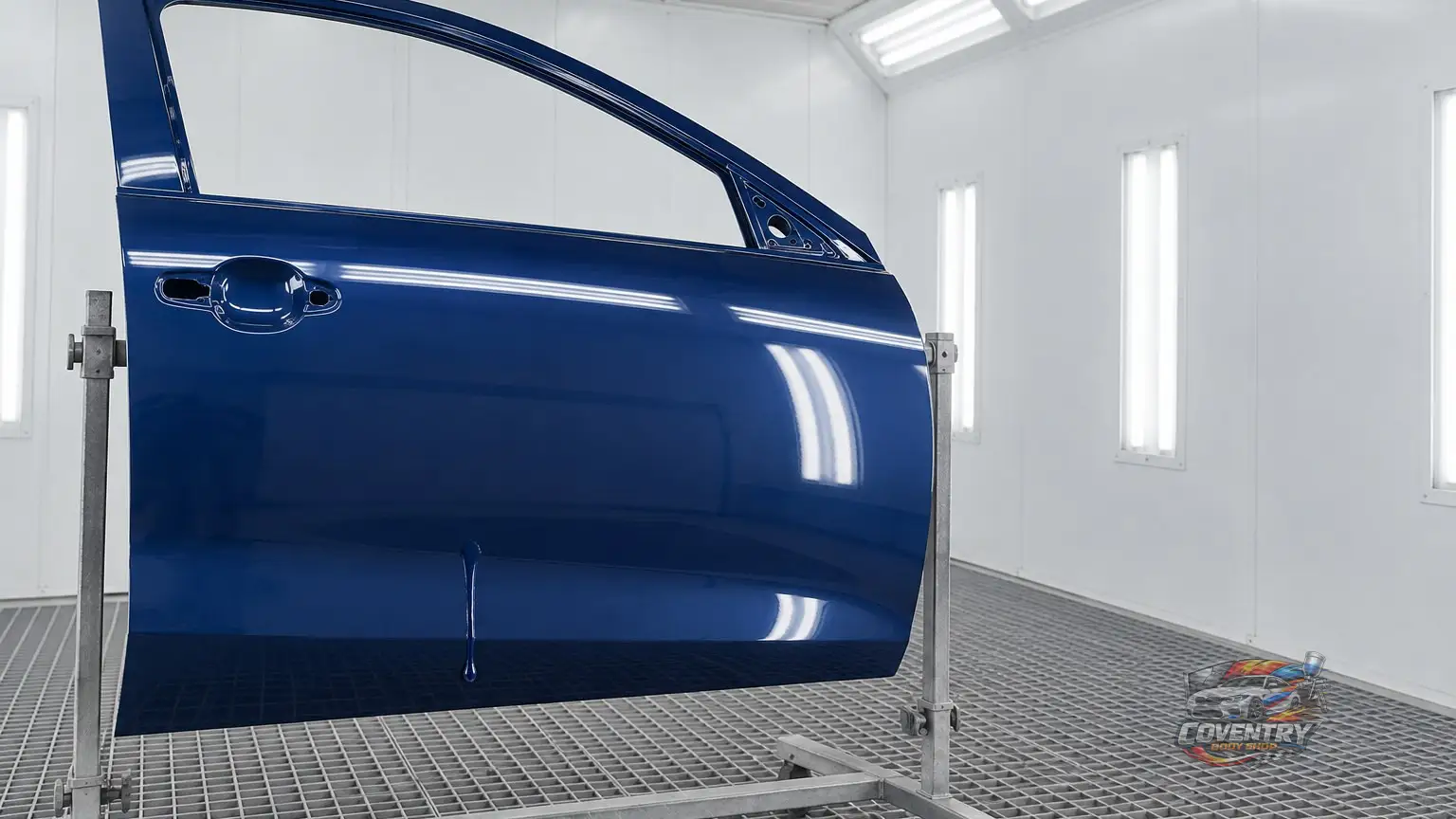
On a gloss finish, a paint run or drip can often be corrected by carefully levelling the raised clear coat, then polishing it, provided enough clear coat remains afterwards to protect the colour beneath. A run in the basecoat beneath clear coat, or one that would leave too little protective clear coat after levelling, usually needs repainting. Levelling and polishing must wait until the paint has fully hardened.
What does a paint run look like?
A run is paint or clear coat that sagged before it set, usually because a coat was applied too heavily or too wet. It can look like a narrow raised trail, a hanging droplet or a thicker curtain of paint. You may notice it most clearly when a reflection bends around the raised area.
Clear coat is the transparent protective layer over the colour on many cars. A run can sit entirely within that layer, or the colour beneath it may have sagged. The shape alone does not reliably tell you which layer needs attention.
With single stage paint, there is no separate clear coat above the colour, so a run in the colour itself may be levelled if enough paint remains; otherwise, it needs repainting.
A distinct drip differs from the widespread dimpled surface described as orange peel texture. Both can appear on the same panel, but assessing a run means looking at the individual ridge and the paint immediately around it.
When is the paint ready for correction?
Leave a run alone while the paint is soft. Paint that feels dry on the surface may still be soft underneath, particularly where a drip has left a thicker build-up. Pressing it with a fingernail to check can leave another mark.
There is no single waiting period that suits every paint system, coat thickness and curing condition. For a recent respray, ask the workshop that applied the paint which system was used and whether the run is ready for correction.
Trying to flatten soft paint can drag or tear it rather than remove it cleanly. A hardened run will not flatten itself with further time.
Can you sand out a run in clear coat?
Inspection determines whether a clear coat run is suitable for levelling. We use a paint depth gauge to help assess the coating around a run. The surrounding finish matters as well as the raised drip, because correction can remove material from both.
A gauge reading needs careful interpretation. Many gauges measure the total coating thickness over metal, rather than the clear coat separately. A high reading therefore does not prove that there is plenty of clear coat available to remove. Our guide to measuring paint thickness explains why these readings support an assessment rather than provide the whole answer.
During flatting, controlled sanding concentrates on the raised run to limit removal of the surrounding finish. Finer abrasives then refine the sanding scratches before compound and polish restore the gloss. Machine polishing can restore gloss after suitable flatting, but polishing alone is usually unsuitable for removing a pronounced ridge.
The abrasive choice and polishing method depend on the paint system, its hardness and its condition.
When does a paint run need repainting?
If the basecoat beneath clear coat has run, levelling the clear coat above it will not correct the underlying defect. The affected finish usually needs preparation and fresh paint. Metallic or pearlescent colour can also show an uneven appearance where the colour coat has sagged.
Repainting may also be needed when levelling would leave less protective clear coat than the paint system requires, even if the colour remains covered. Numerous runs across a panel can make local correction unsuitable, particularly if treating them would remove too much of the surrounding coating.
The area is then refinished, with colour sometimes blended into the surrounding part of the panel to soften the transition. Depending on the paint system, fresh clear coat may need to extend to a panel edge or suitable break point, even for a small colour repair. Repainting a single panel may be appropriate where the defect is contained there; a paint run does not automatically mean repainting the whole car.
Why can picking or sanding a drip make it worse?
A run is attached to the finish beneath it. Picking or scraping can pull away paint or leave a gouge beside the original drip. Sanding by eye can lower the surrounding clear coat before the highest part of the run has been removed.
A dull patch after sanding may be abrasive marks that need refining, but it can also include areas where the clear coat has been cut through. More rubbing cannot replace missing clear coat. That can turn a defect suitable for local correction into an area needing repainting.
If you have already tried to remove the drip, stop and explain what you used when requesting an assessment. Include any sanding, scraping or polishing, even if the surface now looks shinier. That history helps the repairer assess any paint removed during the attempt.
Who should inspect a run after a recent repair?
Show it to the workshop that did the work first, with the invoice. Identify the panel and where the run sits, and explain when you noticed it. Keep a record of its appearance before anyone attempts correction.
Ask whether the run is in the clear coat or the colour, and whether it can be corrected by levelling or needs repainting. A useful explanation should also cover how the surrounding paint affects that choice.
How can you get the paint run assessed?
For a paint run, we advise sending a photo by WhatsApp on +44 7903 105777 or the Send enquiry button to help avoid a wasted trip if we cannot take on the job. After booking, we advise everyone to bring the car to our workshop in Wyken, Coventry so we can see the finish in person.
Include your car's make and model, the affected panel and any recent painting details. The final price is set after inspection, and no deposit is needed. For polishing prices, see our scratch removal and machine polishing page.
Leave a Comment
Comments
No comments yet.