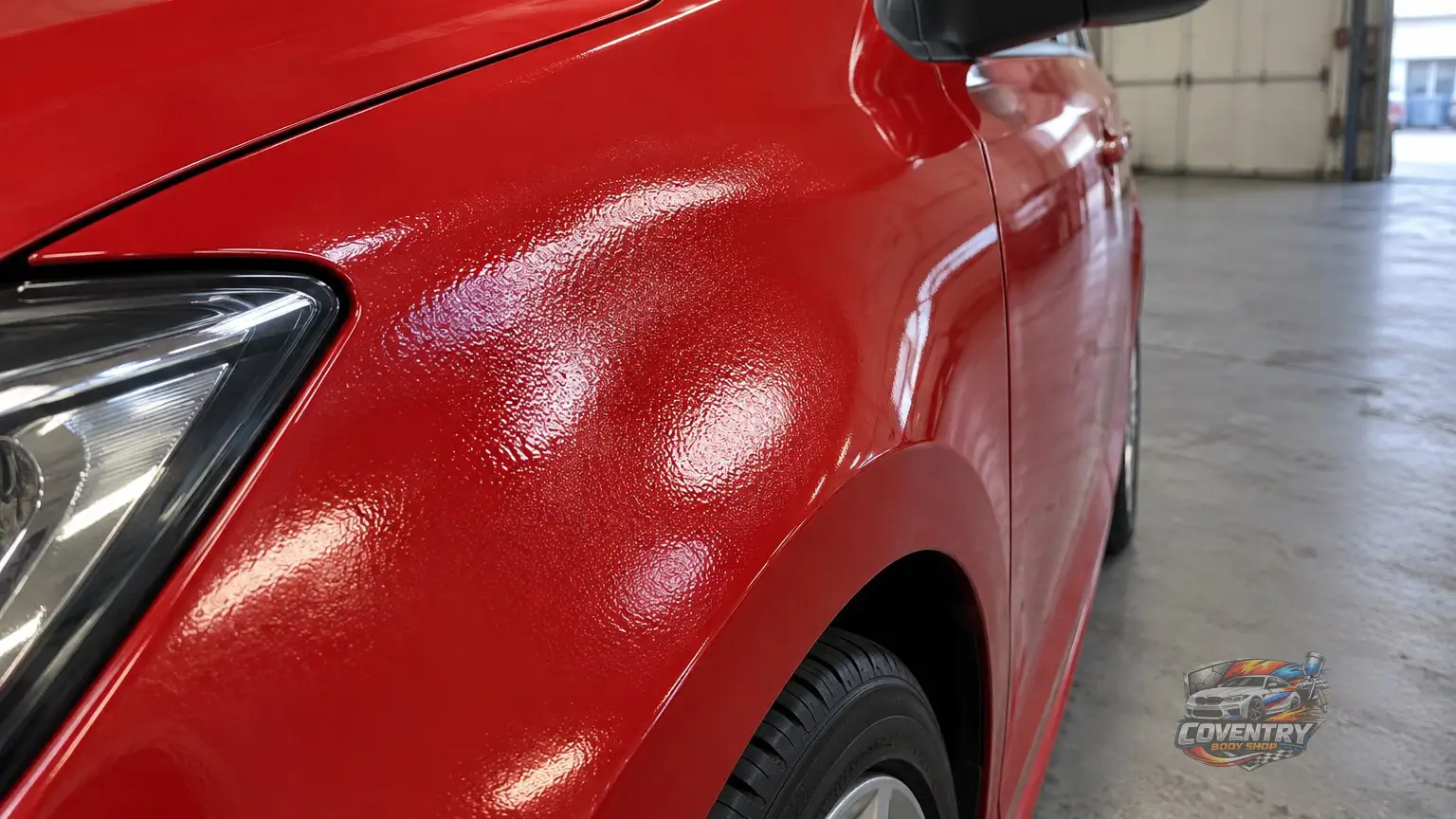
Yes, a bad paint job can often be fixed, but the repair depends on whether the fault sits on the surface or goes into the paint layers. On gloss finishes, small defects in sound clear coat may be corrected without repainting, while faults beneath it or paint that is coming away usually need the affected area repainting.
Which faults in a poor paint job can be corrected?
On paintwork with a clear coat, this transparent layer sits above the colour. Correction usually involves carefully levelling a surface defect and polishing the area without applying new paint, removing a small amount of clear coat in the process. Single-stage gloss paint has no separate clear coat, so correction removes a small amount of the coloured paint instead. Our guide to paint correction explains the method in general.
There must be enough sound paint in the top layer to work with. Levelling or polishing must wait until the paint has hardened as its paint system requires; thickness alone does not make it ready. These faults can sometimes be corrected without applying fresh paint:
- Dust specks: Small raised particles near the surface may be levelled, provided they do not extend too deeply.
- Light runs: A shallow run confined to the clear coat may be reduced without disturbing the colour underneath; our guide to fixing paint runs and drips covers this fault.
- Light orange peel or haze: Mild texture or cloudiness at the clear coat surface can sometimes be improved by controlled finishing.
Overspray on trim, glass or rubber is cleaned off using methods suitable for the material, rather than abrasive paint correction; removal depends on how firmly the paint has attached.
Appearance alone cannot establish whether these faults can be corrected. A bump can extend deeper than it looks, and haze within the coating may need a different repair from haze on its surface.
Which faults mean the paint needs replacing?
Peeling, lifting, cracking or bubbling paint usually needs the affected coating removed back to a sound layer before repainting. Polishing cannot restore the bond between layers or repair a coating that is splitting apart.
The depth of removal depends on what is underneath. Some repairs can stop at stable existing paint; others may need more material removed so that an underlying problem can be addressed. A poor finish does not automatically mean stripping every panel to bare metal.
Runs or uneven patches within the colour coat usually need repainting too. Trying to reach them through the clear coat would remove the protective layer above the colour.
The wrong colour also needs repainting rather than polishing. If the shade is your main concern, our guide to fixing mismatched paint on a repaired panel explains that separate problem.
How do we check whether a poor finish can be saved?
The finish needs checking in daylight and under good inspection lighting. Looking across a panel helps reveal texture and raised defects; viewing it from several angles helps distinguish uneven gloss from a colour problem.
We start from the manufacturer's paint code, and specialist colour mixing adjusts the formula to suit the existing finish. We also check paint thickness with a paint depth gauge to help assess whether correction is suitable.
A depth reading needs careful interpretation. Many gauges measure the total coating thickness on metal, rather than the clear coat alone, and readings depend on the panel material and equipment. A thick reading does not prove there is plenty of clear coat available to polish.
Previous repairs, panel edges and signs of earlier sanding also matter, so tell us if it has been polished before. Where the remaining clear coat cannot be judged confidently, aggressive correction may be unsuitable. The proposed repair should explain both what can be improved and what may remain visible.
A small inspection is free. If the paint needs a deeper inspection to assess the repair, this costs from £240 including VAT (£200 plus VAT), with the charge taken off the repair bill if the work goes ahead.
How much of the car would need repainting?
A local paint failure usually means repairing the affected panel. If the surrounding finish is sound, repainting a single panel may be enough.
Sometimes the colour needs blending into the next panel. Blending means gradually extending the new colour into the neighbouring area to make the transition less noticeable. It does not mean that the neighbouring panel has failed.
A full body respray is generally only relevant to this problem when most panels are affected. One poor door or wing is not, by itself, a reason to repaint the whole car.
If different panels have different faults, they may need different treatments. A sound panel with light surface texture could be corrected while another panel with lifting paint needs repainting.
What should I record if the paintwork is recent?
Go back to the workshop that painted the car first with your invoice and explain when you noticed the defects. Ask what its guarantee covers. Keep a record of the affected panels and any changes, such as a patch spreading or an edge starting to lift. Keep these records before any sanding or heavy polishing alters the evidence.
What result should you expect from correction?
Ask what improvement is realistic before work starts. Removing every trace of texture may require taking away too much clear coat, so retaining some texture can be preferable to thinning the coating excessively. Our explanation of why cheap paint jobs can cost more later covers how repeated work can add to the repair bill.
How can you find out what the repair involves?
We advise sending photos of the poor finish by WhatsApp on +44 7903 105777 or the Send enquiry button, as they may save you a wasted trip if the repair is outside the work we take on. Tell us which panels were painted and when, if you know.
After booking, we advise everyone to bring the car to our workshop in Wyken, Coventry so we can assess the finish in person. The final price is set after inspection, and no deposit is needed.
Leave a Comment
Comments
No comments yet.