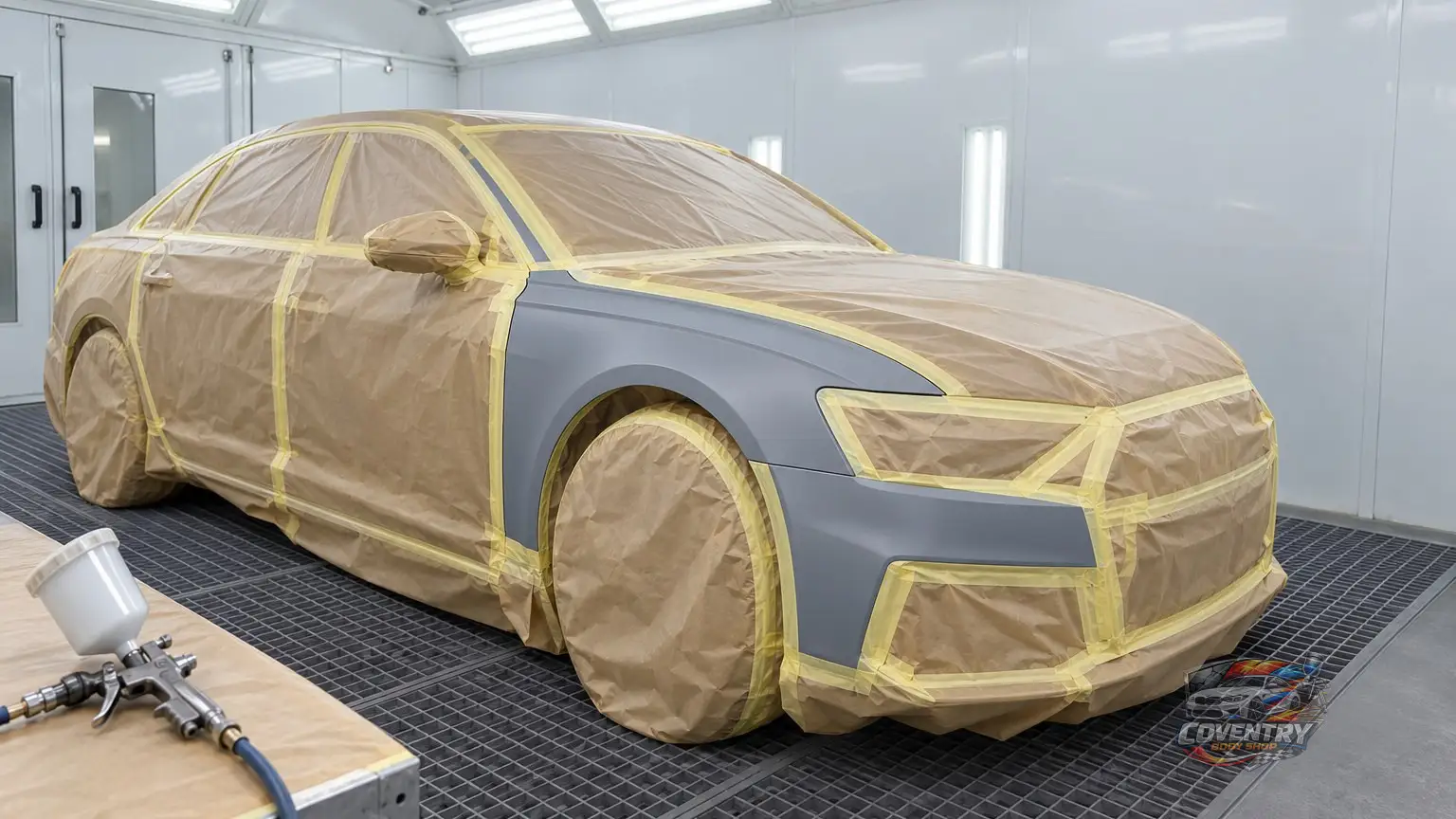
For small paint jobs such as minor scratches or chips, allow 1 to 2 days; most repairs take 3 to 7 working days once work starts, provided all parts are available. A full respray takes 3 to 7 days, depending on the work your car needs. For planning transport, count the whole period from dropping off your car to collecting it, including any wait before repairs begin.
When does the repair time start?
The repair ranges above begin when work starts. The date you leave it with us and the planned start of work are details to confirm before arranging time away from your car.
Ask when your car is booked in, when work is expected to start and when it is expected back. If you need it for a particular date, mention that before agreeing to the booking. A work trip or holiday can affect whether the proposed dates suit you.
We do not offer collection or delivery, so plan your transport for the expected time away. Include getting to and from our workshop in Wyken, Coventry as well as your usual journeys. Treat the expected return date as an estimate until your car is confirmed ready.
How long should I allow for repainting a bumper?
For a small bumper paint repair, allow 1 to 2 days. Some small jobs can be finished the same day, depending on how busy we are. Most repairs take 3 to 7 working days once work starts, parts permitting. Ask how long your bumper repair is expected to take.
The same applies to repainting a single panel: painting a door with sound bodywork can be a different job from painting one that needs dent repair first. Ask whether the estimate covers paintwork alone, repairs underneath it, or replacement parts.
What can keep my car in the workshop longer?
The area being painted is only part of the timetable. Work needed around that area can affect how soon the car is ready to return.
- Dents and rust may need attention before painting. Their extent can change how much repair work is needed beneath the new paint. We do not cut or weld metal panels. If your car needs that, we will tell you and recommend a garage we have trusted with welding work before.
- Replacement bolt-on panels, clips and trims may need ordering. A missing fitting can affect completion even when the main panel is available.
- Damage across several panels can increase the area needing repair and paintwork.
- Trims, handles and lights may need to come off for access, then be refitted. The work involved varies with the vehicle.
- Matching the colour can take time. Blending into neighbouring panels may also extend the work beyond the visibly damaged area.
- Drying and curing requirements can affect when the next task can begin. These depend on the paint system and the work being done. The wait between coats differs from the drying needed before refitting; full curing can continue after collection.
Drying is part of the schedule, but it does not describe the whole period without your car. Our explanation of how long car paint takes to dry covers that separate question.
Why does a full respray need its own time estimate?
A full body respray involves a wider scope than a local paint repair. A full respray takes 3 to 7 days, depending on the work your car needs.
Make sure the estimate describes which areas are included, so the proposed time relates to the work you actually want. If you need help understanding that scope, read what to expect during a respray.
Why might the first time estimate change?
An initial estimate is based on the damage that can be assessed at that point. Once trims are removed, hidden damage can become visible and change the repair needed.
If a deeper inspection is needed to assess the work, it costs from £240 including VAT (£200 plus VAT). The charge is taken off the repair bill if you go ahead with the repair. If the proposed repair changes, ask what that means for the expected return date and whether any additional parts are needed.
What information helps estimate the time away?
Tell us whether any parts are damaged or missing. This helps establish whether the booking needs to allow for several separate repairs or parts to be ordered.
- Include the make and model so the enquiry identifies the car needing work.
- Mention every damaged panel you want assessed, including marks away from the main damage.
- Point out dents, rust, cracks or displaced trim that may affect the work needed.
- Explain when you can leave the car and any date you need it back.
If you are unsure whether a part needs replacing, say so.
How can I get a time estimate for my car?
We advise sending photos of the paint damage by WhatsApp on +44 7903 105777 or the Send enquiry button to help avoid a wasted trip for work we do not take on. After booking, we advise everyone to bring the car in so we can see it in person.
The final price is set after inspection, and no deposit is needed. A small inspection is free.
Leave a Comment
Comments
No comments yet.