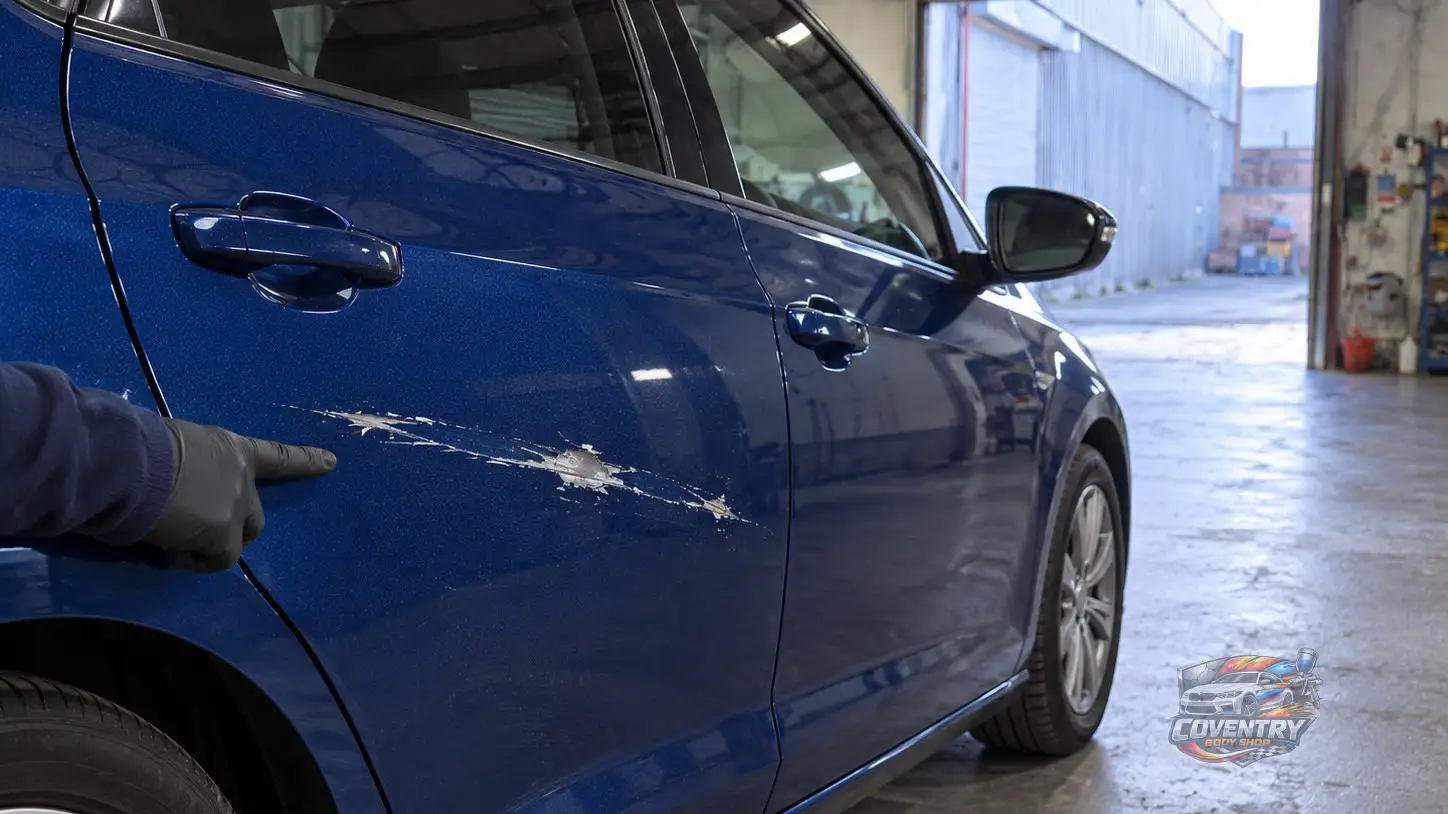
Understanding the Impact of Deep Car Scratches
A deep scratch can go right through to the metal, and bare steel left open to the weather starts to rust. How the scratch is repaired depends mostly on how deep it goes.
Deep scratches often cut through the clear coat and base coat to the primer or the metal panel. Repairing one means rebuilding those layers, and the new paint has to match the paint around it.
Visible damage can also lower what a buyer will pay for the car.
Initial Assessment and Preparation
The repair starts with a look at how deep the scratch goes and how far the damage spreads. We also use a paint depth gauge, which measures how thick the paint is and can show earlier repairs or thin paint near the scratch.
The area then has to be clean and free of grease, as dirt or wax left on it can stop the new paint bonding properly.
Panels and trim around the repair are masked or removed to keep overspray off them.
Priming and Filling the Scratch
Primer is especially important where a scratch has reached the metal. It gives the paint a smooth surface to grip, and many primers also help protect bare metal from rust.
A deeper scratch may need filling first. The filler is sanded until it sits level with the surface around it, as a ridge left at this stage would show through the paint.
Colour Matching and Paint Application
In our bodyshop, the paint is mixed to the manufacturer's paint code and checked against the car with a spectrophotometer. That check helps on an older car, where years of sun and weather may have changed the original colour.
The colour goes on in layers, with each coat given the drying time the paint maker sets before the next.
Where it is needed, the new paint is blended into the neighbouring paintwork so the edge of the repair is hard to see, as an uneven blend shows in daylight. All painting at our workshop is done by our director, a former Aston Martin technician and painter.
Curing and Lacquer Application
Once the colour coat has flashed off, a clear lacquer goes on top to give the gloss and help protect the colour from UV light.
The finished repair then needs time to harden, and it keeps curing for a while after you collect the car.
Final Inspection and Quality Assurance
When you collect the car, compare the repaired area with the paint next to it in daylight, checking the colour and the smoothness of the surface.
The repair is covered by our 6-month workmanship guarantee from the day you collect it.
For lighter scratches that have not gone through the colour, see our Scratch Removal & Machine Polish service.
Maintaining Your Vehicle's Appearance Post-Repair
Once the new paint has cured, regular washing and waxing help protect it and the rest of the paintwork. Ask how long to wait before the first wax.
Paint protection film gives some physical protection against chips and light scuffs. A ceramic coating mainly makes the paint easier to keep clean and does little against scratches.
If small chips appear later, they may only need our Paint Touch-Up service.
Choosing the Right Bodyshop for Your Repair Needs
Whichever bodyshop you use, ask for a written, itemised estimate that explains how the deep scratches will be repaired.
It is also worth asking who will do the painting and what the guarantee covers.
If the paint is damaged or faded across the whole car, see our Full Body Respray service.
Conclusion: Ensuring a Flawless Finish
A scratch through the colour needs the missing layers rebuilt, and the new paint often has to be blended into the original finish.
Small, contained damage may suit our Smart Repair service. For a deep scratch, contact our Coventry workshop for an estimate.
Leave a Comment
Comments
No comments yet.