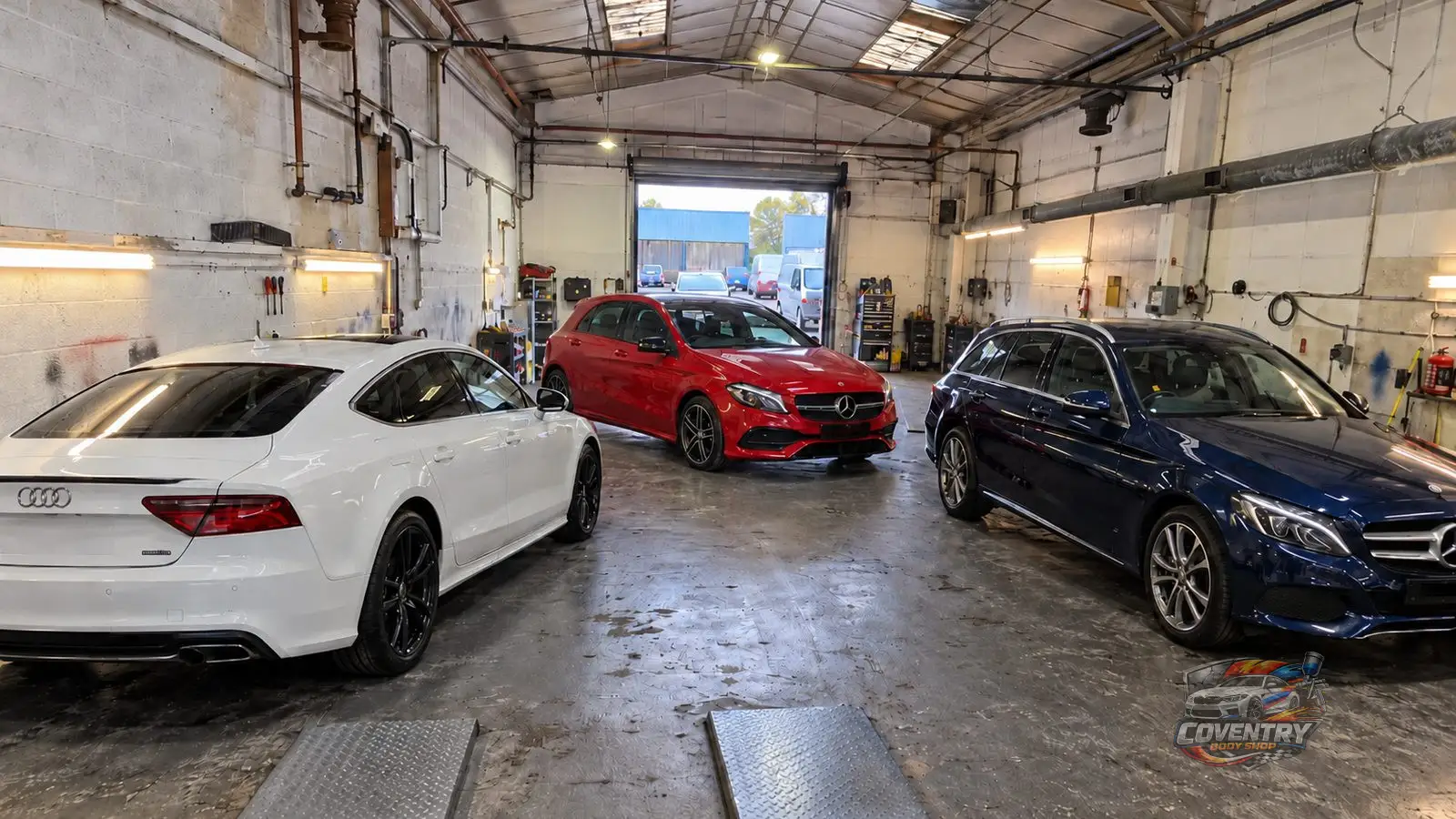
An independent bodyshop and a dealership bodyshop can both repair damaged panels and repaint a car, but they do not necessarily work in the same way. The independent operates outside a vehicle maker's dealer network; a dealership is attached to a franchised business, while a manufacturer-approved bodyshop has a specific relationship with the maker. For a UK driver, the sensible choice depends on the damage, the proposed repair, any warranty or insurance conditions, and what each workshop can actually do.
A scuffed bumper needs a different conversation from a collision that may have affected sensors or the structure behind a panel. Before comparing prices, establish which sort of job you have and whether the workshop is equipped to assess it. If the damage may affect safety, arrange a qualified inspection rather than assuming the car is safe to drive.
What is the difference between an independent bodyshop and a dealer's?
An independent bodyshop is a business that repairs vehicle bodywork without operating as part of a car manufacturer's franchised dealer network. A dealership bodyshop is connected to a franchised dealer, although the dealership may refer body repairs to a separate facility. Manufacturer approval is a separate matter: it relates to a particular maker and its conditions, and an approved repairer may or may not belong to a dealer group.
Those labels tell you something about business relationships, but less about the precise repair your car will receive. An independent might concentrate on paint and panel work across several makes. A dealership may have direct access to brand-specific parts and procedures. Find out where the car will go and who will carry out each stage.
Do not confuse manufacturer approval with an insurer's repair network. An insurer-approved garage has an arrangement with an insurer; that alone says nothing about approval from the vehicle manufacturer. Equally, an independent workshop can have relevant skills without being part of a dealer group. The distinction matters whenever a repair calls for a particular manufacturer's process.
How do repair quality and paint finish compare?
Neither type of bodyshop automatically produces a better paint finish. Surface preparation, panel shape, the paint system, colour selection and spraying technique all affect the result. A repairer should be able to say how it will deal with the damage beneath the visible mark, then how it plans to match the colour to the rest of the car.
A paint code identifies a starting point, but it does not settle every colour-matching question. Paint changes with age and exposure, while some colours have more than one formula or appearance depending on the viewing angle. Paint manufacturer PPG explains that poor colour matches can arise from incorrect variants, mixing, application and differences visible under changing light.
Blending colour into an adjacent area may be appropriate when a sharply defined edge would show. The quote should show whether blending is included and which panels need lacquer. Previous repairs to the existing paint can change the plan, so raise them early, and be wary of any promise that every mark will disappear under every light.
It also helps to separate appearance from safety. A bumper cover can look straightforward while components behind it need examination. If a collision has affected cameras, radar, restraint components or structural parts, the workshop must identify the necessary specialist assessment and associated work before the cosmetic finish becomes the main question.
Will both workshops use the same replacement parts?
Dealership-linked or manufacturer-approved repairers may work with the manufacturer's genuine parts as part of their repair arrangements. An independent may be able to offer genuine, alternative new or suitable used parts, depending on the job and the customer's requirements. Neither label tells you exactly what will be fitted, so ask before agreeing.
For a damaged wing or bumper, compare the proposed replacement with repairing the existing panel. A lower quote might rely on repairing rather than replacing a part, using a different part source, or painting fewer adjacent areas. Those differences can be legitimate, but they should be understood before you compare the totals.
Ask whether mounting points, trim, brackets or sensors need attention and whether any replacement part is compatible with the vehicle's requirements. Parts that affect safety deserve particular care and the maker's instructions may call for a specified procedure or component. If a repairer cannot explain those requirements or arrange competent specialist work, choose one that can.
What happens to warranties after a body repair?
There are separate questions about the warranty on the new repair, warranties supplied with parts, and any remaining warranty on the car itself. Their terms can differ between workshops and manufacturers. A repairer's workmanship promise does not replace your legal rights, and a manufacturer's warranty should not be treated as a general promise to pay for accidental damage.
The Motor Ombudsman explains that garages may offer a workmanship warranty on top of the rights customers already have, while fitted parts can carry their own terms and exclusions. Ask who honours the promise, what defects it covers, when it starts, and whether any return visit must be made to the original workshop.
For paid repair services, the Consumer Rights Act 2015 requires reasonable care and skill. If the service falls short of that standard, a customer can require the work to be done again, and a price reduction may follow where that is impossible or does not happen within a reasonable time. These protections apply regardless of whether the business is independent or dealer-linked; the facts of a dispute still matter.
If the car has an active manufacturer's paint or corrosion warranty, read the relevant terms before authorising work. A defect caused during manufacture is different from a scratch caused in a car park, and an unrelated repair does not by itself establish that every manufacturer's warranty obligation has ended. Ask the manufacturer which repair methods and records matter for the affected area.
Insurance-funded repairs introduce another layer of responsibility. The Financial Ombudsman Service distinguishes between repairs arranged by an insurer and work arranged independently with the insurer's agreement when deciding who is responsible for problems. That makes it worth asking your insurer, before work starts, who would answer for a problem with the repair.
How does insurance affect your choice?
If an insurer is paying for an accident repair, ask it to explain the options under your policy before instructing a bodyshop. You may be able to request a repairer of your choice, but approval of the cost, an additional excess, a replacement car and responsibility for problems can depend on the policy and the arrangement. Do not assume the insurer will pay any quote you accept.
Find out who authorises the repair, what happens if further damage is found and whether choosing a different garage changes any benefit. Keep the insurer's answer with your claim records. Our insurance and accident repair support page sets out how Coventry Body Shop can help with a repair under a claim; what the insurer pays for still depends on your policy.
Does an independent bodyshop cost less than a dealership?
Sometimes, but the type of business does not determine the final bill. Labour rates, whether parts are replaced, preparation time, paint materials and the size of the painted area can change the price. A dealer quote may also include manufacturer-specific operations that another quote has not considered. Compare the work described before comparing the amount.
Imagine two quotes for the same rear corner damage. One includes reshaping a repairable bumper, preparing it and repainting a local area; another includes a replacement bumper and paintwork on adjoining sections. The figures could be far apart because the repair plans are different, even if both workshops have priced their own plans fairly.
Before accepting, find out what the quoted figure covers, whether it includes VAT, what might change following inspection and whether additional work needs your agreement. If a quote looks unusually low or unusually high, the useful question is which stages, materials or parts it includes.
For an example of the scope involved in repainting one damaged panel, see our single-panel car paint page. A full-body respray is a different size of job from a local repair, so it should not be used as a price comparison for one scratch.
Which type can finish the repair sooner?
Availability comes down to the workshop's diary and the parts required. A bodyshop with an early booking slot may still be waiting for a bumper, a trim piece or authorisation for additional work. Ask for the earliest inspection date, the likely start date and the expected time the car will be unavailable.
Check whether the quoted repair period starts when you first make contact or when the car has actually entered the workshop. They are different dates. A dealer's network may help with sourcing genuine parts and an independent may have room sooner, yet either can still be left waiting for a delivery.
The Financial Ombudsman Service also treats unavailable parts as a possible explanation for insurance-repair delays, while considering whether the customer was kept informed. For a private job, agree how the workshop will communicate changes and whether it will contact you before carrying out extra work.
When might an independent bodyshop suit the repair?
An independent can be a sensible option for a scrape, dent or paint repair when it can describe a suitable method and has the ability to do the work. It may also suit a driver who wants to discuss options such as repairing an existing panel instead of replacing it.
A scratched bumper, for example, might need surface preparation and a respray, while another bumper needs repair to the plastic or replacement. The scope is easier to judge when you know which area is damaged and how the workshop intends to tackle it. Our bumper respray page shows the type of paintwork covered by that service.
Before choosing an independent for more complicated damage, ask how it checks for hidden problems and what it would refer elsewhere. A workshop declining work beyond its capabilities is providing useful information. That can save you from committing to a cosmetic repair before the full damage has been assessed.
When might a dealer or manufacturer-approved bodyshop suit better?
A manufacturer-approved bodyshop, dealer-linked or not, deserves particular consideration when the vehicle maker specifies methods, components or specialist checks for the damage involved. It may also be appropriate for a repair being considered under a manufacturer's warranty, or when a lease agreement sets conditions for bodywork. Confirm that the specific workshop holds the relevant relationship for your car and repair.
For an example of what an approval programme can mean, Volvo describes its approved accident repair arrangement as using genuine Volvo parts and factory-trained technicians. Those are terms of Volvo's programme, not a promise about every dealership or other maker. Ask whether the facility offered to you actually participates and which stages it completes on site.
A lease agreement can also influence the choice. Volvo's published end-of-agreement conditions, for instance, address where body repairs should be carried out and the possibility of charges for unacceptable work. Your agreement may say something different, so read it before arranging a repair; our guide to painting a lease vehicle explains the questions to settle first.
For significant impact damage, start by deciding where to obtain a qualified damage assessment. If a sensor system or structural component is involved, ask how the chosen repairer will handle the maker's requirements.
Which questions should any bodyshop answer for you?
Give both workshops the same information and ask them to explain their proposed work in plain words. A comparison becomes much more useful when you know whether they are repairing or replacing the same parts, how they will refinish the area and which extra checks may be needed.
- Have you inspected the car closely enough to identify the likely damage, and is a further inspection needed after removing trim?
- Will you repair the existing panel, fit a replacement part, or discuss both options with me?
- Which parts do you intend to use, and what is their source?
- How will you prepare the surface, match the paint and decide whether to blend into adjoining panels?
- Does this damage require any manufacturer-specific checks or specialist work, and who will do it?
- What does the quote include, and when would you ask permission for additional work?
- When can the job start, how long might the car be unavailable, and what could delay it?
- What workmanship and parts cover applies, what is excluded, and who handles a problem after collection?
When answers differ, ask more before dismissing either workshop. For example, one repairer may have noticed a broken bracket that the other has not yet inspected. If the disagreement concerns a safety-related repair, obtain a qualified assessment before committing to paintwork.
Where can a Coventry driver get a quote from us?
Coventry Body Shop repairs car bodywork and paint at its workshop in Wyken, Coventry. A quote starts with understanding the affected panels and the work they may need; a small inspection is free, and if the damage calls for a deeper one, that charge comes off the repair bill when you go ahead. We advise sending photos first, as they help us identify whether the job is one we take on, but the car still needs to be seen at the workshop after you arrange a visit.
- Describe the damage. Say which panels are affected, whether anything is loose or bent, and if there has been an impact that may need specialist inspection.
- Send photos if you can. We advise them but never require them. They can go by WhatsApp to +44 7903 105777 or through the Send enquiry button, never through the contact or booking form.
- Arrange a visit. Book online or use our contact form to arrange a time to bring the car to Wyken for us to inspect.
- Review the quote. We assess the paint and the work involved before setting the final price, and explain when the job could begin.
Our paintwork is sprayed in a spray booth, with colour selection using the maker's paint code, specialist mixing and spectrophotometer matching. We straighten bent panels, rear quarters included, repair or replace bolt-on panels and repair plastic bumpers, but we do not take on bad structural damage or metal welding. If an inspection finds that kind of work is needed, we say so and direct the customer towards a garage equipped for it.
Coventry Body Shop gives a 6-month workmanship guarantee on every job, starting when the customer collects the car. Customers drop off and collect at the workshop, so plan for the days without the car. Our why choose us page provides more information about the workshop to compare with another repairer's answers.
Leave a Comment
Comments
No comments yet.