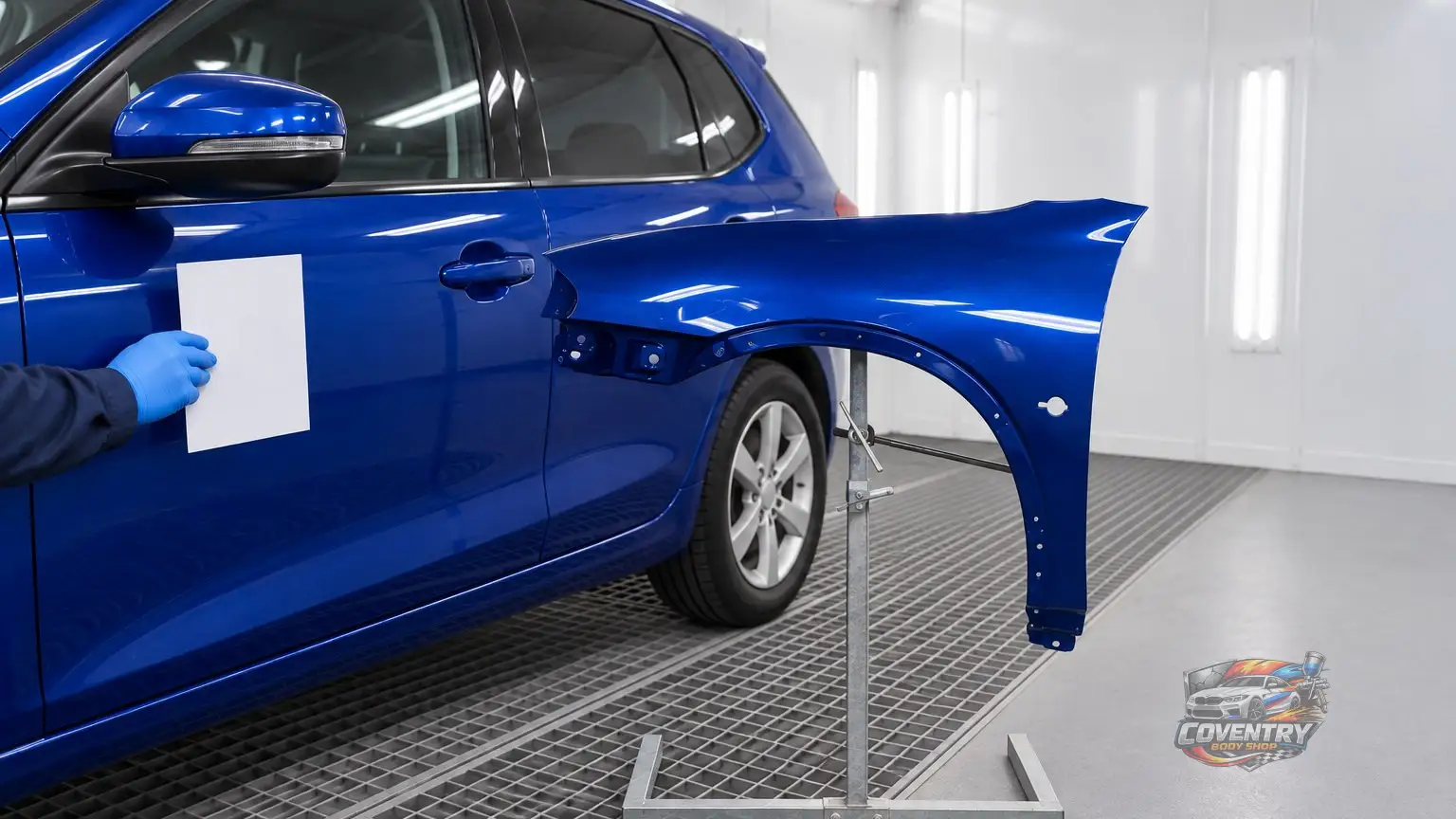
What OEM paint standards mean for vehicle repairs
OEM (original equipment manufacturer) paint standards are the specifications published by individual vehicle manufacturers that define requirements for their vehicles' paint and repairs, and they vary by maker. They can cover colour match, paint chemistry, film thickness, gloss levels, and repair processes; the paint supplier's product instructions give application and curing details for the paint system being used.
For a driver, this matters because a repair that follows the relevant specifications can help the paint blend in with the rest of the vehicle and resist fading, peeling, or flaking. A repair that ignores them can look off in colour or texture and may break down prematurely.
What do OEM paint standards actually cover?
OEM paint standards are not a single rule. They are technical requirements that each vehicle manufacturer publishes for its own vehicles, distinct from the paint supplier's product and application instructions.
Common areas include:
- Paint code identification: a manufacturer's colour usually has a code associated with a paint formula. The bodyshop can read this from the vehicle's code plate and use it as a starting point for mixing.
- Basecoat, midcoat, and clearcoat application: the paint supplier's product instructions specify how each coat should be applied, how thick it should be, and how many passes are needed.
- Film build and thickness: too thin and the colour can shift or the protection can suffer. Too thick and the finish can run, crack, or lose its gloss.
- Curing temperatures and times: the paint supplier's product instructions set out curing conditions for the paint system so the layers cross-link properly.
- Approved products and processes: many manufacturers name specific primer, sealer, basecoat, and lacquer ranges. Deviating from these can compromise the finish or affect approvals.
Why do OEM paint standards matter for your vehicle?
A vehicle that left the factory with a particular paint system is designed to behave in a predictable way when damaged and repaired. When a bodyshop works to the manufacturer's specification, this can support durability, but the repaired panel may age differently from the rest of the car.
Key reasons to care include:
- Colour match: careful colour matching can reduce the visible difference between the repaired panel and the original panels, especially on metallic, pearl, and tri-stage finishes.
- Resale value: service history, invoices, and visible finish all feed into a vehicle's trade-in price. A poor colour match or orange peel texture can show up on inspection.
- Warranty and insurance position: some insurers and manufacturer warranties require approved repair methods. Using non-approved products can create a dispute later.
- Long-term durability: paint cured at the right temperature, with the right film build, resists stone chips, UV, and weather far better than a rushed job.
How paint repairs are carried out in practice
Preparing and painting a panel is a workflow, not a single step. The repair moves through several stages, with application and curing guided by the paint maker's product instructions.
- Damage assessment and paint code check: we identify the manufacturer's paint code, mix paint to that code, and match the colour with a spectrophotometer.
- Strip-down and preparation: panels are stripped of trim, badges, and loose components. Existing damaged paint is removed or sanded back. Proper surface preparation is the foundation of the whole finish, and skipping it can lead to a failed repair. We cover this in more detail in our guide on why proper surface preparation matters in auto painting.
- Primer and sealer application: we apply a suitable primer to the correct film thickness, then a colour-matched sealer where the paint system calls for it. This stage helps provide corrosion protection and gives the basecoat something to bond to.
- Basecoat and blending: the colour coat is sprayed to the right number of passes. For metallic and pearl finishes, we blend into the adjacent panel so the new paint feathers into the original without a hard edge.
- Clearcoat and curing: the clearcoat is applied to the specified thickness, then allowed to cure under the paint maker's recommended conditions so the layers cross-link properly.
- Polishing, reassembly, and final inspection: the panel is polished, trim and badges go back on, and we check the finish under workshop lighting and natural daylight before the car leaves.
The aim is a panel that blends with the rest of the car.
How do bodyshops achieve an accurate colour match?
Reading the paint code is the easy part. Achieving a true match on a modern finish often takes more work, especially on vehicles a few years old where the original paint has faded slightly from UV exposure.
Practical colour-matching techniques include:
- Spray-out cards: mixing the formula and spraying test panels to compare against the vehicle under multiple light sources.
- Tinting by eye: adding small amounts of pigment to nudge the mix closer to the actual panel, particularly for sunset reds, deep blues, and warm greys.
- Blending into adjacent panels: rather than stopping the new paint at the edge of the repaired panel, we fade it into the next panel to make small colour differences less noticeable.
- Light source checks: a finish can look right under workshop fluorescents and wrong in daylight, or vice versa. We check both before signing the job off.
What causes most paint repairs to fail?
Paint failures can start with shortcuts at the prep or curing stage. A respray that has peeled, cracked, or shown obvious colour difference usually traces back to one of a handful of recurring issues.
Common causes include:
- Insufficient prep work: paint laid over contamination, old flaking clear, or un-sanded filler can lift or fail prematurely. This is a common reason resprays fail.
- Wrong paint system: using an incompatible primer, basecoat, or lacquer combination can cause reactions between layers.
- Incorrect film build: too much or too little paint changes the colour, the texture, and the way the finish cures.
- Incorrect curing: air-drying a panel when the paint system requires heated curing can leave the finish soft and prone to marking.
- No blending: stopping the new paint at the panel edge can leave a visible colour difference, especially on metallics and pearls.
For a frank look at where resprays go wrong, our piece on the top reasons paint jobs fail covers the most common shortcuts in more depth.
When is a full body respray the right call?
A spot repair works well for one or two panels with localised damage. When damage is spread across the vehicle, the original paint has faded significantly, or the owner wants a colour change, a full body respray in the original or a new colour can be a practical option. A full respray involves the vehicle being prepared, primed where required, and sprayed using a process appropriate to the paint system.
This approach makes sense for:
- Older vehicles with widespread fading where spot repairs would not blend in.
- Insurance write-offs where multiple panels have been repaired already and colour variation is visible.
- Colour changes where the new shade needs to cover the old one fully and evenly.
- Restoration projects where the owner wants a consistent finish across the whole car.
How can you check a bodyshop's claims about OEM specifications?
Most customers cannot inspect a paint job in technical detail, but a few straightforward questions help identify which specifications the bodyshop says apply and what evidence supports its claim.
Useful questions to ask include:
- Which vehicle-maker specifications apply to my repair? The answer should identify the relevant specifications and explain how the proposed repair meets them.
- How do you identify and match my paint code? the bodyshop should mention reading the code plate, checking for variants, and using spray-out cards.
- How do you cure the paint? The answer should reference the drying conditions required by the paint system.
- Do you blend into adjacent panels? the bodyshop should describe fading the new paint into the next panel rather than stopping at an edge.
- Can I see examples of similar repairs? Before and after photos of work on similar colours and panel types give a clear sense of finish quality.
How OEM paint standards affect cost and timeline
Because the relevant specifications may call for controlled preparation, specific products, and proper curing, the time and materials needed depend on the repair. Preparation, product choice and curing affect the finish, the durability, and how the panel ages.
Factors that affect the final estimate include:
- Number of panels involved and whether blending is needed across multiple areas.
- Paint type with tri-stage and pearl finishes costing more in time and materials than solid colours.
- Prep work needed such as filler, corrosion treatment, or stripping back to bare metal.
- Parts availability if trim, badges, or mouldings need to come off and go back on cleanly.
- Curing and quality control time for the paint to harden and for inspection under daylight.
For a clear estimate, send photos of the damage, the vehicle registration or paint code if known, and a short note about what happened. We will come back with a realistic indication of cost and likely time in the workshop.
How do OEM standards affect an insurance claim?
Some insurance policies steer drivers towards an approved-repairer network, while others allow a choice of bodyshop. If you are claiming through insurance, your policy wording, the insurer's network requirements, and the bodyshop's arrangements with the insurer can affect how the job is handled.
Practical points worth confirming with your insurer include:
- Whether you must use an approved repairer or can choose your own bodyshop.
- What paint and approved parts policy applies to your claim.
- Whether a courtesy car is included and for how long.
- Your excess and any contribution you will need to make.
Even on an insurance job, you can ask the bodyshop which standards they are working to. The relevant specifications help identify the methods and materials appropriate to the repair.
Coverage for nearby areas
We work on vehicles from across the region, including Coventry itself and nearby towns. Drivers from Northampton and other surrounding areas can bring vehicles to us for resprays and colour matching.
Send your photos for a repair estimate
Manufacturers' paint specifications set out requirements for their vehicles and vary by maker. If you have damage or a failing finish, send clear photos of the affected panels along with your vehicle registration or paint code. We will come back with a written, itemised estimate based on the prep, products, and curing time the job actually needs.
Leave a Comment
Comments
No comments yet.