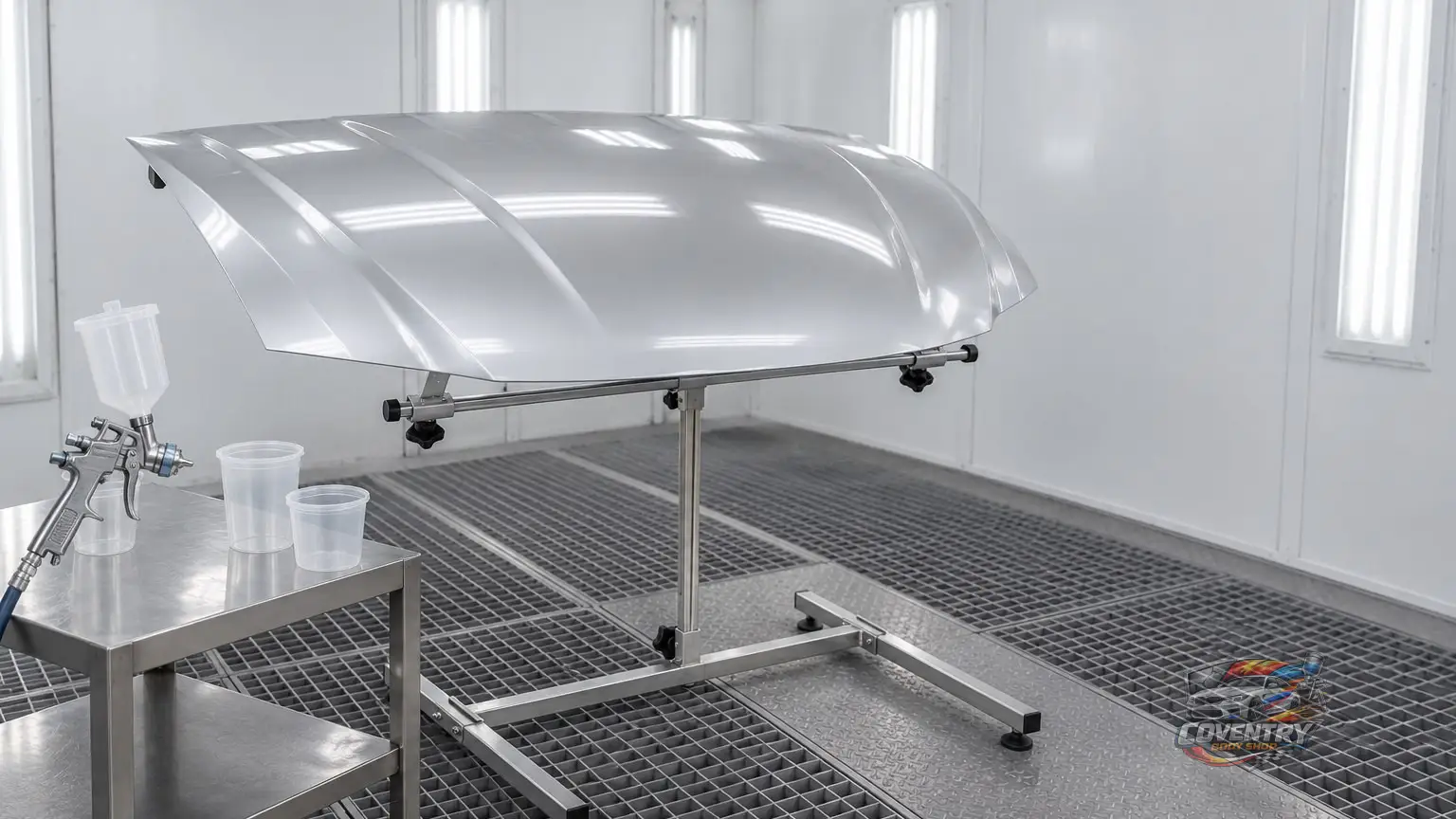
Yes, water-based car paint can give a repair as durable as solvent-based paint. How the repair is carried out matters more than whether water or solvent carries the colour.
Why use water-based colour with solvent-based lacquer?
The colour coat, also called the basecoat, gives your car its colour and any metallic or pearlescent effect. In water-based basecoat, water carries much of the material that forms this layer. Solvent-based basecoat uses organic solvents as its main carrier.
UK body shops now usually use water-based basecoats because rules limit the volatile organic compound content of vehicle refinishing paints. This does not mean every paint layer must be water-based.
For the basecoat systems discussed here, a clear coat is needed over the colour. It supplies the final surface and much of the resistance to sunlight, weather and everyday contamination. This clear coat is usually a solvent-borne two-pack lacquer. Two-pack means the lacquer is mixed with a hardener before application. If the paint maker specifies this combination, water-based colour and solvent-based lacquer can be used together.
What changes when water-based paint is sprayed?
Water-based basecoat dries as water evaporates. Airflow, temperature and humidity therefore affect how it dries and how evenly it settles. The painter needs to follow the product's application instructions and check that the colour layer is ready before applying lacquer.
Suitable spray equipment and cleaning materials matter too. Equipment that contacts the paint must be compatible with it, and residues from unsuitable cleaners or other materials can contaminate the finish. Changing between paint types involves more than pouring a different liquid into the same gun.
Solvent-based basecoat behaves differently as its solvents evaporate, but it also needs suitable conditions and careful application. Neither label gives you a reliable shortcut to the repair schedule. See how long car paint takes to dry for the timing question, and how humidity affects car paint for more about moisture in the air.
Can water-based paint match metallic and pearl colours?
Modern water-based systems are made to reproduce manufacturer colours, including metallics and pearls. If the mix and application suit your car, water-based paint can give a close colour match. However, no paint type can guarantee that a repaired area will look identical to every surrounding panel in every light.
Metallic particles reflect light differently depending on how they sit in the paint. Application technique can therefore affect the appearance as you move around the car. Existing fading, previous repairs and colour variations also influence the comparison with the original finish.
A colour check and a sprayed test sample can help assess the proposed mix before it goes onto your car. Blending colour into an adjacent area may help soften a visible transition. If you are considering repainting a single panel, ask whether the proposed work includes blending and which panels it involves.
What should you ask before agreeing to paintwork?
The useful question is how the proposed repair suits your car's condition. If the coating is not allowed to cure correctly, either type of repair can suffer.
Before agreeing to the work, ask:
- What needs removing or repairing first? Loose paint, corrosion and damage beneath the coating can change the preparation required.
- How will the colour be checked? Ask how the proposed colour will be compared with your existing paint, including any faded or previously repaired panels.
- Which areas will receive paint? Clarify the repair area and any neighbouring panels included for blending.
- Is the lacquer suitable for the basecoat?
For a full body respray, also agree which surfaces are included, such as door shuts and panel edges. "Water-based" alone does not describe the extent of the work or the condition of the surface underneath.
How can you find out what your repair involves?
Send clear daylight photos to our workshop in Wyken, Coventry on WhatsApp at +44 7903 105777 or with the Send enquiry button on this page. Include a close view of the damage and one of the whole panel, and we will tell you what the repair involves.
You get a written, itemised estimate first, with no deposit. A small inspection is free. A deeper inspection costs from £200 plus VAT, deducted if the work goes ahead.
Leave a Comment
Comments
No comments yet.