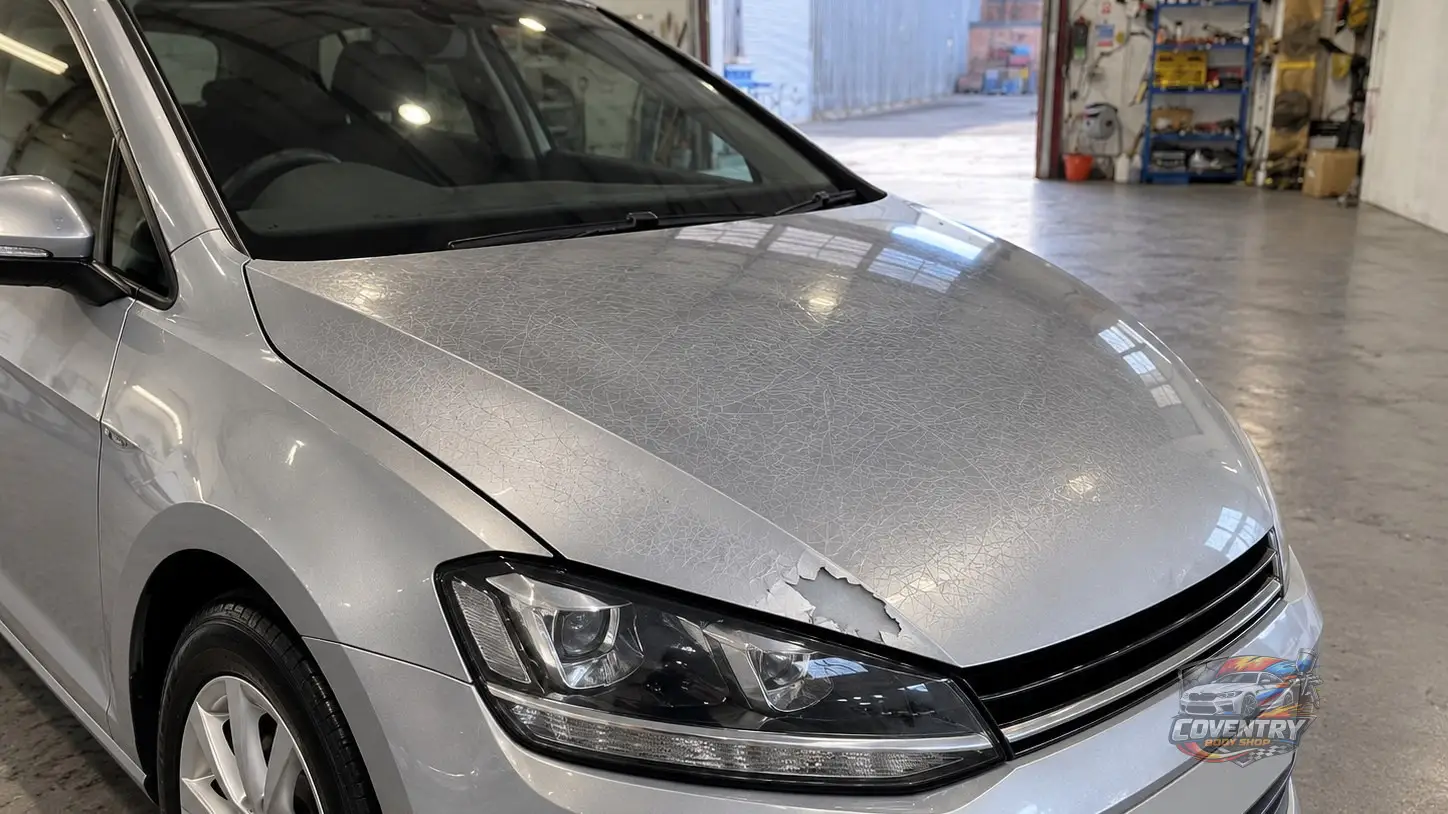
Paint cracking, often called crazing, appears as fine lines or a web-like pattern in the clear coat or colour layer of a vehicle's paint. It usually starts small but can spread, leading to flaking and exposing the primer or metal underneath. As a bodyshop in Coventry, we see this most often on older vehicles or panels that have had poor prep work. The good news is that not all cracking means a full respray is needed. Understanding what causes it helps you decide whether repair is possible and how to prevent it from coming back.
What Causes Paint Cracking on Cars?
The most common cause of paint cracking is inadequate flexibility in the paint layers, especially the clear coat. When the paint cannot expand and contract with the metal underneath due to temperature changes, stress builds up and causes fine cracks. This often happens when the clear coat is applied too thinly or when it has become brittle with age. UV exposure breaks down the chemical structure of the paint over time, making it less flexible and more prone to cracking.
Other causes include poor surface preparation before painting, such as not removing old wax, grease, or flaking paint. If the surface isn't properly cleaned and sanded, the new paint won't bond well, leading to delamination and cracking. Using the wrong type of paint or hardener for the conditions, or applying paint in high humidity or low temperatures, can also affect curing and flexibility. In some cases, cracking appears after a repair because the underlying filler or primer wasn't fully cured before the topcoat was applied.
Is Paint Cracking Just a Cosmetic Issue?
At first, paint cracking is mainly a cosmetic concern. The fine lines may not affect the structural integrity of the panel, but they do ruin the appearance and can lower resale value. If left untreated, moisture and dirt can get into the cracks, leading to corrosion under the paint, especially on steel panels. Over time, the cracks can widen and the paint may start to flake off in larger pieces, exposing the primer or bare metal.
Once flaking begins, the panel is more vulnerable to rust, which can spread and weaken the metal. This is why we recommend addressing cracking early, even if it seems minor. A bodyshop can assess whether the damage is limited to the clear coat or if it has gone deeper into the colour coat or primer. The depth of the cracking determines what repair options are available.
Can Cracked Paint Be Repaired Without a Full Respray?
Yes, in many cases, cracked paint can be repaired without stripping the entire panel. If the cracking is limited to the clear coat and hasn't reached the colour layer, we can often sand back the damaged clear coat and reapply a new layer. This process, known as a clear coat respray, involves preparing the surface, applying fresh clear coat, and blending it into the surrounding area to avoid a visible repair line.
If the cracking has gone into the colour coat but the primer is still intact, we may need to remove the colour and clear coat, reapply the colour, and then add a new clear coat. This is more involved than a clear coat-only repair but still less work than a full panel respray. However, if the primer is cracked or the metal shows signs of corrosion, we usually recommend stripping the panel back to bare metal and starting from scratch to ensure a lasting repair.
How Do We Prepare a Panel for Paint Cracking Repair?
Proper preparation is the most important step in repairing cracked paint. We start by washing the panel to remove dirt and grime, then use a wax and grease remover to eliminate any contaminants that could affect adhesion. Next, we sand the damaged area carefully. For clear coat cracking, we sand back to a sound layer of clear coat or into the colour coat if needed. We use progressively finer grits to create a smooth surface for the new paint to bond to.
After sanding, we clean the panel again to remove all dust. Any imperfections in the surface will show through the new paint, so we take time to ensure it's flawless. We then mask off surrounding areas to protect them from overspray. Before applying any paint, we check that the panel is completely dry and at the right temperature. Applying paint to a cold or damp surface can cause poor adhesion and lead to future cracking.
What Role Does Paint Thickness Play in Cracking?
Paint thickness, or film build, directly affects how well the paint can handle stress. A clear coat that is too thin lacks the flexibility to expand and contract with the metal, making it prone to cracking. Conversely, if the clear coat is too thick, it can become brittle and crack under impact or flex. We aim for a clear coat thickness of between 40 and 60 microns, which provides enough flexibility and durability for UK road conditions.
When repairing cracked paint, we measure the existing paint thickness where possible to understand what went wrong. If the original clear coat was applied too thinly, we adjust our process to apply a thicker, more flexible layer this time. We also consider the type of paint system being used. Some modern water-based clear coats are more flexible than older solvent-based types, which can help reduce the risk of future cracking.
How Does Age and UV Exposure Cause Paint to Craze?
UV radiation from sunlight breaks down the polymers in the clear coat over time, a process known as photo-oxidation. This makes the paint harder and more brittle, reducing its ability to flex with the metal panel. As the paint loses flexibility, repeated heating and cooling cycles cause micro-fractures to form, which we see as crazing. This is why cracking often appears first on horizontal surfaces like the bonnet, roof, and boot lid, which get the most sun exposure.
Age also plays a role. Even if a car is kept in a garage, the paint naturally degrades over time. Older paint systems, especially those from the 1990s and early 2000s, were less UV-resistant than modern formulations. We see more cracking on vehicles that are 10 years old or older, particularly if they have been parked outside regularly. Regular washing and waxing can help slow this process by providing a temporary protective layer, but it cannot stop UV damage entirely.
When Should You Seek Professional Help for Paint Cracking?
You should consider a professional inspection if the cracking is spreading, if you notice flaking or peeling paint, or if the panel feels rough to the touch. If the cracking is only in one small area and the rest of the paint is sound, a localised repair may be possible. However, if cracking appears across multiple panels or is worsening quickly, it could indicate a deeper issue with the paint system or underlying corrosion.
We recommend sending clear photos of the damage to a bodyshop for an initial assessment. We can often tell from images whether the cracking is superficial or has gone deeper. If we need to see the vehicle in person, we’ll check the paint thickness, look for signs of rust underneath, and test the adhesion of the paint layers. This helps us give an honest opinion on whether a repair is viable and what it would involve.
How Can You Prevent Paint Cracking After a Repair?
Preventing paint cracking starts with using the right materials and techniques. We always follow the manufacturer’s guidelines for mixing ratios, application temperature, and flash times between coats. Rushing the process or applying paint in unsuitable conditions is a common cause of premature cracking. We also ensure the panel is properly prepared, as poor adhesion is a leading factor in paint failure.
After a repair, we advise customers to wash the vehicle regularly with a pH-neutral shampoo and to avoid abrasive cleaners or brushes that can scratch the surface. Applying a quality wax or sealant every few months adds a layer of protection against UV rays and environmental contaminants. Parking in a garage or using a car cover when possible also helps reduce sun exposure and slows the aging process of the paint.
Related Reading
If you're interested in learning more about how we prepare surfaces before painting, take a look at our guide on why proper surface preparation is crucial in auto painting. It explains the steps we take to ensure paint adheres properly and lasts longer.
For those considering a full colour change or repair, our article on what to expect during a car respray walks through the entire process from start to finish, including priming, painting, and quality checks.
If your paint cracking is accompanied by dents or deep scratches, our panel dent repair and respray service in Coventry covers how we straighten panels, apply filler where needed, and refinish them to match the rest of the vehicle.
Next Steps for Paint Cracking Repair
If you’ve noticed cracking in your car’s paint, the best first step is to send us clear, well-lit photos of the affected areas. Include shots from different angles and close-ups of the cracking so we can assess the depth and spread. We’ll let you know whether a repair is possible, what it would involve, and give you an honest idea of the time and cost.
Ignoring paint cracking rarely makes it better. Early action can stop it from spreading, prevent corrosion, and keep your car looking its best. We’re based in Coventry and work with vehicle owners across the area, including Bell Green, to provide reliable, long-lasting paint repairs.
Leave a Comment
Comments
No comments yet.