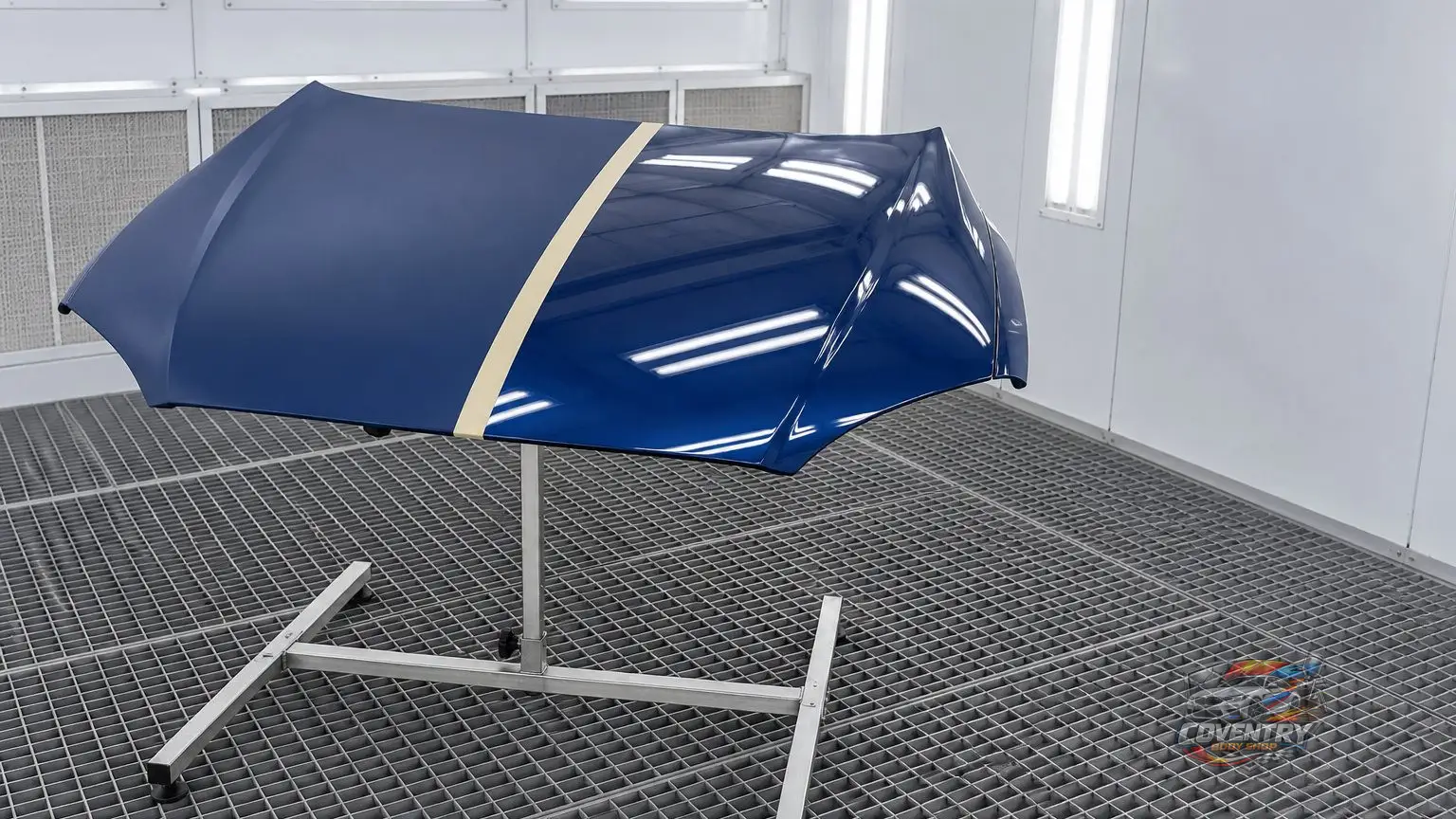
What Is Clear Coat and How Does It Work on Vehicle Paint?
Clear coat is a transparent resin layer applied over the coloured base coat on your vehicle's painted panels. It contains no pigment, so it lets the colour beneath show through while adding gloss, depth, and a protective barrier against UV rays, road grime, and minor abrasions. Modern clear coats are usually polyurethane-based and form the final stage of a two-stage or three-stage paint system.
In our Coventry bodyshop, we spray clear coat using a gravity-fed spray gun inside a filtered spray booth, then bake the panel at around 60 degrees to cure it properly. That curing process is what gives the finish its hardness and chemical resistance. Without clear coat, the coloured paint underneath would fade, oxidise, and lose its shine within a couple of years.
Why Clear Coat Matters for Your Vehicle's Finish
Clear coat matters because it carries most of the protection and most of the visual appeal on a modern car. The coloured base coat is thin and porous, so it relies on the top layer to seal it, reflect light evenly, and resist everything from bird droppings to fuel spills. When the surface starts to fail, the damage you see usually starts in that top layer before it reaches the colour beneath.
A well-applied finish preserves resale value too. Buyers notice dull, peeling, or hazy panels straight away, and they assume the car has been neglected or poorly resprayed. A smooth, glossy shine tells them the paintwork has been looked after. For a small scratch or scuff, a localised spot re-clear is often all that's needed to put things right.
What the Top Layer Actually Protects Against
A healthy layer of clear shields the base coat from a long list of everyday hazards that would otherwise damage or dull the paint. The thickness on a factory finish is usually around 40 to 60 microns, and a professional respray should land in the same range.
Common threats include:
- UV radiation: sunlight breaks down pigment over time and causes fading, especially on reds, blues, and blacks.
- Acid etching: bird droppings, insect splatter, and tree sap can burn into the surface within hours on a warm day.
- Road film and salt: winter grit and grime sit on the paint and slowly wear the finish down.
- Fuel and solvent splashes: petrol, diesel, and some cleaners can soften or stain uncoated paint.
- Light abrasion: automatic car washes with dirty brushes leave fine scratches across the surface.
Types of Finish Sprayed in UK Bodyshops
Not all top coats behave the same way. The product a technician chooses depends on the vehicle, the colour, and the finish the customer wants.
- Standard solid: the most common option for everyday cars. Hard, glossy, and relatively quick to polish.
- High-solids: contains more solid resin per coat, so it lays down thicker. Used for panel repairs and full resprays where extra depth and durability are wanted.
- Ceramic-infused: newer products with ceramic additives that improve scratch resistance and gloss retention. Often paired with a separate ceramic coating service.
- Matt or satin: used on vehicles with a factory matt finish. These require different polishing techniques because they show swirl marks easily.
If you'd like a broader breakdown of how clear coat fits into the wider paint system, our guide on acrylic, enamel, and urethane car paints explains the differences between paint families.
Warning Signs That the Top Layer Is Failing
Top coat failure rarely happens overnight. It starts small and spreads, which is why catching it early saves money. Horizontal panels like the bonnet, roof, and boot are usually the first to show trouble because they catch the most sun.
Typical signs include:
- Hazing or dullness: the panel loses its wet-look shine even after washing and polishing.
- Fine cracking: a network of tiny lines across the surface, often called micro-cracking or spider webbing.
- Peeling or flaking: the surface lifts away from the base coat, often starting on the bonnet, roof, or boot.
- Oxidation: a chalky white or yellow film that rubs off temporarily but returns after a wash.
- Patchy gloss after rain: water beads unevenly, which means the surface has lost its smoothness.
If you spot peeling, no amount of polishing will fix it. The top layer has separated from the base coat, and the only lasting repair is sanding the panel back and respraying it.
How a Professional Respray Is Applied Step by Step
A proper respray follows a strict sequence. Each stage matters because the top coat can only perform as well as the layers underneath allow.
- Preparation: the panel is washed, degreased, and sanded with fine abrasive paper to give the new paint something to grip.
- Primer: a coat of primer goes on to level the surface and protect against corrosion.
- Base coat: the coloured coat is sprayed in two or three thin passes until the colour matches and coverage is even.
- Clear application: two full wet coats are laid down, with a short flash-off time between them.
- Forced drying: the panel is baked at around 60 degrees so the top layer cures fully and hardens off properly.
- Polishing and finishing: after cooling, the panel is machine polished to remove any orange peel or dust nibs and bring up the gloss.
Spraying in a proper booth is non-negotiable. Dust, temperature swings, and contamination all show up in the finish, and they are nearly impossible to polish out of a thick top coat.
Spot Repair or Full Respray: Which Is Right?
The right choice depends on how far the damage has gone. A light scuff and a peeled panel call for very different solutions.
- Machine polishing: removes a tiny amount of material to restore gloss on lightly swirled or oxidised panels. We measure paint thickness first to make sure there's enough depth to safely polish.
- Spot re-clear: for small areas of peeling or burn-through, the damaged section is sanded, re-based, and re-cleared locally. This is a type of SMART repair in auto bodywork and keeps the work limited to the affected area.
- Full panel respray: when the top layer has failed across most of a panel, the whole panel is sanded back to bare metal or primer and refinished from scratch.
- Replacement panel: for severe cases, or where the panel is already damaged, fitting a new panel and painting it can be more cost-effective than trying to save the original.
For localised scuffs and scratches, our smart repair service in Coventry targets only the damaged area, which keeps the cost well below a full respray.
Can You Fix It Without Repainting the Whole Panel?
Often, yes, particularly when the damage is contained. If the failure is smaller than a dinner plate and the base coat underneath is still intact and colour-matched, a localised re-clear is a sound option. We mask the area, sand the failing top layer back to a feathered edge, blend fresh base coat if needed, and rebuild the surface in two coats.
Where it stops working is when failure has spread across a wide area, or when the base coat has also faded so much that a patch would not blend. In those cases, a full panel respray gives a finish you can polish and live with for years rather than months.
How Long Does Clear Coat Last on a UK Car?
Factory clear coat on a well-maintained car usually lasts 10 to 15 years before it shows serious signs of failure. Cars parked outside in strong sun, or washed at automatic brush car washes, often see failure in 5 to 8 years. Garage-kept vehicles with hand washing can push past 15 years.
Resprayed panels can last just as long, but only if the prep and product quality were right. A respray done in poor conditions with cheap materials may start failing within a couple of years, which is why choosing a reputable bodyshop matters.
Day-to-Day Maintenance Tips
Looking after the finish is mostly about removing harmful contaminants quickly and avoiding abrasive contact.
- Wash by hand: use a pH-neutral shampoo, a clean wash mitt, and the two-bucket method.
- Dry with a microfibre towel: chamois leathers trap grit and drag it across the surface.
- Clear bird droppings fast: keep a bottle of quick detailer and a soft cloth in the boot for those moments.
- Avoid automatic brush car washes: the rotating bristles are the single biggest cause of surface scratches.
- Apply a ceramic coating or sealant: this adds a sacrificial layer on top and makes washing easier.
- Park in the shade when you can: UV is the main driver of long-term breakdown.
If you're based in or near Warwickshire, we also handle repairs and resprays for drivers from Leamington Spa and the surrounding villages. It's a common request because cars from the early 2000s are now reaching the age where factory finish starts to fail.
What Affects the Cost of a Repair?
Costs vary because every repair is different, but the factors that drive price are consistent.
- Panel size: a bonnet costs more than a wing mirror cover.
- Extent of failure: a small spot repair is cheaper than a full panel respray.
- Paint system: solid colours are quicker to match than metallics or pearlescents, which need careful blending.
- Prep work: rust, dents, or old body filler add time and material.
- Product choice: ceramic-infused or high-solids options cost more than standard solid finishes.
For an accurate figure, send clear photos of the panel in daylight, include close-ups of the damage, and tell us the registration so we can identify the paint code. We'll then give you a realistic estimate rather than a guess.
How Long Does a Repair Usually Take?
A small spot re-clear can be completed in a day, including prep, spraying, and curing. Most repairs at our workshop take 3 to 7 working days once started, parts permitting.
Timelines stretch when insurance approval is needed, when parts have to be ordered, or when stripping the panel reveals hidden corrosion that needs extra work. We flag anything like that as soon as we find it so you're not left waiting without an update.
Book an Inspection at Our Bodyshop
If your paintwork looks dull, hazy, or is starting to peel, the sooner it's looked at the more options you have. Send us a few photos and your registration, and we'll come back with an honest assessment of whether a polish, a spot re-clear, or a full respray makes the most sense for your vehicle.
Leave a Comment
Comments
No comments yet.