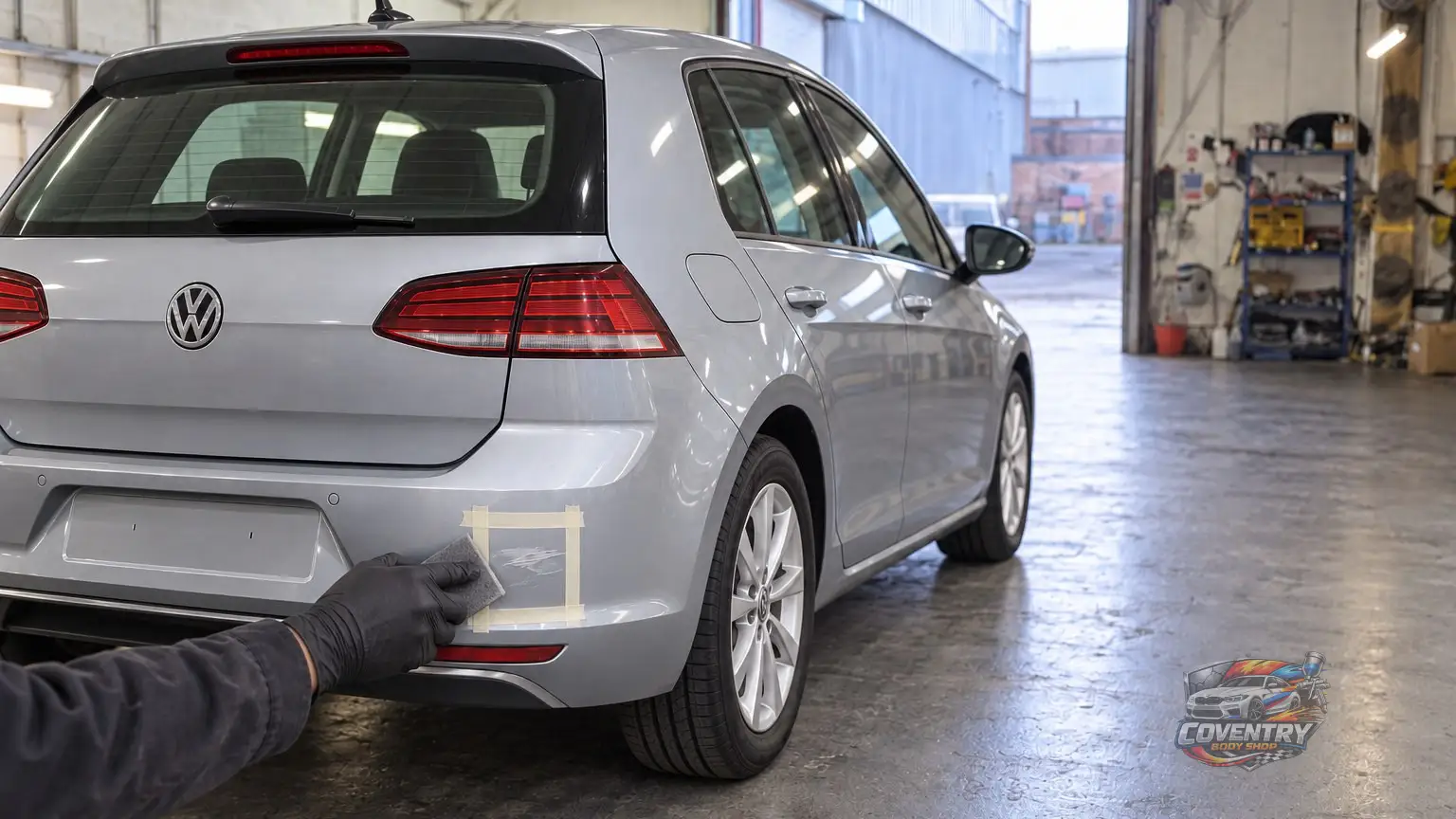
SMART stands for small to medium area repair technique: it usually means preparing, painting and blending a damaged area rather than repainting the whole panel. It can suit contained bumper scuffs, corner scrapes, light scratches, stone chips and small dents. Large or deep damage, damage crossing an edge or crease, and spreading rust usually need a wider repair.
Which scuffs, scratches and dents can SMART repair fix?
The best candidates have damage concentrated in one place, with sound paint around it. Size matters, but depth, panel shape and the condition of the surrounding finish can change which method is suitable.
These types of damage can suit a local repair:
- Bumper scuffs and corner scrapes: surface damage on a painted bumper may be suitable if the plastic beneath is intact and retains its shape. If a parking or radar sensor sits behind the damaged area, the vehicle maker's rules for repairs there must be checked first.
- Scratches over a small area: suitability also depends on depth, since a scratch through the colour may need local painting, while a shallower mark on a gloss finish may only need polishing.
- Stone chips: isolated chips can sometimes be treated locally, depending on their depth, position and whether corrosion has started.
- Small dents: a shallow depression with damaged paint may suit local preparation and painting once its shape has been corrected.
There is no single measurement that makes every repair suitable. Our SMART repair service is for damage that can reasonably be kept within a limited repair area.
A small dent with unbroken paint may be pushed or worked out using paintless dent repair, depending on access, the shape of the dent and whether the material has stretched. Fine marks confined to the clear coat on gloss finishes may respond to scratch removal and machine polishing, provided enough sound clear coat remains, but polishing cannot replace missing colour. For the wider choice between these methods, read about fixing scratches without repainting the whole car.
What happens during a SMART paint repair?
A local paint repair still needs careful preparation. Painting over a rough scratch or an uneven dent can leave the shape of the damage visible beneath the new finish.
The usual stages are:
- Clean and assess: dirt and contamination are removed so the damage and surrounding paint can be checked. Paint transfer can make a scrape appear worse than the underlying damage.
- Sand the damaged area: damaged paint is sanded back, with its edges smoothed into the sound finish around it. Nearby surfaces are protected from sanding and spray.
- Fill where needed: suitable filler may be used for remaining shallow imperfections, then shaped and sanded smooth. It does not replace necessary panel repair.
- Apply primer: the prepared surface receives the appropriate primer where required. This helps provide a suitable base for the colour.
- Apply the colour: paint is selected using the manufacturer's paint code and checked against the existing finish. The code is a starting point, since age and colour variations can affect the match.
- Clear coat and blend: colour is usually blended as it is applied, followed by clear coat, also called lacquer. A local lacquer transition is only suitable where the paint system and repair position allow it.
- Finish and polish: after sufficient drying, the repair is checked and polished where appropriate to refine the surface.
The painted area usually extends beyond the visible mark to allow a gradual transition. Even when colour is applied to a small area, the clear coat may need to cover more of the panel, depending on the paint system. Our explanation of blending new paint into the old describes why stopping colour abruptly can leave a noticeable boundary.
Minor scratches and chips usually take 1 to 2 days. Preparation, drying and finishing still take time even when the damaged area is small.
The work is done at our workshop in Wyken, Coventry.
What makes damage too big for a local repair?
A repair becomes unsuitable when there is not enough sound surrounding paint or space to blend it effectively.
These conditions can push the repair beyond SMART:
- Large, deep or creased damage: stretched or sharply folded material needs assessment beyond a cosmetic paint repair. Damage crossing a panel edge or crease usually needs a wider approach.
- Bonnet and roof damage: broad, flat surfaces can make changes in colour, texture or gloss more apparent. A small repair in the middle can show.
- Some metallic and pearl colours: their appearance changes with light and viewing angle. They may need more blending space than a local repair allows.
- Matt and satin finishes: these finishes are not polished, and a small local repair may not suit them.
- Rust beneath broken paint: exposed metal that has started to corrode needs the corrosion assessed and treated. Spreading rust cannot simply be covered with a small paint repair.
- Cracked or torn bumpers: damaged plastic needs assessment for repair or replacement before painting. Paint and filler alone cannot resolve a split.
When the surface can be repaired but a local blend is unsuitable, a panel repaint is usually the honest answer. This gives more room to manage the finish, although colour blending into adjacent panels may still be needed. Repainting alone does not correct damaged material or spreading corrosion.
What should you send for a repair assessment?
Send clear daylight photos on WhatsApp at +44 7903 105777 or with the Send enquiry button on this page. Include a close view of the damage and one of the whole panel. An angled photo can help show a dent; include any crack, panel edge or crease beside the damage.
Add your car's make, model and the location of the damage. We will tell you what the repair involves, although photos may need to be followed by an inspection.
You get a written, itemised estimate first, with no deposit. A small inspection is free. A deeper inspection costs from £200 plus VAT, deducted if the work goes ahead.
Leave a Comment
Comments
No comments yet.