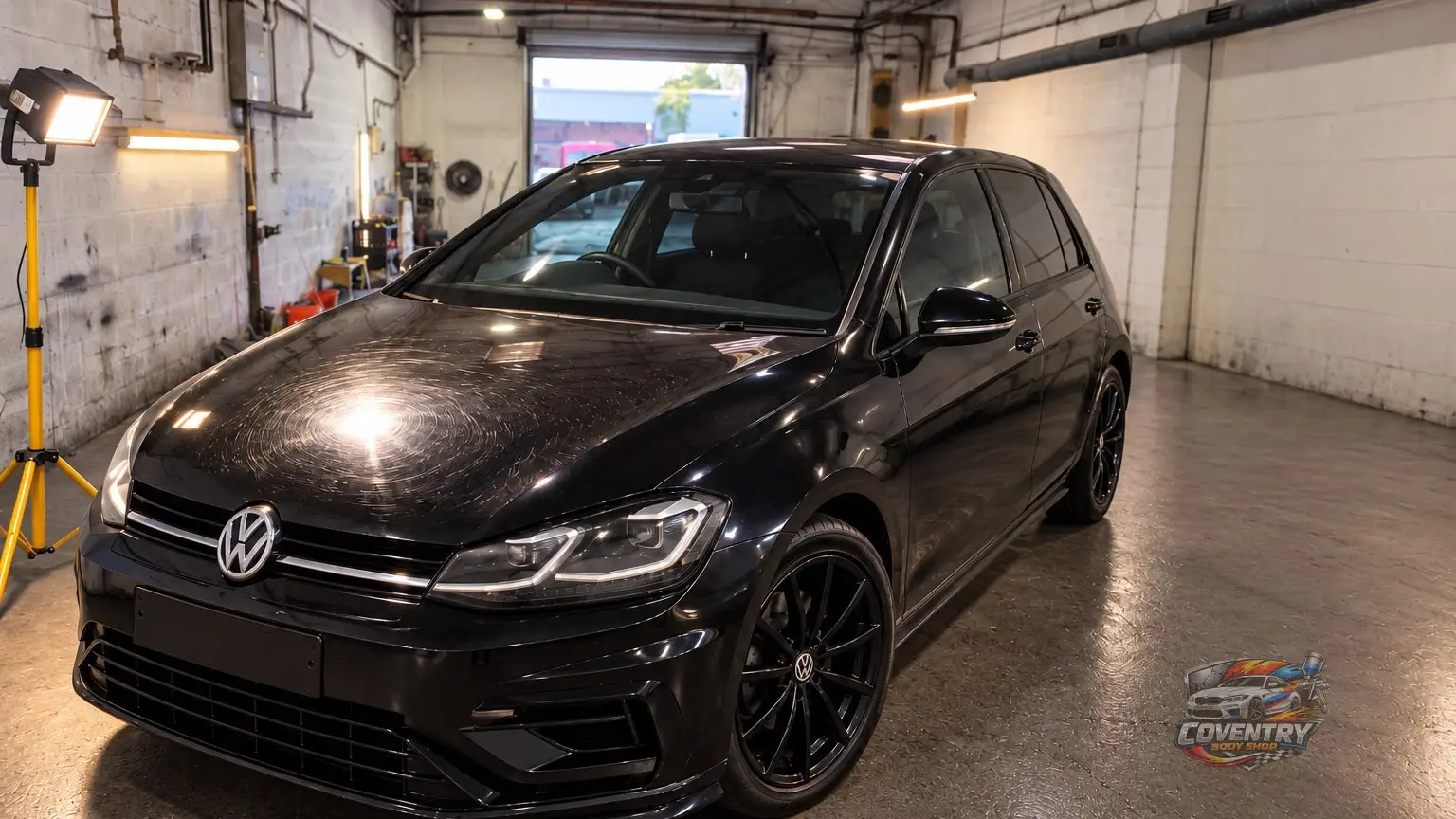
Paint correction is a multi-stage machine polishing process that removes surface imperfections from a vehicle's paintwork, restoring gloss, depth, and reflectivity without respraying the panel. It works by carefully abrading a microscopic layer of clear coat with machine polishers, cutting compounds, finishing polishes, and inspection lights to level out swirl marks, light scratches, oxidation, etching, and holograms. It is the detailer's equivalent of sanding a rough surface smooth, except the surface is your car's clear coat and the margin for error is measured in microns.
As a bodyshop that handles everything from scratch removal and machine polishing in Coventry through to full resprays, we get asked about paint correction almost daily. The short answer is that it can transform a dull, swirled finish into a deep, mirror-like shine when done properly. The longer answer, which you'll find below, covers how the process works, what it can and can't fix, what affects the price, and when a respray is the better option.
What does paint correction actually fix?
Paint correction targets imperfections that sit in the top layer of your car's paintwork, usually the clear coat. It can't fix dents, rust, or deep structural damage, and it won't change the colour of a panel. What it does fix is the surface texture that catches the light in all the wrong ways.
Common imperfections corrected include:
- Swirl marks: fine circular scratches visible in direct sunlight, usually caused by incorrect washing, automatic car washes, or poor buffing technique.
- Light scratches: surface marks that don't catch a fingernail when run across them, typically from keys, bushes, or careless contact.
- Oxidation: dull, faded paint caused by years of UV exposure, most noticeable on darker colours.
- Etching: marks left by bird droppings, insect splatter, tree sap, or water spots that have sat in the sun and burned into the clear coat.
- Holograms: wavy patterns left in the paint by an inexperienced polisher using the wrong pad or compound.
- Buffer trails: dull patches caused by uneven polishing pressure or worn pads.
If a scratch catches your fingernail, it usually goes deeper than the clear coat and correction alone won't make it disappear. In those cases, wet sanding followed by polishing, panel touching in, or a respray may be the right route. We cover this in more detail in our guide to car body repair processes, costs and quality.
How does it differ from a machine polish or a respray?
Paint correction, machine polishing, and a respray are three different services, and the difference matters when you're booking work in. A machine polish is a lighter version of the same idea, usually a single-stage pass with a finer polish to refresh gloss rather than remove deep defects. Paint correction is multi-stage polishing done specifically to remove measurable defects from the paintwork, measured with a paint depth gauge before, during, and after each stage.
A respray is something else entirely. It involves applying fresh paint and lacquer to a panel, usually because the existing finish has been damaged beyond what polishing can repair, the colour needs to change, or the panel has been repainted as part of an accident repair. If you're unsure which is right for your car, our breakdown of acrylic, enamel, and urethane car paints explains how the factory finish is built up in the first place, which helps you understand what polishing can and can't undo.
What does the correction process actually involve?
A proper correction job follows a set sequence. Rushing any stage ruins the finish, which is why cheap offers often leave holograms behind.
- Wash and decontamination: the car is washed, then treated with a clay bar or clay mitt to remove bonded contaminants like tar, industrial fallout, and tree sap. Polishing over contamination grinds it into the paint and causes fresh scratches.
- Inspection under strong light: we inspect every panel under a swirl-finding light, usually an LED panel or a detailing torch. This is where the depth of defects becomes clear and the right pad and compound combination is chosen.
- Paint depth measurement: a paint thickness gauge records how much clear coat is left. Cars with thin, resprayed, or previously polished paint have less material to work with, and this dictates how aggressive the correction can safely be.
- Compounding stage: a cutting pad and compound are used with a dual-action or rotary polisher to remove the deeper defects. This is the heavy lifting and the stage most likely to leave marks if rushed.
- Polishing stage: a finer pad and polish refine the finish, removing the haze left by the compound and bringing back gloss.
- Finishing stage: a finishing pad and ultra-fine polish remove any micro-marring and bring the paintwork to its final clarity.
- Wipe-down and protection: the panels are wiped with an isopropyl alcohol solution to remove polish oils, then a wax, sealant, ceramic coating, or paint protection film is applied to lock in the finish.
On a well-maintained car, full correction usually takes a full working day or longer. On heavily neglected paint, it can run into two or three days because each panel needs more stages.
Why bother correcting the paintwork at all?
A corrected finish looks better, but the benefits run deeper than that. Removing oxidation and contamination slows further degradation of the clear coat. A properly sealed surface resists water, bird droppings, and road grime better than neglected paint. Gloss and depth help disguise minor wear when you come to sell, which matters for resale value on prestige and everyday cars alike.
There's also a financial case. A full respray costs many times more than a correction, and on a car with sound paintwork it isn't necessary. Correction lets you reset the finish without stripping it back to bare metal.
What goes wrong when correction is done badly?
Done badly, paint correction leaves the finish worse than you started. The most common problems we see coming into our Coventry workshop include:
- Hologramming: caused by the wrong pad, wrong speed, or wrong polish combination, leaving visible trails in sunlight.
- Burn-through: too much pressure, heat, or compounding on a thin panel, usually edges, bonnets, and rooflines, exposing primer or paint beneath.
- Buffer marks: dull patches from uneven pad contact or polishing over a contaminated surface.
- Micro-marring: very fine scratches left by an overly aggressive compound not refined with a follow-up polish.
- Thin clear coat: removing too much material during correction, leaving the panel vulnerable to future stone chips and UV damage.
For these reasons, paint correction should be carried out by someone who can measure paint depth, choose the right pad and compound for the specific paint type, and recognise when a panel has been resprayed or has too little clear coat left to polish safely. If you're booking the work in, ask whether the technician uses a paint thickness gauge and what training they have.
What affects the price?
Prices vary depending on the condition of the paint, the size of the vehicle, the level of correction chosen, and the protective coating applied afterwards. We won't quote figures here because every car is different, but the main drivers of cost are clear.
- Vehicle size: a small hatchback has fewer panels to correct than a long-wheelbase estate or large SUV.
- Paint condition: a one-owner car that's been hand-washed carefully takes less time than a daily driver covered in swirl marks.
- Number of correction stages: a single-stage enhancement is cheaper than a two-stage or three-stage full correction.
- Paint hardness: some manufacturer finishes, including many German clear coats, are extremely hard and need more time and the right products to correct.
- Protection package: adding a ceramic coating, paint protection film, or a quality wax increases the price but extends the life of the finish.
- Additional services: engine bay detailing, interior valeting, glass polishing, or wheel refurbishment alongside correction are usually priced separately.
Most reputable detailers will want to see the car, photograph the paintwork under strong light, and confirm paint depth before giving a fixed price. If you're sending photos, daylight shots taken with the sun behind the camera help, but a physical inspection is always more accurate.
How long does a correction job usually take?
A one-stage enhancement usually takes half a day to a day. A two-stage correction on a mid-sized car typically takes a full day. A three-stage correction on a larger or heavily neglected vehicle can take two to three working days. Add drying and curing time if you're booking a ceramic coating at the same time, since most coatings need a controlled environment for several hours after application.
Workshops with high demand may also have a queue, especially in spring and early summer when owners book work in for the show season. If your car is needed daily, ask about a courtesy car or a Saturday handover when you book.
How do you maintain the finish afterwards?
A corrected finish is only as good as the washing technique you use afterwards. The whole point of correction is to remove the marks left by bad washing, so going back to old habits undoes the work quickly.
- Use the two-bucket method: one bucket for soapy water, one for rinsing the wash mitt. This stops grit being dragged back across the paint.
- Use a lambswool or microfibre wash mitt: rather than a sponge, which traps grit against the surface.
- Dry with a clean microfibre towel or a blower: rather than dragging a chamois across the wet panels.
- Avoid automatic car washes: the brushes and recycled water are a fast route back to swirl marks.
- Apply protection regularly: a wax every few months or a ceramic coating maintained with a topper helps the finish last.
If you'd rather not maintain the finish yourself, a ceramic coating applied after correction gives longer-lasting protection, but it isn't a magic solution. It still needs correct washing technique to keep swirl marks at bay.
Is it worth correcting paint on an older or higher-mileage car?
Often, yes. The resale value of a clean, glossy car is consistently higher than the same model with dull, swirled paint, and the cost of correction is usually a fraction of the difference it makes to a private sale or part-exchange price. On older cars with thin or checked paint, we'll always measure clear coat depth first and recommend a lighter enhancement rather than a full correction if the paint can't safely take it.
We see plenty of drivers from Coventry and surrounding towns, including customers travelling from Northampton for correction work before selling, returning a lease vehicle, or just enjoying the car again. Booking in for an inspection before committing to a full correction is always the safest approach.
Book a paint inspection before committing to correction
If your paintwork looks dull, swirled, or scratched, a quick inspection is the best place to start. We'll measure clear coat depth, photograph the panels under strong light, and tell you honestly what correction will achieve, what it won't, and whether a lighter enhancement or a respray is the better route. Send us a few daylight photos of the worst panel and we'll come back with an initial view before you bring the car in.
Leave a Comment
Comments
No comments yet.