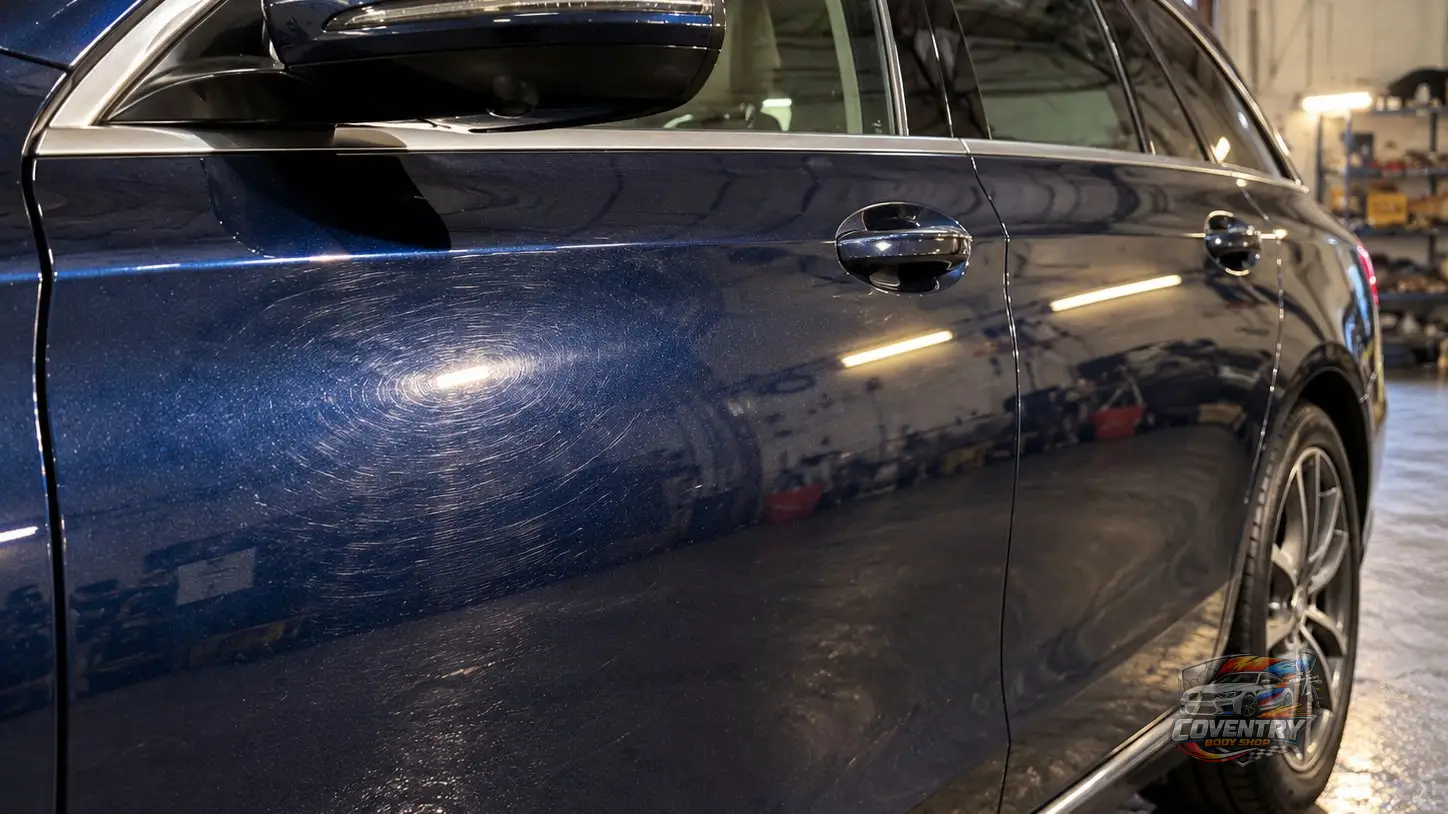
Yes, automatic car washes can damage your paint. Brush-style washes, in particular, can leave fine scratches and swirl marks, especially on darker colours and softer clear coats. The risk depends on the wash type, brush condition, detergent strength, and how dirty the car is before it goes in.
Most of the damage is cosmetic rather than structural. Repeated micro-scratches over months will dull the finish, weaken the clear coat, and make the paint harder to keep clean. If the paint already shows visible damage before a wash, an automatic machine can quickly make it worse.
How Do Automatic Car Washes Damage Paint?
An automatic car wash isn't one thing. Several systems exist in the UK, and the risk to your paint varies a lot between them.
The main types you'll come across are roll-over brush washes, tunnel conveyor washes, and touchless or laser-guided systems. Brush washes use large rotating strips of cloth, foam, or polypropylene bristles. Tunnel washes pull your car through on a conveyor while spinning brushes and cloth strips do the work. Touchless systems rely on high-pressure water and chemicals alone.
The brushes themselves are the main concern. They pick up grit, sand, and fine debris from previous cars. That debris then drags across your panels. It's not the brush material that scratches the paint; it's what the brush is carrying.
- Roll-over brush washes: common at petrol stations, with fixed brushes that move over a stationary car.
- Tunnel conveyor washes: pull the car through on a track while brushes and cloth strips spin around it.
- Touchless washes: use high-pressure water and strong detergents, with no physical contact.
- Hand car washes: usually bucket and sponge, though quality varies a lot.
Which Wash Type Causes the Most Damage?
Brush and cloth tunnels cause the most cosmetic damage. Touchless systems cause the least, but they aren't risk-free either.
Soft-cloth wash systems feel gentle, but those cloths aren't cleaned between every car. Over a busy day, the cloth pad can hold fine grit from dozens of vehicles. When that pad presses against your bonnet or door, it acts like very fine sandpaper against your clear coat.
Foam and polypropylene brushes are stiffer and can leave more visible marks, especially if a brush hasn't been replaced in years. Older brushes develop hardened edges that scuff rather than glide.
Touchless systems skip the contact problem, but they use stronger chemicals to compensate. Harsh detergents can strip wax protection, dry out rubber trims, and on some paints leave spotting if the water isn't filtered well.
- Brush tunnels: highest risk of swirl marks and scratches, especially on dark colours.
- Soft-cloth systems: lower visible scratch risk but still carry grit between cars.
- Touchless washes: safest for paint but can weaken protective wax and sealants.
- Hand washes: lowest risk when done well, highest when the same sponge gets used wheel-to-body.
What Kinds of Damage Should You Watch For?
The most common damage we see linked to automatic washes is swirl marks, light scratches, and dull patches. These usually show up first on the bonnet, roof, and boot lid where the brushes press hardest.
Swirl marks are tiny circular scratches in the clear coat. They're barely visible under normal light but show clearly in direct sunlight, especially on black, dark blue, or dark grey paintwork. They're annoying but mostly cosmetic.
More serious damage can happen when existing problems get ignored. A small stone chip or already-loose trim can catch on a brush and tear, leaving a longer scratch or pulling a trim piece off. We've seen wing mirrors snapped and washer nozzles ripped out by aggressive brush systems.
Edge damage is another common issue. The leading edge of the bonnet, the top of the roof, and the lower part of the tailgate take more direct contact from brushes. If the paint is already thin or oxidised in those areas, an automatic wash can speed up clear coat failure.
Does Wash Frequency Matter?
Yes. A single automatic wash is unlikely to cause obvious damage, but weekly visits will build up micro-scratches over months.
Each pass leaves a small amount of damage. On its own, that's nothing. Repeated dozens of times, the clear coat slowly loses depth and gloss. Once the clear coat thins out, the colour coat underneath becomes vulnerable to UV, pollution, and staining.
If you wash your car weekly at a tunnel wash, expect the finish to look dull within 12 to 18 months. If you wash once a month or less, the build-up is much slower. The same applies to frequency at hand washes with poor technique.
When Does Paint Damage Need a Bodyshop?
Light swirls and minor dullness don't usually need a bodyshop visit. A good machine polish by a detailer can usually restore them. The point where you should consider professional repair is when damage goes beyond the clear coat.
If you can catch a scratch with your fingernail, it's usually through the clear coat and into the colour layer. Those marks won't polish out. They need touch-up or repainting to stop moisture getting under the paint and causing rust.
Other cases that need bodyshop work include:
- Deep scratches: any mark that catches a fingernail has gone past the clear coat.
- Peeling or flaking paint: clear coat failure usually means respray of the affected panel.
- Bonnet or bumper damage from brushes: torn trim, scuffed edges, or cracked lamp covers.
- Bird droppings or tar etched in: automatic wash chemicals can bond contaminants into paint if not rinsed off quickly.
For localised scuffs and small scratches, a smart repair in Coventry can refinish just the damaged area. That's quicker and cheaper than a full panel respray, and the surrounding paint is left untouched.
Can You Avoid Damage and Still Use Automatic Washes?
You can reduce the risk without giving up automatic washes completely, but you have to pick the right system and prep the car beforehand.
The safest automatic option is a touchless wash with filtered water. The next best is a soft-cloth system that replaces its cloth pads regularly. If you go to a tunnel wash, look for one that uses fresh water for the final rinse, not recycled water full of grit.
Before going through, rinse off any loose dirt. A quick pre-rinse at home with a hose removes the worst of the grit that would otherwise be dragged across the paint by the brushes. Removing mats and roof racks also helps; they hold grit that can fall onto panels mid-wash.
Useful preparation steps include:
- Pre-rinse at home: knocks off loose grit before the brushes touch the car.
- Remove roof racks and bike mounts: stops trapped debris falling onto paint.
- Fold in wing mirrors: avoids snagging and snapped mirror caps.
- Close all windows and sunroof: prevents water ingress into the cabin.
- Wax or sealant the car beforehand: gives the clear coat a sacrificial layer between brush and paint.
What's Better Than an Automatic Wash?
A two-bucket hand wash with a proper mitt, fresh water, and a clean grit guard is the gold standard for paint safety. The two-bucket method keeps dirt in one bucket and clean rinse water in the other, so the mitt doesn't drag grit back onto the car.
If you don't have time for that, a pressure washer and snow foam are a good middle ground. Snow foam lifts dirt off the surface and rinses away without contact. After the foam rinse, a gentle mitt wash and microfibre drying towel finish the job safely.
Professional detailing takes this further with paint correction, ceramic coatings, and paint protection film. A ceramic coating doesn't make your car scratch-proof, but it does add a hard layer that resists swirl marks far better than factory clear coat alone.
How Does Paint Type Affect the Risk?
Some paints handle automatic washes better than others. Solid colours with a hard clear coat, like white or silver, hide swirl marks well and resist minor scratching. Metallic and pearl finishes, especially in dark colours, show every mark.
Single-stage paints, found on some classics and older vehicles, are softer and easier to mark. Modern base-coat clear-coat systems are harder but still vulnerable at the edges and on horizontal panels.
If you're choosing a car or considering a respray, the paint system matters for long-term finish. Our guide to car paint types covers how acrylic, enamel, and urethane finishes compare on durability and repairability.
What Should You Do If Your Paint Is Already Damaged?
Start by working out how deep the damage goes. Wash and dry the car, then look at it under direct sunlight. Swirl marks will show as a spider web of fine scratches. Anything deeper usually runs in one direction rather than circular.
If the marks are light, a detailer can machine-polish them out in a day. If they catch your fingernail, you'll need touch-up paint at minimum, and possibly a panel respray if the area is large or the colour match is tricky.
For small chips and scratches that don't justify a full respray, our SMART repair guide explains how bodyshops fix localised damage without redoing the whole panel.
Are Hand Car Washes Safer Than Automatic?
Good ones are safer than automatic washes. Bad ones are worse.
The risk with hand washes isn't the technique, it's the shortcuts. Using one bucket for everything, reusing a dirty sponge on multiple cars, and dragging grit across panels are all common at budget hand wash outfits. We've seen cars come in with worse wash-induced scratches after a cheap hand wash than after a tunnel wash.
If you use a hand wash, look for one that uses grit guards, microfibre mitts, and separate buckets for body and wheels. If the operative sprays the car with a pressure washer before touching it, that's a good sign.
What About Car Wash Wax and Polish Options?
The hot wax and polish options at the end of an automatic wash give short-term shine but little real protection. They add a thin layer that fills micro-scratches temporarily and boosts gloss for a week or two.
For longer-term protection, a proper wax, sealant, or ceramic coating applied by hand lasts months rather than weeks. These products give the clear coat a buffer zone, so brushes drag across the protective layer instead of the paint.
If you do use an automatic wash regularly, refreshing a wax or sealant every few months will keep that buffer in place. Skipping protection means the brushes hit bare clear coat every time.
Does Coventry Weather Make This Worse?
Local conditions do play a part. In Coventry and across the Midlands, road grime, salt in winter, and tree sap in summer all build up on paint faster than in drier regions. That build-up means more grit on the car before it ever hits the wash, which raises the risk of scratches from any contact system.
Drivers using the M6, A444, or city centre routes pick up extra brake dust and traffic film. A weekly automatic wash on that kind of grime is asking for swirl marks.
For drivers across the wider region, including car body repair in Northampton, the same advice applies: pre-rinse, protect, and avoid washes with dirty brushes.
Book a Paint Inspection or SMART Repair
If your car already shows swirl marks, dull patches, or scratches from automatic washing, a quick inspection will tell you whether a polish will fix it or whether a panel respray is needed. Send us a few clear photos of the damaged area in daylight, and we'll come back with honest, no-obligation advice on the right repair and what it should cost.

Leave a Comment
Comments
No comments yet.