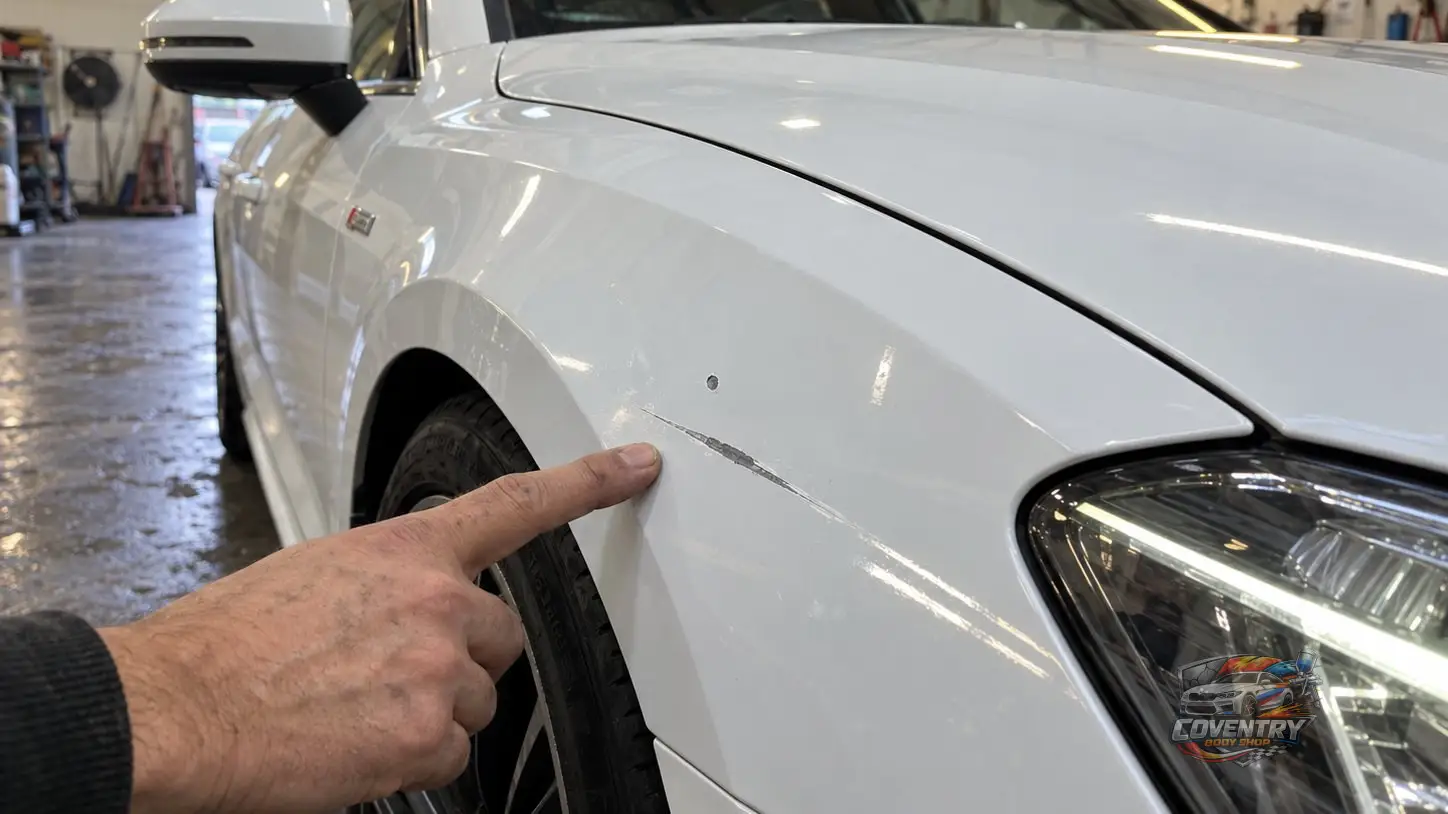
On sound gloss paint, a shallow clear-coat mark may polish out if enough coating remains. Touch-up suits small chips where paint is missing. A panel repaint suits wider damage through the colour, several scratches close together, or a coating that is failing across one panel. A full respray can address widespread paint failure or a colour change; the areas included need agreeing. Size is only a starting point: depth and the condition of the coating matter as much.
How can you tell how deep a scratch is?
Clean the area gently and look at it in good daylight. Lightly draw a fingernail across the scratch. If it catches, the damage may be too deep for polishing alone, but this test cannot tell you exactly which paint layer is affected.
On paintwork with a clear coat over the colour, these clues help:
- Clear coat: A pale scratch can sit in this transparent outer layer while the colour remains intact. Cloudiness needs inspection to establish its cause. Polishing removes coating, so even a scratch within the clear coat may be too deep to remove safely.
- Colour coat: Damage through this layer leaves a break in the car's colour, exposing a different shade underneath. Paint is now missing, so polishing alone cannot fix it.
- Primer: This undercoat often looks grey, white or another flat colour. Its shade varies, so colour alone is not proof.
- Bare metal or plastic: Exposed metal may look shiny or already show rust. Bumper plastic is often dark and dull, though its colour varies.
If the layers are unclear, do not scrape or press harder; an inspection tells you more.
When is touch-up paint enough?
Touch-up adds paint to a small damaged spot. With suitable preparation, it seals exposed areas and helps hide isolated chips from normal viewing distance. Our paint touch-up and chip repair suits damage where you can accept a small visible repair close up. Prices start from £58.80 including VAT (£49 plus VAT).
It does not make the repair invisible or necessarily level with the surrounding paint. A slight difference in texture, colour or reflection can remain.
A tiny chip can go down to primer or bare metal and still suit touch-up, once any rust is removed and the surface is properly prepared. What rules touch-up out is the extent of the damage: spreading touch-up paint across a wide scrape will not restore an even finish or repair the surface beneath it.
When does the whole panel need painting?
A broad scrape, several scratches close together or clear coat peeling across one panel usually makes repainting more suitable.
Dull or faded paint is a different case. Surface oxidation on gloss paint can sometimes be polished back, so a faded panel needs checking before any paint is recommended. Paint that is flaking, peeling or worn through cannot be polished back.
Painting a single panel allows the damaged surface to be prepared before fresh paint is applied. A dent or uneven area needs correcting first, because paint follows the shape underneath it. We straighten bent panels, including rear quarter panels, before painting where the repair needs it.
The painted area can extend beyond the original damage. Taking the clear finish to a panel edge gives it a natural stopping point instead of leaving a visible boundary halfway across a door. Colour may also be blended into the next panel to soften a visible difference, so a single-panel repair can include work on an undamaged neighbour. Single-panel painting starts from £180 including VAT (£150 plus VAT). These are starting prices for different jobs, with the final price set after inspection.
When is a full respray worth considering?
A full respray becomes relevant when paint failure affects much of the car, such as clear coat peeling on several panels, or when you want a colour change. Check whether the quoted work includes door shuts and other internal painted areas. Painting one panel would leave the rest of that deterioration untouched.
It is usually overkill for one scraped door or damaged bumper when the remaining paint is sound. Even damage on more than one panel does not automatically mean the whole car needs painting.
If you are unsure whether the problem is local or widespread, our guide to signs your car needs repainting helps you check the rest of the paintwork before discussing the repair.
What else changes the choice of repair?
Two marks of the same size can need different repairs:
- Where the damage is: A mark in the middle of a bonnet or door is easier to see than one low down, so a touch-up there is more likely to bother you. Damage near a panel edge can affect where a panel repair finishes.
- Metallic or pearl paint: These finishes change appearance with light and viewing angle, so a touch-up on them is more likely to show. If that would bother you, a panel repaint is worth discussing.
- Rust at a chip: Painting over rust does not resolve it. We do not cut or weld metal panels. If your car needs that, we will tell you and recommend a garage we have trusted with welding work before.
- Plastic or metal: An exposed plastic bumper cannot rust, but cracked plastic needs more than paint. A metal panel needs checking for corrosion where its coating has broken.
- How long you will keep the car: If you plan to keep it for years, a visible touch-up you notice every day may be worth upgrading to a panel repaint. If you plan to sell soon, a neat touch-up that seals a chip may be all it needs; a repair is no sure way to raise the price.
- A lease return: Check the leasing company's return standards first. Some small marks may count as fair wear and tear and need no repair at all. If a repair is needed, a visible touch-up may not be accepted just because the chip is covered.
How do we decide what your car needs?
At our workshop in Wyken, Coventry, we look at the car to assess the size, depth and spread of the damage. We consider the surrounding paint and discuss the finish you want before recommending polishing, touch-up, a panel repaint or a wider respray.
A small inspection is free. If the paint damage needs a deeper inspection, the charge is from £240 including VAT (£200 plus VAT), taken off the repair bill if the work goes ahead.
We mix paint to the manufacturer's paint code using specialist colour mixing. The code provides a starting point, while the existing paint's condition also affects the match.
Sprayed repairs are painted in our workshop's spray booth. All painting is done by our director. He previously worked as an Aston Martin technician and painter.
Arrange a paintwork inspection
We advise sending photos of the chipped or peeling paint by WhatsApp on +44 7903 105777 or the Send enquiry button, though they are optional. This can save you a wasted trip if we cannot take on the job. Say what happened and where the damage is.
After booking, we advise everyone to bring the car in for us to see it in person. No deposit is needed.
Leave a Comment
Comments
No comments yet.