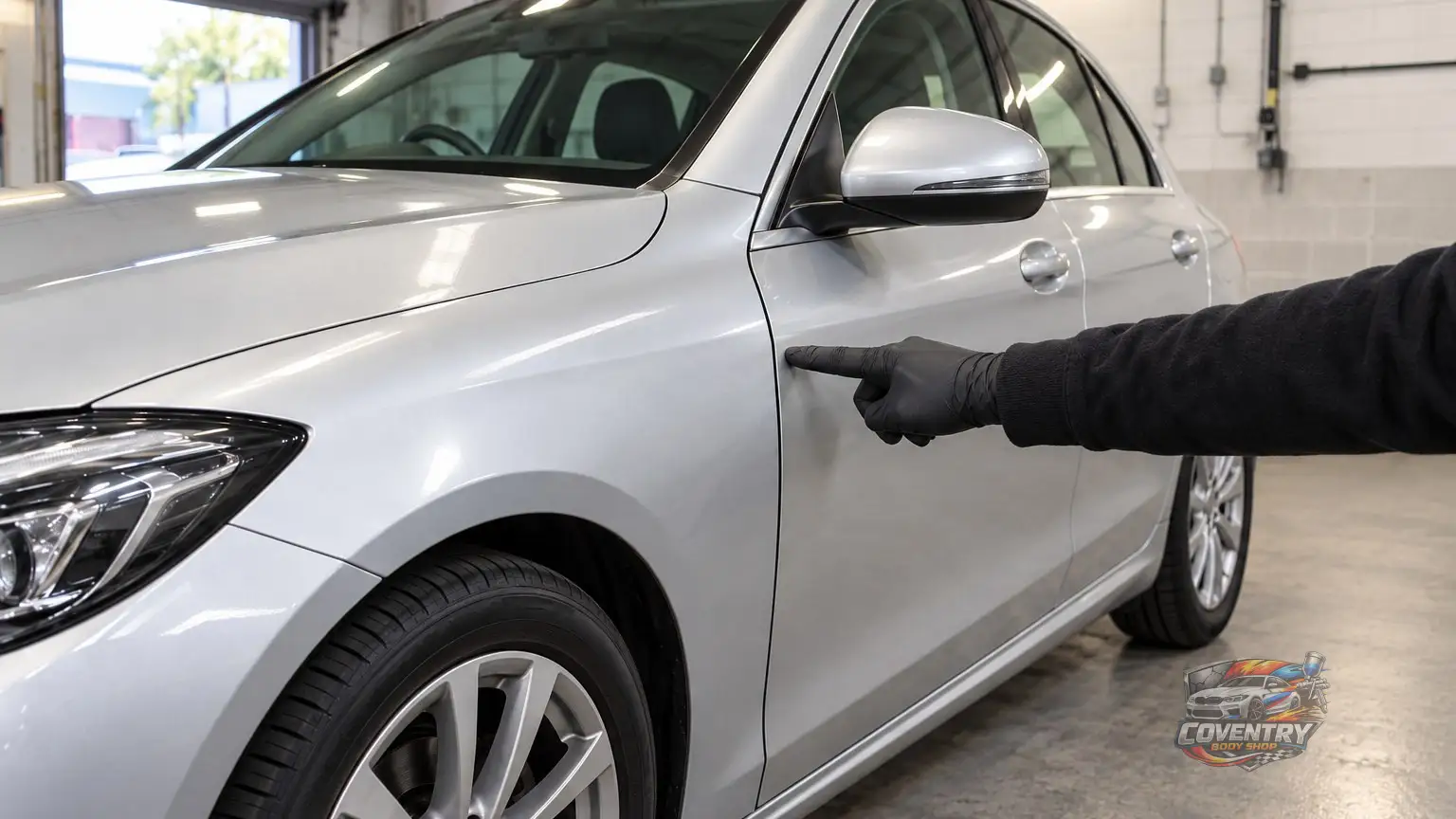
Yes, paint condition affects your car's resale value because buyers and dealers look closely at the bodywork. Visible chips, scratches, dents, mismatched panels and rust bubbles usually lower offers or give someone room to haggle. Repairing obvious damage can help your car sell, but a full respray can cost more than it adds to the sale price, so compare the quote with offers first and remember that no repair guarantees a particular price.
What will buyers and dealers check on the paintwork?
Look over your car when it is clean and dry, in good daylight. Walk around it, then look along each side at an angle. Reflections can make dents, scratches and differences in the finish easier to spot than they are when you face a panel directly.
These are the main areas to check before a valuation or viewing:
- Visible damage: Chips on the bonnet, scratches around door handles and bumper scuffs can draw attention, particularly where damage stands out against the paint.
- Differences between panels: Changes in colour, gloss or surface texture can prompt questions about earlier repairs. Lighting and viewing angle can also affect how a finish looks.
- Paint on surrounding parts: Overspray on rubber seals or trim can suggest that masking during an earlier repaint was inadequate.
- Rust bubbles: Check wheel arches and sills. Bubbling can indicate corrosion beneath the paint, so the visible patch may not show its full extent.
A dealer or buyer may also use a paint depth gauge. Read about how paint depth readings can indicate a repainted panel, but remember that readings need interpretation and cannot establish the repair history on their own.
Which marks deserve attention before you advertise?
Start with damage that dominates the appearance of an otherwise tidy car. A noticeable door scratch, dent on the bonnet or scraped bumper may be worth assessing because it gives a buyer a specific repair to consider.
Fine marks and scattered small chips may be reasonable wear for the car's age and mileage. Repairing every minor blemish can mean spending money on details a buyer already expects. Judge each mark against the condition of the whole car, rather than inspecting it in isolation.
The repair needed depends on the depth of the damage as well as its size. Some surface marks may improve with polishing, while deep damage to the clear coat or damage through the colour layer may need repainting. Our guide to fixing scratches without a full repaint explains which types of damage may suit a smaller repair.
Rust deserves a separate assessment. Painting over bubbling does not resolve corrosion underneath, and deterioration around a sill may involve more than appearance. Have suspected structural corrosion checked by a professional before you keep using the car.
How do you decide whether a repair is worth doing before part exchange?
Get an itemised repair estimate before authorising work, then compare the cost with the likely difference between offers for your car as it is and repaired; any estimated difference is never certain. The same repair cost takes a larger share of a lower car value. If several panels need attention, look at the combined work before committing to individual repairs.
Ask for a valuation with the damage visible and described accurately. You can then ask whether completing the proposed repair would change that valuation. Treat any indication cautiously, even when its conditions are confirmed; only a firm offer that applies after the stated repair removes that uncertainty.
For a private sale, a repair may improve presentation and remove a reason for hesitation, even if its effect on the eventual offer is uncertain. If the financial benefit is unclear, selling with the damage honestly described may be the more sensible choice. Do not base the decision on an assumed increase in value.
Will a repainted panel put a buyer off?
A repaired panel is not automatically a problem if the work is good. The reason for the repair, its quality and the condition of the rest of the car all matter. A poorly matched or uneven finish can raise questions that a consistent, well-finished panel may not.
Where the damage is confined to a particular area, repainting a single panel may be appropriate. Colour, fading and the position of the damage can affect how much painting is needed, including whether paint needs to extend gradually into an adjoining panel to make the colour change less noticeable. Ask what the estimate includes before deciding.
Keep the invoice and any available photographs from before the repair. These can help explain what was damaged and what work was carried out. Answer a buyer's questions honestly, distinguish what you know from what you cannot confirm, and never use fresh paint to hide accident damage.
What changes if you are returning a lease or finance car?
If your agreement involves handing the car back, read the leasing or finance company's fair wear standards before arranging repairs. Damage beyond those standards may lead to a return charge. Acceptable wear depends on the applicable agreement, so do not assume that every chip or scratch needs repairing.
Get questionable damage assessed before the return inspection, while you still have time to consider the options. Check any repair requirements with the company and compare the proposed work with its return guidance. Our repairs before a lease return service can help you assess paint and body damage before handover, but cannot guarantee the inspection outcome.
How can you get the damage assessed?
To have damage assessed at our workshop in Wyken, Coventry, send clear daylight photos on WhatsApp at +44 7903 105777 or with the Send enquiry button on this page. Include a close view of the damage and one of the whole panel, and we will tell you what the repair involves.
You get a written, itemised estimate first, with no deposit. A small inspection is free; a deeper inspection costs from £200 plus VAT, deducted if the work goes ahead.
Leave a Comment
Comments
No comments yet.