UNIT 5 STAR INDUSTRIAL PARK,BODMIN ROAD CV2 5DB, Coventry447722033412
Mon-Fri: 8:00 AM - 6:00 PM, Sat: 9:00 AM - 2:00 PM, Sun: Closed

What Is Paint Depth Measurement? A Bodyshop Guide

May 25, 2026 11 min read
What Is Paint Depth Measurement? A Bodyshop Guide

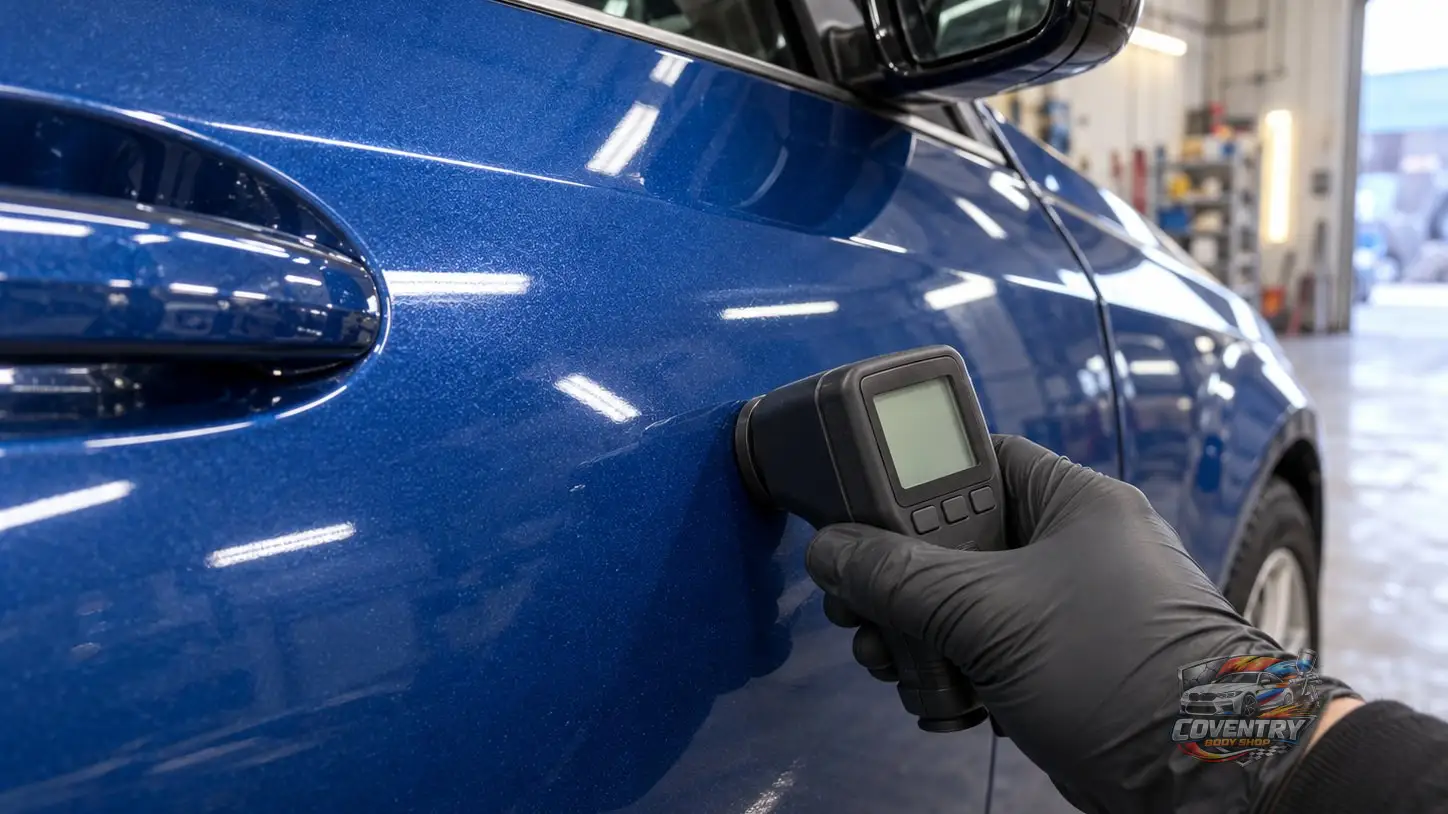
Paint depth measurement is the process of using a digital gauge to read the total thickness of paint, primer, and coatings on a vehicle panel, usually expressed in microns. We use it at the start of almost every repair estimate so we know what we're working with before we touch a sander or a spray gun. A single reading takes seconds, and the numbers we collect tell us whether a panel is original, has been resprayed, or carries filler under the surface.

For drivers, the real value sits behind those numbers. Correct paint depth guides how far we can safely polish out a scratch, whether a panel can be blended instead of resprayed, and whether a fresh coat will actually cure properly on top of what's already there. Without that measurement, a bodyshop is guessing. With it, we can plan a repair that lasts, matches the original finish, and doesn't risk burning through healthy paint during preparation.

How Paint Depth Measurement Actually Works

Paint depth measurement uses a handheld electronic gauge that reads the distance between the panel's bare metal or substrate and the top of the clearcoat. Most modern gauges rely on either magnetic or eddy current principles depending on whether the panel is steel, aluminium, or a mix of both. Some units combine both technologies and switch automatically based on the substrate.

The probe sits flat against the surface, sends a signal through the coatings, and returns a reading in microns (thousandths of a millimetre). A typical modern car comes from the factory with around 100 to 180 microns of total coating, though this varies by manufacturer, colour, and panel. A bonnet, for example, often reads slightly thicker than a roof because it's painted horizontally during production.

We take multiple readings across a panel, not just one spot, because factory application isn't perfectly even and because prior repairs show up as localised thickness changes. A high reading in one area and a normal reading beside it usually means a panel has been resprayed in that spot. A consistently high reading across an entire panel points to a full respray, and a very high reading combined with a soft or uneven surface suggests body filler underneath the topcoat.

Why Paint Depth Matters in Bodyshop Repairs

Paint depth matters because it directly controls how much work a panel can tolerate before the base coats or metal underneath are exposed. Every time we sand, compound, or polish a panel, we remove a small amount of material. If a panel has already been resprayed once, that safe working window has shrunk, and the risk of burning through grows with every pass.

It also matters because different paint systems behave differently once they're layered. Original factory coatings are usually baked at high temperatures and bonded tightly to the substrate. Aftermarket resprays, particularly older ones, may use different chemistries, fillers, or primers that don't respond well to further heat, sanding, or solvent exposure. Reading the depth helps us choose a preparation method that won't react badly with what's underneath.

For our customers in Coventry, this is the difference between a repair that disappears into the original finish and one that leaves a tell-tale ring, a sand-through, or a colour match that drifts after a few months on the road.

Standard Paint Depth Readings and What They Tell Us

Standard paint depth readings tell us whether a panel is original, resprayed, or carrying filler underneath. Most factory panels measure between 100 and 180 microns in total coating thickness, though the exact figure varies by manufacturer, colour, and panel position. Metallic and pearl finishes tend to sit at the higher end of that range because they need an extra base coat for the flake to lay evenly.

Every vehicle we work on starts with a baseline map. We measure several reference points on each panel so we have a clear picture before any work begins.

  • Original factory finish: typically 100 to 180 microns, depending on the maker, the panel, and the colour chosen.
  • Single previous respray: usually adds 80 to 150 microns on top of factory, depending on how many coats were applied and whether primer was used.
  • Spot repairs or blended panels: show uneven readings, with thicker zones where the repair sits and thinner zones where original paint remains.
  • Filled areas: often read significantly higher than surrounding paint, sometimes well over 300 microns, because body filler adds bulk beneath the topcoat.

Once we have that map, we can make decisions with confidence. A low reading means we have plenty of room to polish or blend. A high or uneven reading means we need to plan around the existing layers, not through them.

How Paint Depth Guides Polishing and Scratch Repair

Polishing is one of the most common places paint depth saves a panel from disaster. Compound polishes cut through clearcoat quickly, and on a thin or previously repaired panel, it's easy to remove more material than intended. We've seen cars come in with holograms, buffer trails, or full clearcoat burn-throughs caused by over-polishing at home or by hand car washes using aggressive pads.

Before we touch a polishing pad, we read the depth. If the clearcoat is healthy and thick, light machine polishing is safe. If the reading shows the panel is already thin, we move to hand polishing, finer pads, or in some cases we recommend leaving the marks alone and protecting them with a ceramic coating or PPF instead.

For scratch repair, the same logic applies. A light scratch that sits only in the clearcoat can often be polished out on a healthy panel. The same scratch on a previously resprayed panel may sit close to the base coat, and polishing it away risks exposing the colour underneath. Depth measurement tells us which scenario we're dealing with before we commit to a method.

How Paint Depth Guides Respray and Blending Decisions

When a panel needs new paint, depth measurement shapes the entire approach. A full respray on a panel with normal factory readings is straightforward. A full respray on a panel that already carries 250 microns of coatings is a different job, because the additional layers change how the new paint flows, how it cures, and how it bonds to the substrate.

Blending, where we fade new paint into the adjacent panel to avoid a hard colour break, only works when the neighbouring panel has enough clearcoat to accept the blend. If that panel is already at the upper end of safe thickness, there's no room to melt new clear into it. In that case, we often recommend painting the whole panel instead of blending, even though it's more material and more time.

If you're booking a repair that involves any kind of paintless dent work alongside a respray, depth measurement becomes even more important. PDR preserves the original paint, which only makes sense if we know exactly what we're preserving and whether it can handle the rest of the repair process.

Detecting Previous Repairs and Hidden Damage

One of the most practical uses of paint depth measurement is finding work the previous owner may not have disclosed. A used car that looks immaculate can still carry a resprayed panel hiding filler, rust, or poor preparation underneath. We see this regularly on trade cars, part exchanges, and vehicles bought privately.

A quick depth map takes a few minutes and reveals the truth. High readings in localised areas suggest a spot repair. High readings across an entire panel suggest a full respray. Readings over 400 microns often point to body filler, which can hide corrosion or structural work that wasn't done properly.

This information matters for resale value, insurance claims, and safety. A vehicle with undisclosed accident repair history is worth less and may have hidden structural issues. If we're quoting a repair on a used car, we want to know what we're starting from.

What Happens When Paint Depth Gets Ignored

Ignoring paint depth usually shows up in three ways: sand-throughs, delamination, and poor colour match. A sand-through happens when polishing or preparation removes material down to the base coat or primer, leaving a dull or differently coloured patch. Delamination happens when new paint is applied over an unstable layer and the whole stack starts to lift, peel, or crack. A poor colour match often traces back to improper blending on a panel that didn't have the depth to accept it.

All three are avoidable. None of them are cheap to fix once they happen, because correcting a sand-through on a previously repaired panel often means stripping the panel back to metal and starting over. We've re-repaired plenty of cars that came in from other shops with exactly these issues, and in nearly every case a depth reading at the start would have prevented the problem.

Good surface preparation makes the difference between a respray that lasts a decade and one that fails in months. Our approach is laid out in more detail in our guide to proper surface preparation in auto painting, where depth readings play a key role from the first step.

Common Paint Job Failures Linked to Depth

Several of the issues we see on failed resprays trace directly back to paint depth being ignored or misread. We've covered the wider picture in our breakdown of why paint jobs fail, but a few examples stand out:

  • Peeling clearcoat: often starts where new clear was applied over an old, brittle layer that had no depth reading taken before prep.
  • Visible repair edges: appear when blending into a panel that was already at maximum safe thickness.
  • Sinkage and orange peel: show up where thick filler under the surface contracts differently to the coatings on top.
  • Colour drift over time: can develop when two paint systems from different manufacturers are layered without proper testing.

None of these are inevitable. A ten-second reading at the start of a job often prevents them entirely, and the cost of the gauge is trivial compared to the cost of putting a respray right.

When Paint Depth Measurement Is Most Useful

Paint depth measurement is useful on almost every job that touches a painted surface, but it earns its keep most clearly in a handful of situations:

  • Pre-purchase inspections on used cars, especially where accident history is unclear.
  • Insurance estimates where we need to confirm a panel hasn't already been resprayed before approving further work.
  • Polishing and detailing where the panel may already be thin from previous machine work.
  • Respray planning where the choice between a spot repair, a blend, or a full panel repaint depends on existing thickness.
  • Vintage and high-value vehicles where preserving original paint is part of the value.

For drivers in and around Coventry, asking whether a bodyshop takes depth readings before quoting is a quick way to gauge how seriously they take the technical side of the job. It's a small step that separates a measured repair from a hopeful one.

Paint Depth and Insurance Claims

Insurance work often starts with a third-party estimate, and that estimate can overlook prior repairs entirely. When we take over a job, our own depth readings sometimes change the scope. We may discover a panel was previously filled or resprayed, which affects how we approach the current damage and what kind of finish we can realistically deliver within the insurer's approved methods.

If you've had an accident and your vehicle is being repaired through an insurance claim, it's worth asking the repairer for a depth map before work starts. It protects you from inheriting someone else's hidden problems and gives you a clear record of the panel's condition at the point of repair, which can be useful if questions come up later.

Coverage Beyond Coventry

Although our main workshop is based in Coventry, we regularly carry out work for drivers from across the wider region, including Northampton and surrounding towns. Depth measurement is part of our standard process regardless of where the vehicle comes in from, because the principle is the same on every panel.

Getting a Clear Picture Before Any Repair

Paint depth measurement is one of those quiet steps that separates a proper bodyshop from a guess-and-go respray. It takes minutes, costs nothing extra, and gives you a real picture of what's on the vehicle before any preparation begins. If you're booking a repair in Coventry or the surrounding area, ask whether your bodyshop takes depth readings as standard.

To get an accurate estimate, send us clear photos of the damaged panel along with your vehicle's make, model, and registration. We'll come back with a plan that accounts for what's already on the panel, not just what's on the surface.

Leave a Comment

Comments

No comments yet.