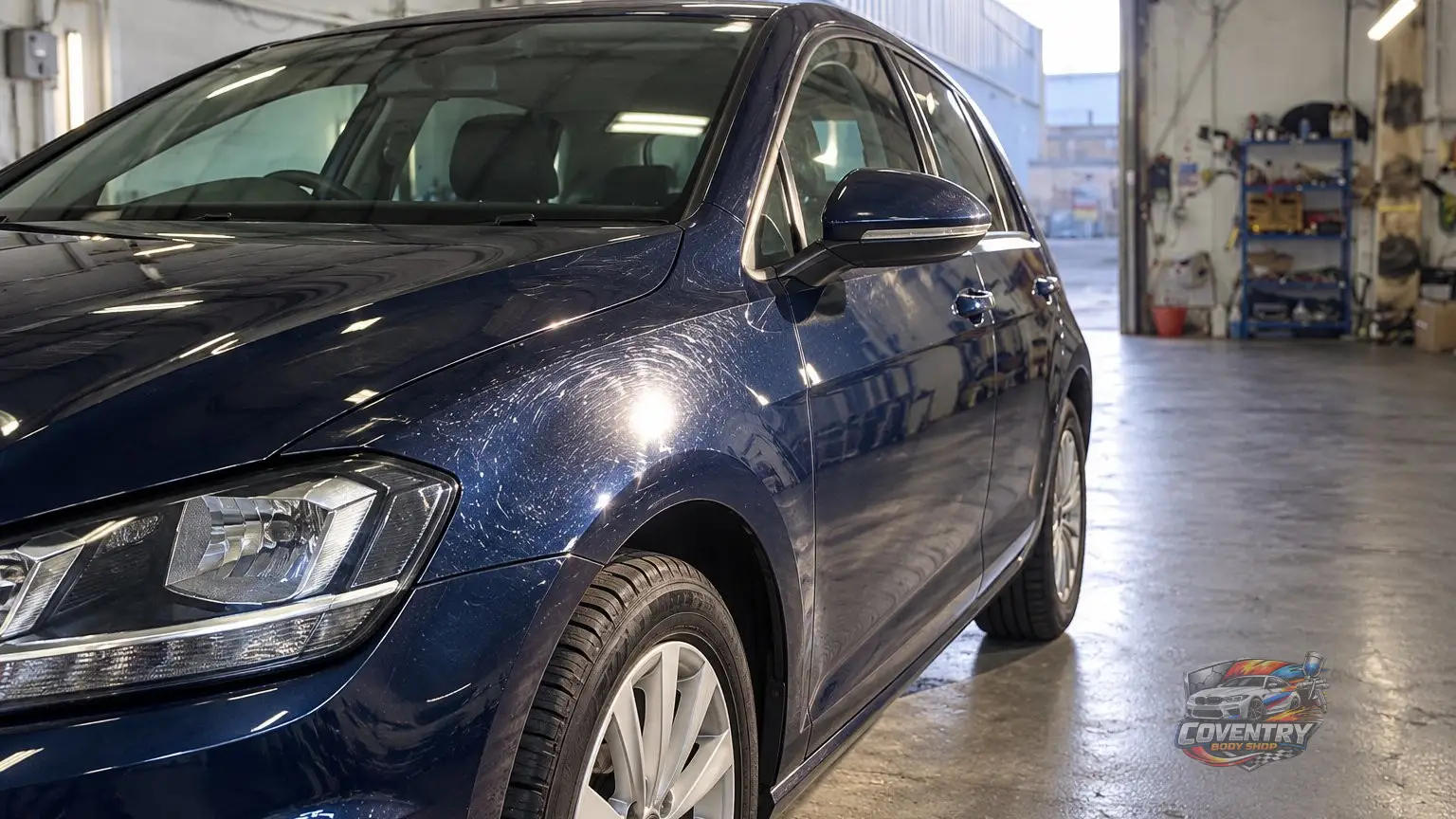
Polishing swirls, haze or light scratches is optional and is worth considering only when those cosmetic marks remain after cleaning. Abrasive polishing removes a small amount of the surface each time, so there is no fixed interval that suits every car. Check the finish first, then decide whether it needs polishing, protection or a repair.
This advice is for gloss paint; matt and satin finishes are not polished this way because abrasion can leave unwanted glossy patches.
What should I look for before deciding?
Wash and dry your car, then check for roughness or specks that could be bonded contamination. These deposits can survive washing, so ask about removal suitable for the finish before trying an abrasive polish. Dirt can hide fine scratches, while water can temporarily disguise them. Look at the dry panels in daylight, then use a torch from different angles if the marks are difficult to see.
Concentrate on what remains visible on the clean surface:
- Swirls: Fine curved scratches around a reflected light may respond to light polishing.
- Haze: A cloudy reflection can come from fine surface marks, although residue or damaged paint can look similar.
- Light scratches: Shallow lines may be suitable for polishing if enough sound paint remains.
- Dullness without clear marks: Further cleaning or renewed protection may be enough. A flat-looking finish does not automatically need abrasion.
Compare the affected area with the neighbouring panel under the same light. If you cannot identify a lasting defect, leave the paint unpolished. Arrange an assessment if the surface is peeling, cracking or lifting.
Does my car need polish or just wax?
Abrasive polish levels light surface marks by removing a little material around them. On a typical clear-coated finish, that means removing a small amount of clear coat, the transparent layer over the colour. Some paint systems differ, so the finish needs identifying before treatment.
A non-abrasive wax or sealant adds protection without removing paint. It can improve the appearance, but it does not level scratches. Some combined treatments contain both abrasives and protective ingredients, so the word "polish" on its own does not reliably describe what a treatment does.
If your clean paint has clear reflections and no troublesome marks, protection may be all it needs. If scratches remain, wax may make them less obvious temporarily, but it cannot replace missing paint. Decide whether you want to protect a sound finish or reduce a visible defect before choosing the next step.
Marks that return after an earlier wax or glaze may be old marks showing again once the filler has worn off. Before polishing again, ask a detailer to remove masking residue with a preparation product suitable for the finish, then inspect the exposed marks. Compare their position with any record of the earlier defects; appearance alone cannot prove when they formed. If new swirls appear after washing, check your wash mitt and drying towel for trapped grit.
Which scratches should I leave alone?
A mark that catches a fingernail usually goes deeper than polishing can safely reach. This test cannot measure scratch depth. A scratch that does not catch can still be unsuitable for removal if the surrounding paint is thin.
Polishing works by lowering the surrounding surface towards the bottom of a mark. Chasing a deep scratch can therefore remove too much sound clear coat before the scratch disappears. Where colour or primer is exposed, polishing cannot put the missing layers back.
A lighter but still visible mark may be a more sensible outcome than attempting complete removal. If several panels have widespread defects, our explanation of paint correction covers the broader assessment. One stubborn scratch is not a reason to keep polishing the same spot.
Can repeated polishing thin the paint?
Repeated abrasive polishing can thin the finish, whether you work by hand or machine. The amount removed depends on the abrasive, pad, technique and paint itself. Previous polishing matters too, even when the car still looks glossy.
The least abrasive effective step should come first. Once bonded contamination has been removed, a small test area can show whether a gentle approach improves the marks before treating a larger area. Starting with a stronger cut than needed can remove more clear coat than the marks require.
We check paint thickness with a paint depth gauge. Many gauges measure all the coating layers over a metal panel together, and readings depend on the equipment and panel material. A reading helps assess the finish; it does not provide a guaranteed allowance for polishing.
Machines can remove material quickly, and excessive heat or abrasion can damage the surface. Edges, raised lines and previously repaired areas need particular care. If you do not know the paint's history, arrange an assessment for scratch removal and machine polishing to check whether the remaining paint can tolerate another polish.
A small inspection is free. If assessing the paint needs a deeper inspection, it costs from £240 including VAT (£200 plus VAT), with the inspection charge taken off the repair bill if the work goes ahead.
What if the panel has been painted recently?
Follow the painter's instructions for when fresh paint can be polished; some finishes allow professional polishing after the specified drying cycle and cooling. Waxing has its own wait, explained in our guidance on waxing after a paint job. Keep any recent repair details with the car's polishing history so they can inform a later assessment.
What should go on the paint after another polish?
Once suitable polishing is complete, protect the finish with a compatible wax or sealant when the paint is ready. Polishing itself does not provide lasting protection, and it can remove an existing protective layer. Ask about our paint protection and detailing service to find out what is suitable for your finish.
What should I send so you can assess the marks?
We advise sending photos of the swirls or scratches by WhatsApp on +44 7903 105777 or the Send enquiry button so we can spot jobs we do not take on and save you a wasted trip. This is optional. Tell us about any previous polishing or repainting.
After booking, we advise everyone to bring the car to our workshop in Wyken, Coventry, so we can see the paint in person. The final price is set after inspection, and no deposit is needed.
Leave a Comment
Comments
No comments yet.