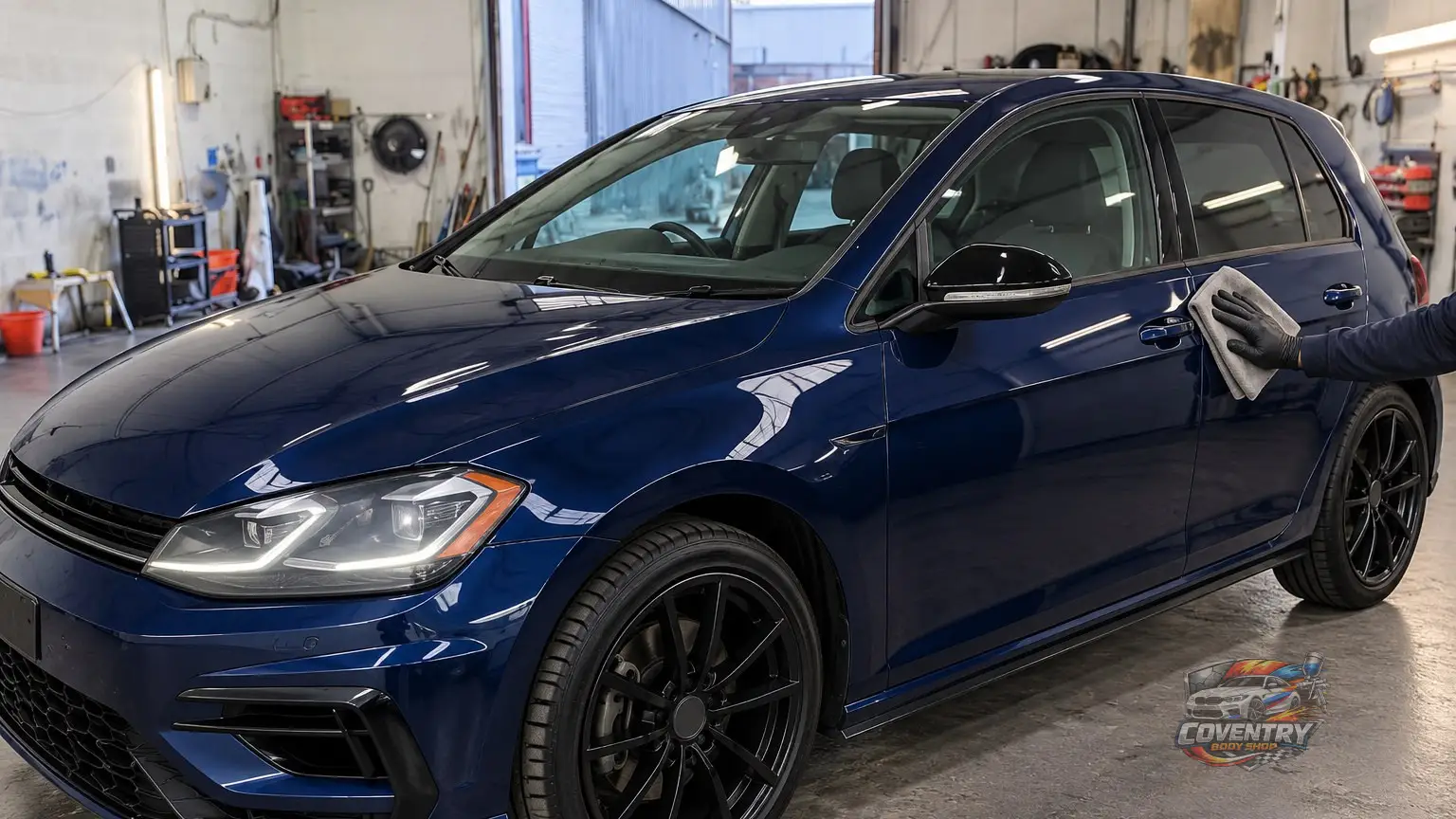
Understanding the Respray Process
A respray starts with preparation: the surface is cleaned and sanded to remove flaws so the primer can bond to it.
Primer goes on next to give the paint a smooth base, and many primers also help protect against corrosion.
The paint is mixed to the manufacturer's paint code and the colour is checked with a spectrophotometer. Once sprayed, it needs time to cure before it is fully hard, and how long depends on the paint system.
Post-Respray Care: The First Few Days
Fresh paint is still curing when the car leaves the workshop. In the first few days, avoid washing the car and keep it out of harsh weather where you can.
If you need to drive the car, keep off gravel and loose surfaces that could chip the fresh paint. Parking in a garage keeps bird droppings and tree sap off the paint, and both can damage it if they are left on.
Do not wax or seal the paint while it is still curing, as that can interfere with the cure and leave a dull finish. Ask the workshop how long to wait.
Long-Term Paint Protection Strategies
Once the paint has cured, wash it regularly with a pH-balanced car shampoo to keep the shine and remove grime, and dry it with a soft microfibre cloth to lower the risk of scratches.
A good wax or sealant adds a layer that repels water and dirt, which makes the car easier to clean.
If swirl marks appear later, our Scratch Removal & Machine Polish service can often take out light ones and bring back the gloss.
Regular Maintenance and Inspection
Look over the paint every so often for chips and scratches. A chip caught early is a smaller repair, and if it goes through to bare metal, it has less time to rust.
A bodyshop can spot problems that are not obvious to you, and our Smart Repair (Minor Dents & Scratches) service deals with small dents and scratches.
Where you park matters too, as building sites throw up dust and grit, and trees drop sap.
Dealing with Scratches and Minor Damage
Scratches can still happen, however careful you are. A touch-up kit can deal with a small one quickly, but more noticeable damage is better repaired by a bodyshop.
Our Paint Touch-Up service is for minor chips and marks, with the paint mixed to your car's paint code and checked with a spectrophotometer.
Deep scratches and dents need more work, which our Panel Dent Repair & Respray service covers, repairing the panel and then repainting it.
Choosing the Right Products for Paint Care
Use products made for cars. Household cleaners can be too harsh and may strip wax or other protection from the paint.
Car shampoo is for cleaning and wax is for protection. A clay bar lifts embedded grime that washing leaves behind, but use it with a lubricant and a light touch, as it can mark the paint if it drags.
A ceramic coating bonds with the paint and usually lasts longer than wax, though it will not stop stone chips or deeper scratches.
Professional Services for Optimal Paint Maintenance
Some damage is beyond care at home, such as a dent or a scratch through to the primer.
Our Full Body Respray service is for repainting the whole car.
Bumpers take a lot of the knocks and scuffs, so for damage there, see our Bumper Repair service.
Conclusion: Ensuring Longevity and Value
Treat the paint gently while it cures, then wash it regularly and deal with chips early.
If your paint needs attention, contact us. We can inspect the paintwork and tell you what it needs.
Leave a Comment
Comments
No comments yet.