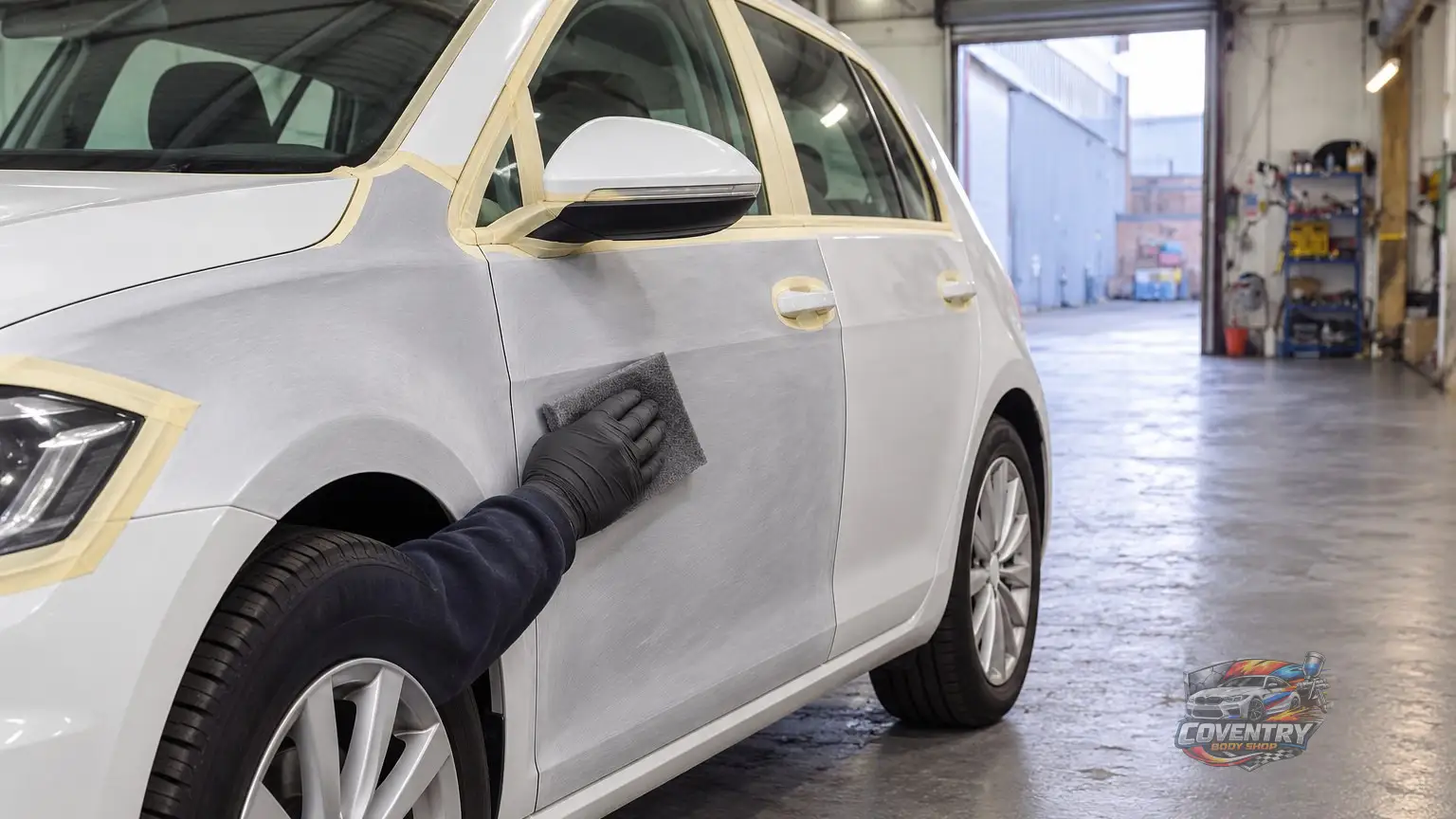
Understanding the Importance of Proper Preparation
Some paint faults that show up months after a repair go back to the preparation. Wax or grease left on a panel can weaken the paint's grip, and the paint may lift or peel later. Sanding scratches that were not smoothed can show through the colour.
Preparation can include cleaning, sanding, priming and masking, and how much of it a car needs changes with the job. A small paint touch-up needs far less than a respray. A full body respray means preparing every panel being painted, while a single panel repair centres on one panel, though the new colour may need blending into the panels next to it.
The stages below describe how bodyshops generally prepare a car for paint, and what a particular car needs is decided at inspection. You do not need to sand or prepare the paint yourself. A wash before you drop the car off helps, but leave wax off the areas to be painted.
Thorough Cleaning: The First Step
Grease and silicone from car care products can stop paint bonding or leave small craters in it. A wash alone may not take off all wax and polish residue, and a cleaner suited to the paint system helps remove what is left on the areas to be painted.
Sanding dust or the oil from a hand can spoil the paint, and panels may need cleaning again before primer and before colour.
Sanding: Creating the Right Surface
Sanding gives the new paint a surface to grip and takes out small faults. The grade of paper depends on the job. A coarser grit takes off damaged paint or shapes filler, and finer grits smooth out the scratches the coarse paper leaves.
Uneven sanding can leave a low spot that shows as a ripple once the gloss goes on.
Where a repair covers part of a panel, the edges of the damaged paint are usually sanded to a gentle slope, called feathering, so there is no hard edge between the repair and the paint around it. Filler or primer can then bring the surface level, and blending is a separate step for the colour.
Priming: The Foundation of a Lasting Finish
Primers do different jobs. Some are made to grip bare metal or protect it from corrosion, and others build a surface over filler that can be sanded level. A filling primer can cover the fine scratches left by sanding and is usually sanded smooth once it has hardened, while some systems are made to take the colour without sanding.
Painters choose a primer that the paint maker lists for its paint system and that suits the surface under it.
Coats of primer are built up with the flash-off and drying times the paint maker's data sheet gives. Coats laid on too thick can trap solvent and shrink later, leaving marks in the finished paint.
Masking: Protecting Areas from Overspray
Parts near the area being sprayed, such as glass, rubber seals and lights, need protecting from overspray, by masking or by taking them off. Paint mist can travel well beyond the area being sprayed. Ask how the parts on your car will be protected.
Tape pressed down firmly along its edges helps stop paint creeping underneath.
Colour Matching: Blending New Paint into Old
When only part of the car is painted, the new colour has to match the old. The paint code, often on a label in a door shut or under the bonnet, is the starting point for mixing. Factory shade variants, earlier repairs, sun and age can all make the paint on the car differ from the code, so the colour is still checked against the car.
At Coventry Body Shop, colour matching uses the manufacturer's paint code, specialist colour mixing and a spectrophotometer. Where the repair needs it, the new colour is then blended into the paint around the repair, so small differences are harder to see.
Application: The Art of Painting
All paintwork at Coventry Body Shop is sprayed in our spray booth by our director, a former Aston Martin technician and painter. The booth helps keep dust out of the wet paint.
Colour goes on as the paint maker's system sets out, usually in coats with a flash-off time between them. The number of coats varies with the paint and the colour.
Finishing Touches: Ensuring Durability and Shine
On a basecoat finish, clear lacquer usually goes over the colour to protect it and give the final finish. It goes on as the paint maker's technical data set out, then dries for the time they give before it is handled. Any polishing waits until the paint maker's guidance allows it, and full curing can take longer.
When you collect the car, look at the repair in daylight next to the panels around it.
Our workmanship guarantee runs for up to 6 months from collection. Ask us to look at anything in the new paint that seems wrong after you collect the car. Light marks from everyday use may be suitable for scratch removal and machine polish once the paint has cured, and small chips for a paint touch-up, which an inspection can confirm.
If your car needs paintwork, send photos by WhatsApp or through the Send enquiry button and ask for an inspection. A small inspection is free; a deeper inspection costs from £200 plus VAT (from £240 including VAT), deducted if the repair goes ahead. You receive a written, itemised estimate before any work starts, and no deposit is taken.
Leave a Comment
Comments
No comments yet.