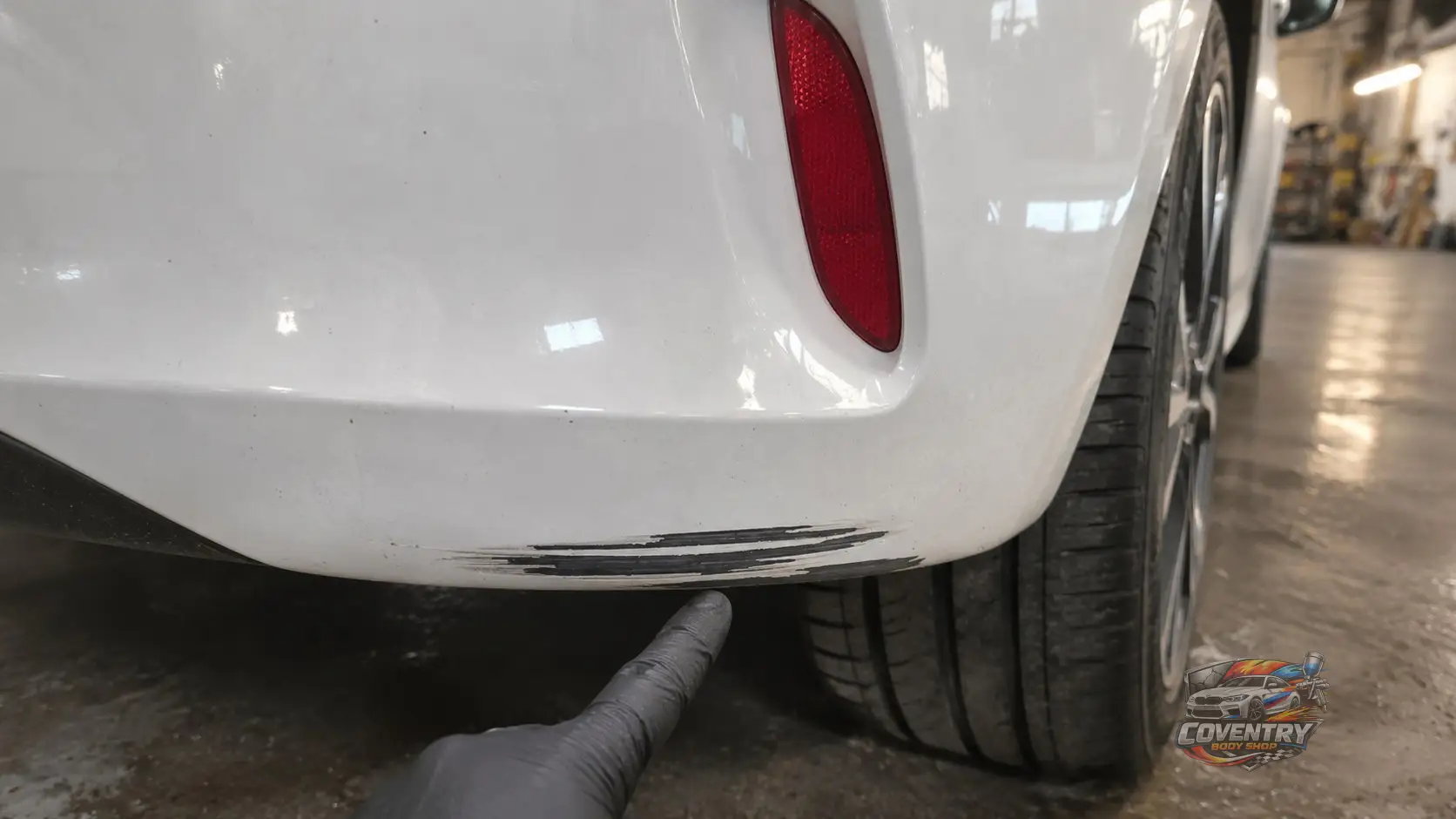
A scraped bumper or a dented door can leave you with two possible ways to fund the repair: make a motor insurance claim or pay the bodyshop yourself. The useful comparison starts with the repair quote and your own policy excess, then takes account of the claim record, your choice of repairer and any time spent getting authorisation. Neither route is automatically right for a small area of paint damage.
What changes when you claim instead of paying yourself?
If you pay privately, you agree the work with the bodyshop and pay its bill. If you claim, you ask your insurer to deal with the loss under the policy, and the insurer may need to assess and authorise the repair before work starts. Your excess and the terms of your cover affect what you contribute. Reporting an incident to your insurer is a separate step from asking it to pay.
Side by side, the two routes differ in five places:
- Who agrees the work: paying yourself, you and the workshop; claiming, the insurer authorises the scope, sometimes after its own assessment.
- Who pays the workshop: paying yourself, you settle the whole bill; on a claim the money usually goes from the insurer straight to the garage, though this varies, and your excess comes from you.
- What you pay: the full quote, or the excess plus anything the policy does not cover.
- What is recorded: a private repair adds no claim, though a reported incident can stay on the insurer's file; a claim may reduce your no-claims discount.
- Who picks the repairer: paying yourself, you; claiming, the insurer, unless it agrees to a garage you choose.
Where another driver caused the damage, a claim may be made on your own policy or against the other driver's insurer. This article mostly follows the first of those routes, so ask your insurer how each would work in your case.
For a private repair, the discussion is mainly about which areas need attention, the finish you want and when the workshop can take the car. The bill is yours to pay, and the price is set after the car has been inspected and before any work starts, so preparation found at inspection is part of the quote you agree.
An insurance repair adds another decision-maker. The insurer may inspect photographs, ask for a repair report, agree a particular scope of work or arrange an assessment. The Financial Ombudsman Service's guidance on vehicle repairs explains that on comprehensive cover the insurer usually arranges and pays for repairs, but disagreements can arise over delays, repair quality and the work authorised.
Whether paint damage is covered in the first place depends on the policy and what caused it. That separate question is covered in our guide to whether car insurance covers paint damage.
How does the policy excess affect the decision?
The excess is the fixed amount you pay towards an insured claim, and it can vary with the type of claim. A repair quote tells you the cost of the work; your policy schedule shows the excesses that could apply. Compare those figures before looking at possible effects on your no-claims discount. Also check whether your policy applies a different excess for the type of incident or repair arrangement involved.
MoneyHelper's motor insurance guidance distinguishes an insurer-set compulsory excess from any voluntary excess you chose when taking out cover. Your schedule may list both, so check the total before you compare it with a quote. Reading only the voluntary figure on a renewal email can therefore leave out part of the amount relevant to the decision.
Suppose the quote and your applicable excess are very close. The part potentially funded by an insurer would then be limited, assuming the loss is covered and the proposed work is accepted. If the quote is substantially higher than the excess, the contribution the insurer might make is greater, but you still need to consider policy conditions and how the incident will be recorded.
If another driver was involved, ask your insurer whether the excess would initially be payable and whether it might later be recovered. Do not assume that being blameless means you will never have to pay an excess.
What can a claim do to your no-claims discount and future premiums?
Your no-claims discount and your renewal premium are two separate things, and a claim can touch either one or both. The Financial Ombudsman Service explains that an unprotected discount is normally reduced by two years when a fault claim is recorded, although insurers' rules differ. A protected discount may preserve the discount while still leaving the renewal price free to change.
In insurance records, "fault" does not simply mean that a driver behaved badly. The Ombudsman uses the term for a claim where the insurer has not recovered its costs from someone else. This can include a parked car damaged by an unidentified driver, even though its owner did nothing to cause the scrape.
A non-fault incident can follow a different path. If you claim on your policy, the discount may be affected while recovery from the responsible party remains outstanding. The Ombudsman's guidance distinguishes that temporary position from cases where responsibility is resolved by renewal, and also notes that a third-party claim against you can change the position even if you only reported the incident yourself. It also says that an extra year of no-claims bonus is only added for a policy year without claims, so a non-fault claim can still cost you that year.
There is no reliable way to turn a particular scratch into a predicted premium increase. Insurers consider claims and incident history alongside other pricing information, so the next quote is not determined by the repair bill alone.
Check your schedule for no-claims protection and the policy wording for how it operates. Ask the insurer how a claim that cannot be recovered would be recorded, what happens while liability is unresolved and whether the discount protection has conditions.
Do you have to tell your insurer if you do not claim?
For an accident, yes: GOV.UK says to report it to your motor insurer even if you do not intend to make a claim. For a mark discovered later, with no clear accident, check the notification conditions in your policy and ask the insurer if you are unsure. Paying privately does not cancel a duty to report that your policy sets.
Tell the insurer you are reporting the circumstances and ask it to confirm whether the record is "notification only" if you are not asking it to meet the cost. The Financial Ombudsman Service says an incident recorded as notification only, with no insurer payout, should not reduce the no-claims discount. The report may still remain on the insurer's records, and renewal pricing is a separate matter.
Make a note of the date you reported the incident and any reference given. If someone else was involved, give an accurate account rather than relying on an informal agreement to sort out a scrape privately. The other party may contact their own insurer later, and your insurer may need to respond.
Who chooses the bodyshop if you make a claim?
Your insurer may propose a repairer, but you can ask to use a garage you have chosen. What happens next depends on the terms of your policy and the insurer's agreement. Check whether it will authorise your chosen garage, whether the excess or amount it pays changes, and who would be responsible if there is a problem with the completed repair.
The Financial Ombudsman Service draws an important distinction between repairs carried out by a garage the insurer directed you to use and repairs you arranged at your own garage with the insurer's agreement. In the latter situation, the insurer may not normally be responsible for problems with the workmanship if that limitation was properly explained. So find out who answers for the workmanship before you authorise anything.
If you have a particular workshop in mind, tell your insurer before booking the repair. Ask who will approve the scope, which documents the garage needs to supply, whether a different excess applies and how any proposed changes will be agreed.
Does the paint finish depend on who pays?
How a panel is repaired follows from the damage, whoever pays. At our workshop the process is the same on both routes: paint depth is measured with a gauge, we mix the colour to the car's factory code, with a spectrophotometer reading to help where the shade needs it, and all paintwork is sprayed and baked in our booth, which is heated by a diesel burner. What may differ is the agreed repair scope, particularly if an insurer is authorising a specific area or deciding whether additional work belongs to the incident. Discuss the intended finish before either route begins.
A shallow surface mark may improve through polishing without repainting. A scratch that cuts into paint layers, a dent that distorts the panel or damage around a bumper edge can need a different approach. The visible width of a scuff does not always tell you how much preparation or painting is required, so have it inspected before you choose a funding route.
For marks that may be confined to the surface, the page on scratch removal and machine polishing explains one repair option. Where a small section of bodywork is affected, SMART repair may be relevant, subject to the position and depth of the damage.
Ask what will be repaired, whether adjacent areas need blending, and how the finished colour and surface will be assessed. If a claim is involved, check that the proposed work matches the insurer's authorised scope. If you are paying yourself, make sure the quote covers the finish you have discussed, rather than assuming every cosmetic mark requires a whole panel to be painted.
Loose fittings, lighting faults or doubt about damage beneath a panel mean the job is more than paint. Arrange a qualified inspection before deciding on a cosmetic repair; a photograph of the surface cannot establish whether a vehicle is safe to drive.
How do timing and paperwork compare?
Paying privately often involves fewer parties: the workshop inspects the car, provides a quote and agrees a booking with you. With a claim, the insurer may also require details of the incident, photographs, a garage report or an assessment before authorising work. Neither route has a fixed completion date. As a guide here, a small job is often finished in a day or two, occasionally on the day, while a typical repair runs to between 3 and 7 working days once we begin, parts permitting; none of these times is promised. Repair preparation, replacement parts and the workshop's booking position matter whichever way the bill is funded.
Ask when the vehicle would be needed, whether parts must arrive first and what happens if inspection reveals damage that was not obvious in the first photographs. Make sure the quote describes the same repair you would put to the insurer.
For a claim, the insurer may need to verify the circumstances and agree the repair method or cost before the garage can proceed. The Ombudsman's repair guidance recognises that unavailable parts and the amount of work required can contribute to delays.
Keep photographs, the insurer's reference, the repair quote and any approval messages together. If the agreed work changes, establish who needs to approve the change before work continues.
When does each route tend to fit?
Private payment can suit a contained cosmetic repair when you are comfortable meeting the whole quote and want to arrange the work directly. An insurance claim can suit damage whose cost or circumstances make the policy's contribution important to you, particularly where another party is involved. Both descriptions depend on the repair assessment and your actual policy terms; neither creates a price threshold for claiming.
Consider a scuff on one bumper corner with no indication of further damage. A workshop inspection might establish that a localised repair is suitable, giving you a clear private cost to set against your excess. You may still prefer to make a claim for reasons specific to your policy or finances. The important point is that you can compare the same proposed repair, rather than guessing its size from a photo.
Now consider a dent crossing the edge of a door and adjacent panel, with paint broken in both places. The repair could involve a broader area than the initial mark suggests, so an assessment may materially change the comparison. On a claim, the insurer may want its own assessment of both panels before it agrees the scope; paying yourself, you agree the scope with the workshop. If the damage arose in a collision involving another vehicle or property, questions of notification, responsibility and third-party claims sit alongside your own paint bill.
Only the insurer decides what it will cover and authorise under the policy. A private quote shows what the repair would cost you, and asking for one does not commit you to either route.
What should you have ready before deciding?
Put the policy schedule beside a repair quote that reflects an inspection of the damage. You also need the date and circumstances of the incident, any other party's details and your insurer's answers about excess, no-claims discount and repairer choice.
- Record what happened. Note when and where you noticed the damage, how it happened if known, and whether anyone else or any property was involved. Keep clear photographs of the damaged area and surrounding panels.
- Read the relevant policy pages. Find the compulsory and voluntary excess, incident notification terms, no-claims protection, and any conditions concerning a garage you select.
- Get the damage assessed. Ask for a quote based on the repair method needed, not just the apparent size of the mark. Clarify whether further inspection may change the work.
- Ask the insurer the outstanding questions. Confirm the incident's recorded status, whether a claim is being opened, what it would authorise, and whether you may use your preferred repairer on the proposed terms.
- Compare like with like. Weigh your out-of-pocket amount, who authorises changes, responsibilities for the repair, and the likely booking process. Keep the insurer's answers and the quote for reference.
If you are unsure what an insurer means by "fault", "notification only" or "protected discount", ask it to explain those terms against your policy and to tell you what it has recorded so far.
Getting a quote from our Coventry workshop
We repair cars at one site in Wyken, Coventry, as an independent shop that no insurer lists as an approved repairer, yet drivers making insurance claims have brought their cars to us for repair. We can assess scratches, scuffs and light body damage, provide a quote and discuss the repair that appears appropriate. Looking over minor damage costs nothing, while a more detailed inspection is charged and that charge is deducted if you then book the repair. Sending photos first is optional; they help us see early on whether the damage suits our workshop, but the price is only fixed after we inspect the car itself.
For areas needing more substantial paint preparation, our single-panel paintwork page describes that work. A marked or dented plastic bumper may instead need the work covered by our bumper repair page. Our quote reflects the work assessed, although an insurer may authorise a different repair scope.
To send pictures, message them by WhatsApp to +44 7903 105777 or attach them through the Send enquiry button; to write to us without pictures, use our contact form. We advise bringing the car to the workshop after booking online so we can inspect the damage properly.
If you decide to claim, authorisation is normally between you, as the car's owner, and the insurer. Some insurers direct the repair to us or prefer to deal with the garage themselves; in those cases the insurer wants a complete report on the repair from us. If you would rather we spoke to the insurer for you, we can; how that arrangement works is on our insurance accident repair support page. Please confirm the insurer's requirements before authorising repairs, as we cannot decide whether it will accept the claim.
Leave a Comment
Comments
No comments yet.