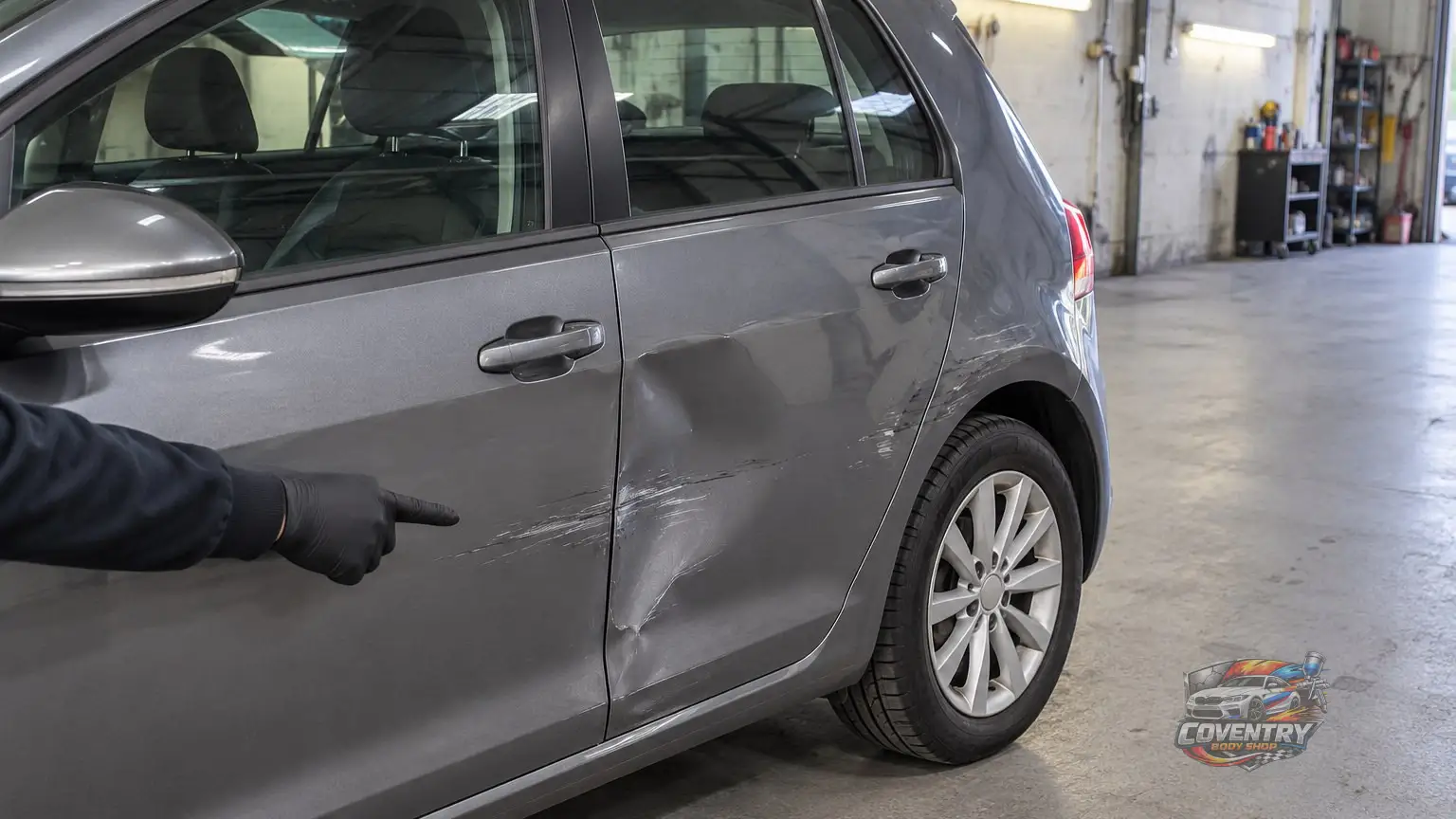
A bodyshop price is made up of labour, paint and materials, and any parts the repair needs. The figure on a quote comes from what the bodyshop found when it looked at your car and how it plans to repair it. Seeing those parts listed separately makes two quotes easier to compare.
Bodyshop pricing: what really goes into a repair quote?
Each line on an estimate comes back to the damage assessment, labour hours, the paint and materials, or parts. How long the job takes, the paint system used and whether the panel can be repaired or has to be replaced push the figure up or down.
The costs behind an estimate usually include:
- Damage assessment: what can be seen, and a note that more may be found once panels come off.
- Preparation: pulling out dents and straightening bent panels, then sanding and priming.
- Paint materials: base coat and lacquer, plus primer and the products used to mix and match the colour.
- Labour: hours of work, set by how complicated the repair is.
- Parts: replacement panels, clips or other parts where the repair needs them.
As a guide, our prices start from £49 plus VAT (£58.80 including VAT) for a paint touch-up, £75 plus VAT (£90 including VAT) for a SMART repair, £120 plus VAT (£144 including VAT) per panel for scratch removal and machine polish, £150 plus VAT (£180 including VAT) for a single panel, £210 plus VAT (£252 including VAT) for a bumper respray and £1,495 plus VAT (£1,794 including VAT) for a full respray. These are from prices. The final price is set once we have inspected the car, and you get a written, itemised estimate before any work starts. A small inspection is free, and a deeper inspection is from £200 plus VAT (£240 including VAT).
How does damage type and severity affect the cost?
Light scuffs and small dents usually cost less than deep creases or damage spread across several panels, because they tend to need fewer stages of repair. A SMART repair on one bumper corner usually takes less time than repainting a whole panel, so the labour comes down and the total with it.
How bad the damage is also decides whether the panel can be saved. A shallow dent can often be worked back into shape before the panel is prepared and painted. A deeper crease that has stretched the metal usually needs reshaping first, and often filler and primer, before it is painted. When a bolt-on panel is split or bent too far to bring back, replacing it can be the better repair and sometimes the cheaper one. Each extra stage adds time before the car is ready to collect.
Why do paint systems and colour matching change the price?
Modern car paint is built up in layers rather than sprayed from one tin. On a panel repaint we use filler and primer where the repair needs them, then the base colour mixed to your car's paint code and a clear lacquer. Where the colour needs it, the base colour is blended into the panels around the repair before the lacquer goes on. The products chosen and the painter's time in the spray booth both feed into the cost.
Metallic and pearlescent colours are often harder to match, and some need extra coats or a blend into the neighbouring panels so the join is harder to see. We match colour with the manufacturer's paint code, specialist colour mixing and a spectrophotometer, because paint that has faded can sit a shade away from the factory colour. If a quote for a metallic colour does not mention blending, ask whether the job needs it. You can read more in our guide on why surface preparation matters in auto painting.
Repair or replacement: which is more cost-effective?
Repairing keeps the original panel on the car, which often suits minor damage, though an area that has been filled or primed has to be refinished. Replacing a bolt-on panel, such as a bumper, wing or door, can make sense when it is split or bent past saving, or when getting it back into shape would cost close to a new part. We straighten bent panels, rear quarters included, and replace bolt-on panels, but we do not cut or weld metal.
On cars with parking sensors, cameras or radar in the bumper, a new bumper can add to the bill, as sensors or brackets may need moving across or replacing, and some camera and radar systems need calibrating after the work. Set the price of the part, the labour to fit and prepare it and the paint work against the cost of repairing what is there.
What hidden costs can appear during a repair?
Taking a damaged panel off can show more than the first estimate covered. Bumper brackets can snap and reinforcement bars can bend. Wiring behind the bumper can chafe too. Corrosion can also sit under the paint and only show once the surface is sanded. These finds change the job, so the bodyshop should tell you before it carries on.
Common hidden items include:
- Corrosion under paint or old filler: more often on older cars.
- A cracked or bent bumper reinforcement bar: the car maker's repair instructions decide whether it can be repaired or has to be replaced.
- Bonnet or tailgate catches out of line: even a light impact can move them.
- Damaged wiring connectors: for parking sensors or fog lights behind the trim.
A clear estimate notes that more damage may be found once the panel is stripped. If a quote gives one number with no mention of this, ask how the bodyshop will handle anything it finds.
How do insurance, warranty and courtesy cars fit into bodyshop pricing?
When a repair goes through insurance, the insurer often has a say in the labour rate and in where the parts come from. Depending on the claim, you may have an excess to pay, and a claim can affect your no-claims bonus. Your insurer can tell you what using a bodyshop you choose means for the cost, and whether your policy includes a courtesy car. We are not on any insurer's approved list and we do not provide a courtesy car, though we have repaired cars for customers claiming on their insurance.
Paying for the repair yourself gives you more say over the parts and the repair method, though you carry the whole cost. Either way, ask what guarantee comes with the paintwork and workmanship and how long it lasts. Ours is 6 months on workmanship from the day you collect the car. For how a good finish holds up over time, our article on why professional paint jobs last longer goes through the methods involved.
SMART repair versus full respray: when does each make sense?
A SMART repair works on a small area around the damage, usually with local blending, to fix minor scuffs and chips. It uses less labour and material, so it usually costs less than repainting the whole panel. It suits damage that is small, on paint that is otherwise in good condition.
A full panel repaint usually costs more, because the whole panel is prepared and painted, with trim taken off or masked and, where the colour needs it, a blend into the panels next to it. It is often the better option for larger scuffs, stone chips spread across a panel, sun-faded paint or an earlier repair that shows as a patch, and the inspection settles which suits your car. A full body respray is a bigger job again, for paint that is tired across the whole car: ours is from £1,495 plus VAT (£1,794 including VAT) and takes 3 to 7 days.
Our SMART repair service page sets out which damage it suits.
How to compare bodyshop quotes without getting caught out
A low quote can turn out poor value if it cuts preparation or leaves out blending the colour needs. When you compare quotes, look past the total and check what each one includes.
Useful questions to ask any bodyshop:
- Paint system: which brand, and whether the base coat is water-based or solvent-based.
- Blending: whether the colour is blended into the next panel, and how many coats of lacquer go on.
- Parts: new from the maker, aftermarket or used, and who supplies them.
- Hidden damage: what happens if more is found once the panel is stripped.
- Guarantee and price: what the guarantee covers and for how long, and whether the figure could change once work starts.
Ask for the answers in writing, so you can set one quote against another line by line.
Getting a fair quote for your repair
We ask for no deposit, and before work starts you get a written, itemised estimate. Drivers from further afield, including Northampton, can bring the car to our workshop in Wyken, Coventry for the inspection.
Call or WhatsApp +44 7903 105777, send photographs with the Send enquiry button, or use our contact form to show us the damage and arrange an inspection. The final price is set once we have inspected the car.
Leave a Comment
Comments
No comments yet.