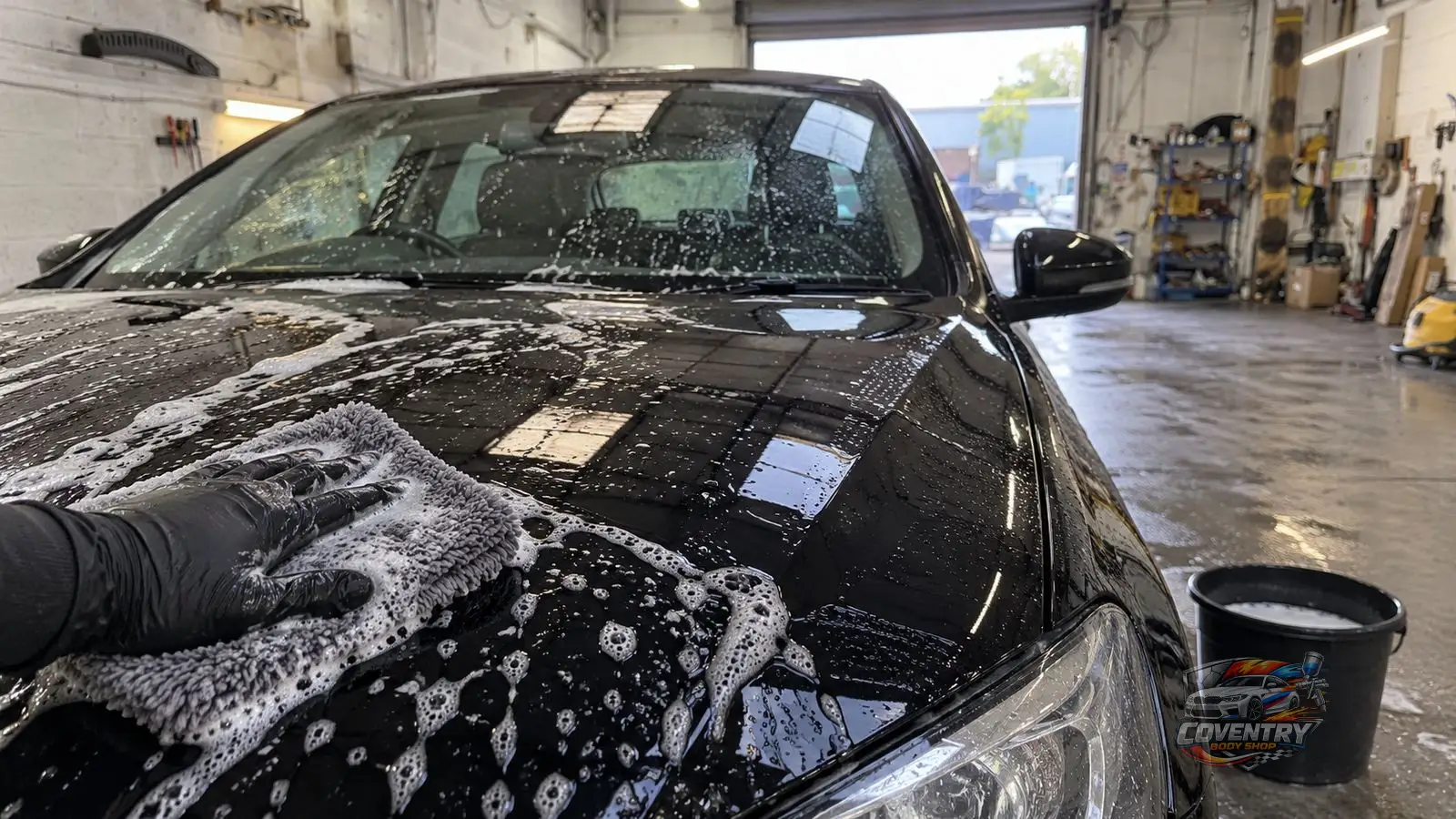
Wash a newly painted car only when the workshop that painted it says the finish is ready. For the first wash, use a gentle hand wash with a suitable car shampoo, clean equipment and light pressure, then dry carefully with a soft microfibre towel.
There is no single waiting period that suits every paint job. Paint systems and curing conditions differ, and paint that feels dry may still be hardening. Ask for instructions for your car before washing it or applying any protective product. This guide is for ordinary gloss paintwork; matte and satin finishes need their own advice, covered in the questions at the end.
When can you wash a car after fresh paintwork?
The workshop should give you separate guidance for the first wash and for later treatments. Permission to hand wash does not automatically mean the paint is ready for a pressure washer, machine wash, polish, wax or sealant.
Before taking the car home, ask:
- When can the newly painted panels get their first hand wash?
- Which shampoo and drying method are suitable?
- When can a pressure washer or machine wash be used, if at all?
- When can wax, sealant or a ceramic coating be applied?
- What should you do if bird droppings or another contaminant lands on the paint before washing is allowed?
If you have no aftercare instructions, contact the workshop before starting. Do not use a general waiting period found online as permission to wash your particular paintwork.
This applies after both single panel paint and a full body respray. If only part of the car was painted, keep those panels in mind when washing or treating the rest of it.
Choose gentle products and clean equipment
Once hand washing is allowed, use a mild car shampoo that the workshop considers suitable for fresh paint. A pH-neutral shampoo is the usual cautious choice, but the label alone does not prove that it suits your paint or that it is free of wax and other protective additives.
Until the workshop clears protective treatments, choose a shampoo without added wax or sealant. Avoid washing-up liquid, household cleaners, abrasive cleaners and strong degreasers on the painted surfaces.
Useful equipment includes:
- Two clean buckets: one for the shampoo solution and one with clean water for rinsing dirt out of the mitt.
- A clean, soft wash mitt, with a spare in case one is dropped.
- Separate equipment for wheels and tyres so brake dust and grit do not reach the paint.
- Clean, soft microfibre drying towels.
Leave clay bars, cutting compounds, scratch removers and polishing machines aside until the workshop has assessed whether the paint is ready and whether treatment is needed.
How to hand wash fresh paintwork
Choose a shaded place and let the panels cool before starting. Hot panels and direct sunlight can make water and shampoo dry before you can rinse them away.
- Gently rinse the bodywork with clean water to loosen and remove surface dirt. Use a gentle hose flow rather than a concentrated jet.
- Mix the shampoo according to its label. Do not make it stronger in an attempt to remove stubborn dirt.
- Wash from the roof down, leaving the dirtier lower panels until last. Use light pressure and short passes without scrubbing.
- Rinse the mitt frequently in the clean-water bucket before reloading it from the shampoo bucket. Replace dirty rinse water as needed.
- If the mitt falls on the ground, swap it for the clean spare before continuing.
- Rinse each section before the shampoo dries, then rinse away any remaining suds.
If a mark does not lift with gentle washing, stop working on that spot. More pressure or repeated rubbing can add scratches without removing the cause.
Dry the car without rubbing grit into the paint
Dry the car after rinsing instead of leaving droplets to evaporate. Water can leave mineral deposits that show as spots.
Once the panel is rinsed clean, blot the water with a clean, soft microfibre towel or draw the towel lightly across the surface. Do not press hard or repeatedly buff the same patch. Change towels if one becomes dirty or too wet to absorb water.
Do not wipe dust off a dry panel or use a towel to remove dirt missed during washing. Rinse and gently clean that area first. Avoid rubber drying blades on fresh paint because trapped grit can scratch the surface.
If water spots remain, ask the workshop before trying a chemical remover or polish.
Machine washes and pressure washers
Avoid automatic machine washes until the workshop confirms they are suitable for the new paint. Brushes and cloth strips can mark paintwork, while a touchless wash may still use strong chemicals and high-pressure jets, so a touchless label does not prove the wash is suitable. Our guide to whether automatic car washes damage paint explains the risks of each wash type.
A gentle hand wash gives you control over the products and pressure used. For pressure washing, ask the workshop when it is allowed and what limits apply. There is no universal safe pressure or nozzle distance for every fresh finish.
Once cleared, follow the equipment instructions and the workshop's advice. Use a broad spray, keep it moving and avoid concentrated jets, close spraying at panel edges, or spraying directly at chips and lifting paint. If suitable settings are unclear, use a gentle hose flow instead.
When can you wax, seal or polish new paint?
Before applying a protective treatment, check its suitability for refinished paint and the workshop's timing for that treatment. This includes wax, synthetic sealants, ceramic coatings, spray protectants and wash-and-wax products. Our guide to when you can wax after a paint job explains what changes that wait.
Do not assume a product is suitable simply because its label mentions new cars; recently refinished panels need guidance specific to the paint used.
Once a treatment is allowed, use a compatible product according to its instructions. Protective products do not make paint scratch-proof or remove the need to clean away contaminants.
Polishing is a separate decision because abrasive polishes and compounds remove a thin layer from the top of the paint. If you notice swirl marks or scratches, ask for an assessment before attempting correction. Read about scratch removal and machine polish for more information about that service.
Bird droppings, insects, sap and road tar
Bird droppings and insect remains can mark paint if left in place. Deal with them promptly, but do not scrape, pick or rub them off dry.
If gentle cleaning has been cleared, soften the deposit with clean water or a soft cloth soaked in water, then rinse it away. Repeat the softening rather than scrubbing, and dry the area carefully afterwards. If washing has not yet been cleared, contact the workshop promptly for a safe spot-cleaning method rather than leaving the deposit until the first wash date.
Tree sap and road tar are harder to shift. Do not pick at them or smear them with a dry cloth, and avoid solvents, tar removers, insect removers and clay bars on fresh paint unless the workshop confirms the product and method. If the agreed shampoo and light contact do not lift a deposit, stop and send the workshop a photo rather than pressing harder.
If fuel splashes onto the paint while you refuel, stop, tell the forecourt staff and follow their spill instructions; do not hose fuel away on the forecourt, and do not wipe it with a dry cloth. Fuel can mark fresh paint, so contact the workshop promptly for advice on cleaning the panel rather than waiting for the first wash date.
After removing any deposit, check for a dull patch, staining or an outline. That may be a change in the finish rather than dirt, so more rubbing will not help. If the paint becomes tacky, lifts or changes appearance during cleaning, stop and contact the workshop.
What damage should you look for?
Check the paintwork regularly between washes for fresh deposits and changes in the finish so you can deal with them promptly. After washing and drying, inspect the painted panels in good daylight. Contact the workshop if you notice:
- Paint lifting, peeling, blistering or cracking.
- A surface that appears unusually soft, tacky or easily marked.
- Cloudy patches, dull areas or stains that remain after gentle cleaning.
- A lasting outline where bird droppings or another deposit was removed.
Stop washing an area if paint lifts or the surface changes during cleaning. Do not try to hide the problem with wax, polish or touch-up paint before the workshop has assessed it.
New chips or scratches from stones or road use are usually separate damage. If paint flakes or lifts around a chip, though, mention it so the cause can be checked. For a small chip or scratch, paint touch-up may be an option after assessment.
When to contact Coventry Body Shop
Contact Coventry Body Shop in Wyken, Coventry if you are unsure about the aftercare for paintwork carried out here, need advice about contamination, or notice a change in the finish.
Call or WhatsApp +44 7903 105777, or send photographs with the Send enquiry button. Include a close view and a wider view of the panel, when you noticed the issue, and any cleaning products or equipment used.
Paintwork carried out here has a six-month workmanship guarantee from collection. Raise any concern about the finish promptly so it can be looked at.
If your car needs a new repair, a small inspection is free. You receive a written, itemised estimate before any work starts, and no deposit is taken. If a deeper inspection is needed, it costs from £200 plus VAT (£240 including VAT) and is taken off the repair bill if the work goes ahead.
Leave a Comment
Comments
No comments yet.