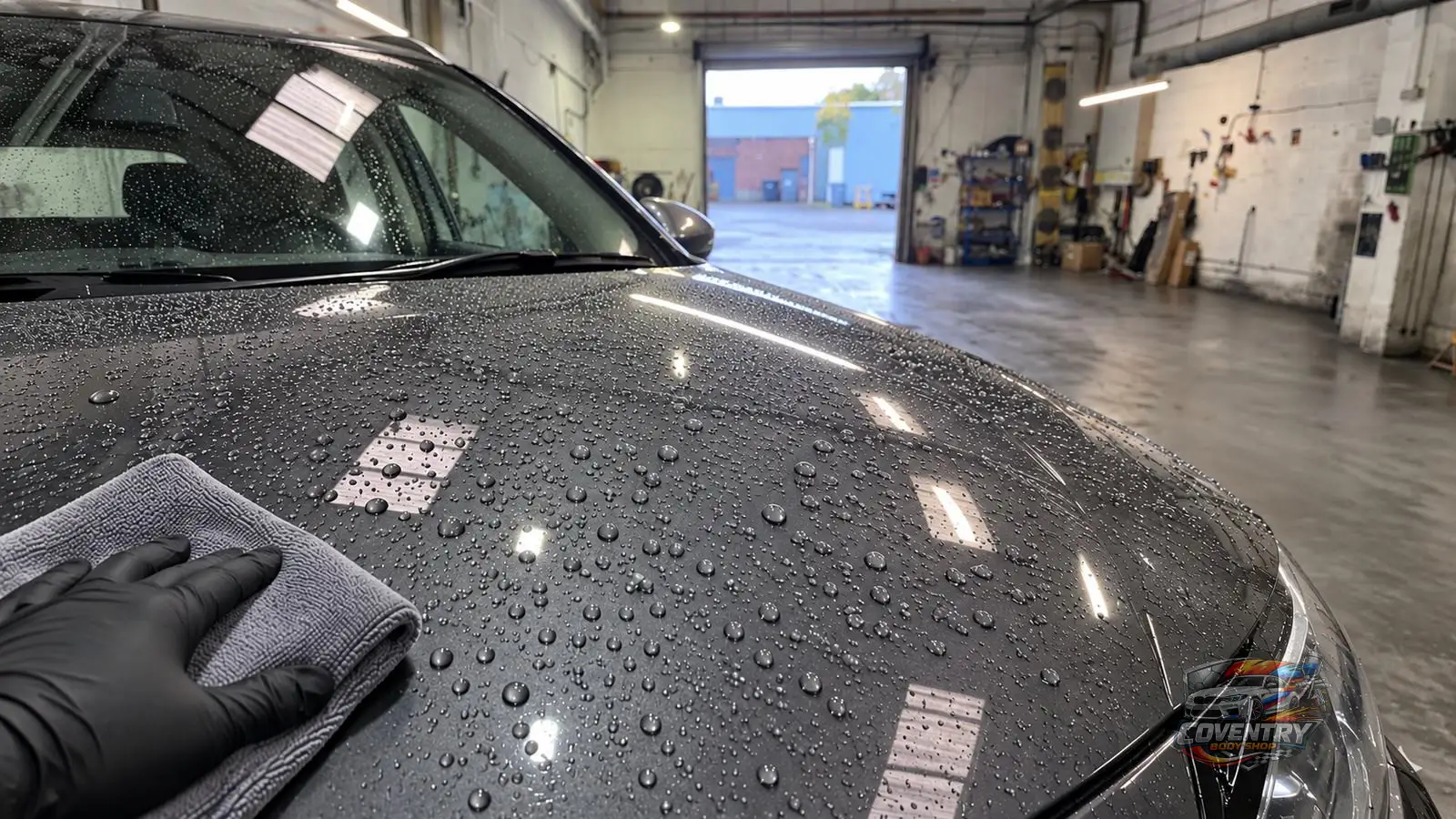
Paint sealant is a synthetic product that puts a thin protective layer on top of your car's paint. Its polymers are made to bond to the surface, and some sealants last longer than traditional wax. It protects the finish you have; it does not repair chips or peeling paint.
How is paint sealant different from wax?
The main difference is what they are made from. Paint sealant is fully synthetic, while traditional car wax is at least partly natural. Carnauba wax, for example, comes from plant leaves.
Some sealants last longer than traditional wax, but resistance to contaminants and sunlight depends on the product. That makes it an option if your main aim is to protect an existing finish.
Appearance is a separate consideration. The gloss you get depends on the particular product and the condition of the paint.
What can paint sealant protect, and what can it fix?
Check the paint for damage before applying sealant.
- A sealant can help water run off the surface and make dirt easier to wash away. Resistance to specific contaminants depends on the product.
- Some sealants can mask fine scratches or swirls without repairing the underlying damage.
- Peeling clear coat needs repair before protection is applied.
If you seal damaged paint, the damage stays underneath. Chips exposing primer or bare metal need attention, as does peeling clear coat. Cloudiness or fading can sometimes respond to polishing; inspection helps establish whether repainting is needed. For local damage, read about repairing small chips or scuffs to understand where repair work may fit before you think about protecting the finish.
How do you apply paint sealant at home?
Read the product's label first, including its preparation and curing instructions. These steps apply to sealants spread on dry paint and buffed off; some spray sealants go onto wet paint and are rinsed away. If a panel has recently been painted, check with your painter before starting.
- Wash and dry your car, then check the surface for any contamination left after washing.
- If the clean paint feels rough, bonded contamination may need removing. When using a clay bar, keep the clay and paint wet with a suitable clay lubricant; never use it dry. On matte or satin paint, skip the clay unless its maker says it suits that finish.
- Spread a thin, even coat of sealant.
- Buff off the excess with a clean microfibre cloth at the time specified for your sealant.
- Allow the sealant to cure for the stated time, keeping it dry if the instructions require it.
If your car has a matte or satin finish, check that the label says the product suits that finish, because a product made for gloss paint can change how it looks.
Can you put sealant on new or repaired paint?
Wait before sealing newly painted panels. New paint and clear coat continue hardening for a while after they feel dry, so a dry surface alone does not tell you it is ready for wax or sealant.
The right time is the one your painter gives for the products used on your car.
Our guide explains more about how long to wait before waxing or sealing new paint.
How should you look after a sealed finish?
Gentle washing still matters because sealant does not stop dirt building up. Keep the instructions for your sealant so you can check its care guidance later.
How you wash matters too. Sealant cannot prevent scratches from grit dragged across the paint, so before you take a sealed car through a wash, read how automatic car washes can damage paint.
Where does our paint repair work fit in?
At our workshop in Wyken, Coventry, we repair and repaint panels. Paint is mixed to the manufacturer's paint code, matched with specialist colour mixing and sprayed in our spray booth.
Our director does all the painting here. He previously worked as an Aston Martin technician and painter. Our repairs carry a six-month workmanship guarantee from collection.
Need help with paint damage that sealant cannot fix?
For peeling clear coat or chipped paint, we advise sending photos by WhatsApp on +44 7903 105777 or the Send enquiry button so we can check whether we take on the job and save you a wasted trip. After booking, we advise every customer to bring the car in so we can assess the paintwork in person.
No deposit is needed, and the final price is set after inspection. For prices, see our paint touch-up and panel repair and respray pages.
Leave a Comment
Comments
No comments yet.