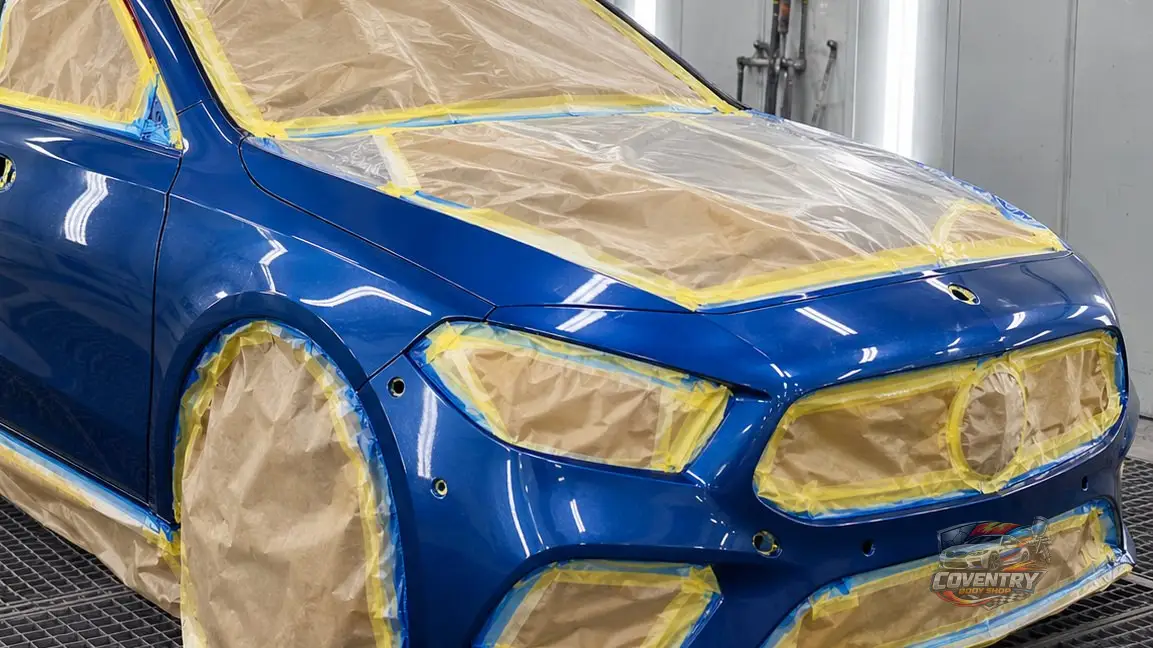
Custom paint can cost more when the chosen paint is more expensive or the job needs extra preparation and coating stages. A custom colour can use the same panels and number of coats as a same-colour respray. The price depends on the paint chosen and the work your car needs.
What makes paintwork custom?
Custom paint changes your car's colour or finish beyond repainting it as it is. Different choices add different tasks, so the word "custom" is not enough to explain an estimate.
- A colour change: Painting areas inside openings as well as outer panels adds surfaces to prepare, mask and coat.
- A non-factory colour: For a colour your car was never offered in, the paint chosen and the areas to be painted affect the cost.
- Pearl, candy or three-stage colours: Depending on the finish, separate layers build the effect. Each adds application time and material, and the layers need to look consistent across the panels.
- Two-tone work: Separate colours need extra masking lines and painting stages. The position of each boundary needs agreeing before work starts.
- Matte or satin: These finishes need care to achieve an even appearance because they cannot simply be polished afterwards like gloss.
Different paints can cost different amounts even when the coverage and preparation are identical.
Where do the extra hours go?
Including door shuts adds preparation around edges and openings. Any extra colour layers are applied after that preparation.
The stages depend on the existing surface and the paint system.
- Taking parts off: Parts such as trim or handles may need removing so paint reaches covered edges. The amount of dismantling depends on the car and the areas being painted.
- Straightening and preparing: Dents are straightened and the surface is prepared. The car's condition determines how much repair and surface preparation it needs. Surfaces also need cleaning before coatings are applied.
- Masking: Areas staying unpainted are covered. Openings and separate colour boundaries add more edges to mask carefully.
- Applying primer: Primer is applied where the surface and paint system require it, followed by any further preparation needed before colour.
- Applying colour coats: Colour is built across the agreed surfaces. Pearl, candy and three-stage colours can add separate layers, each needing an even application. Between coats, the paint needs the flash-off time specified by its maker for solvent or water to evaporate.
- Applying clear coat: Where the paint system uses a separate clear coat, each additional area needs more material and application time.
- Refitting: The finish must dry enough for handling before removed parts go back onto the car; a deeper strip-down means more refitting.
Drying and waiting between coats extend the time the car spends in the workshop, without necessarily adding continuous labour.
How much of the car should change colour?
A colour change can cover exterior panels only, or include door shuts, the engine bay and boot interior. Door shuts are the painted areas revealed when you open the doors.
An exterior-only change leaves the old colour visible when the doors and bonnet open. A fuller change means more strip-down, preparation and masking, particularly around areas that must stay unpainted.
A colour change also means updating your V5C with DVLA. Before the work, ask your insurer whether the change affects your cover.
What can the existing paint hide?
Rust, old filler and earlier repairs often only become clear once paint and trim come off. A panel that looks ready for preparation may need additional repair before it can be painted.
This changes the work underneath the finish, even if your chosen colour stays the same.
A small inspection is free. If a deeper inspection is needed before a respray, it costs from £240 including VAT (£200 plus VAT); that charge comes off the repair bill if you go ahead.
Where rust has eaten through a bolt-on panel, the panel can be replaced. We do not cut or weld metal panels. If your car needs that, we will tell you and recommend a garage we have trusted with welding work before.
Would keeping the existing colour meet your goal?
If you want to put damage right, you may not need custom work. A same-colour respray or a smaller repair may address the affected areas without extending the job into a colour change.
For that comparison, read about what a standard full respray costs.
If you are still deciding between matte, satin, metallic or pearl, our guide to choosing a paint finish can help you settle that choice before requesting estimates.
How can you compare estimates fairly?
Ask each repairer to explain what their estimate covers. A total alone cannot show whether the difference comes from the finish, the surfaces included or the repairs allowed for.
- Surfaces: Are both estimates for exterior panels only, or do both include the same openings and interiors?
- Finish and effect: Do they describe the same colour, effect and gloss, matte or satin appearance?
- Hidden damage: How will additional repairs be explained and agreed if stripping reveals a problem?
- Work after painting: Is refitting included, and is any finishing of the clear coat specified?
If an item is unclear, ask the repairer to explain it before agreeing to proceed.
Who paints your car at our workshop?
At our workshop in Wyken, Coventry, paint is mixed to the manufacturer's paint code with specialist colour mixing, then sprayed in our spray booth. All our car painting is done by the director, who previously worked as an Aston Martin technician and painter.
We provide a six-month workmanship guarantee from collection.
When you are ready to arrange the work, see our service page for a full respray or colour change with us.
Before booking a custom respray
If your car has rust or paint damage, we advise sending photos by WhatsApp on +44 7903 105777 or the Send enquiry button so we can flag work we do not take on and help you avoid a wasted trip. After booking, we advise you to bring the car in so we can see it in person.
We set the final price after inspecting the car, based on the paint chosen and the work needed. No deposit is needed.
Leave a Comment
Comments
No comments yet.