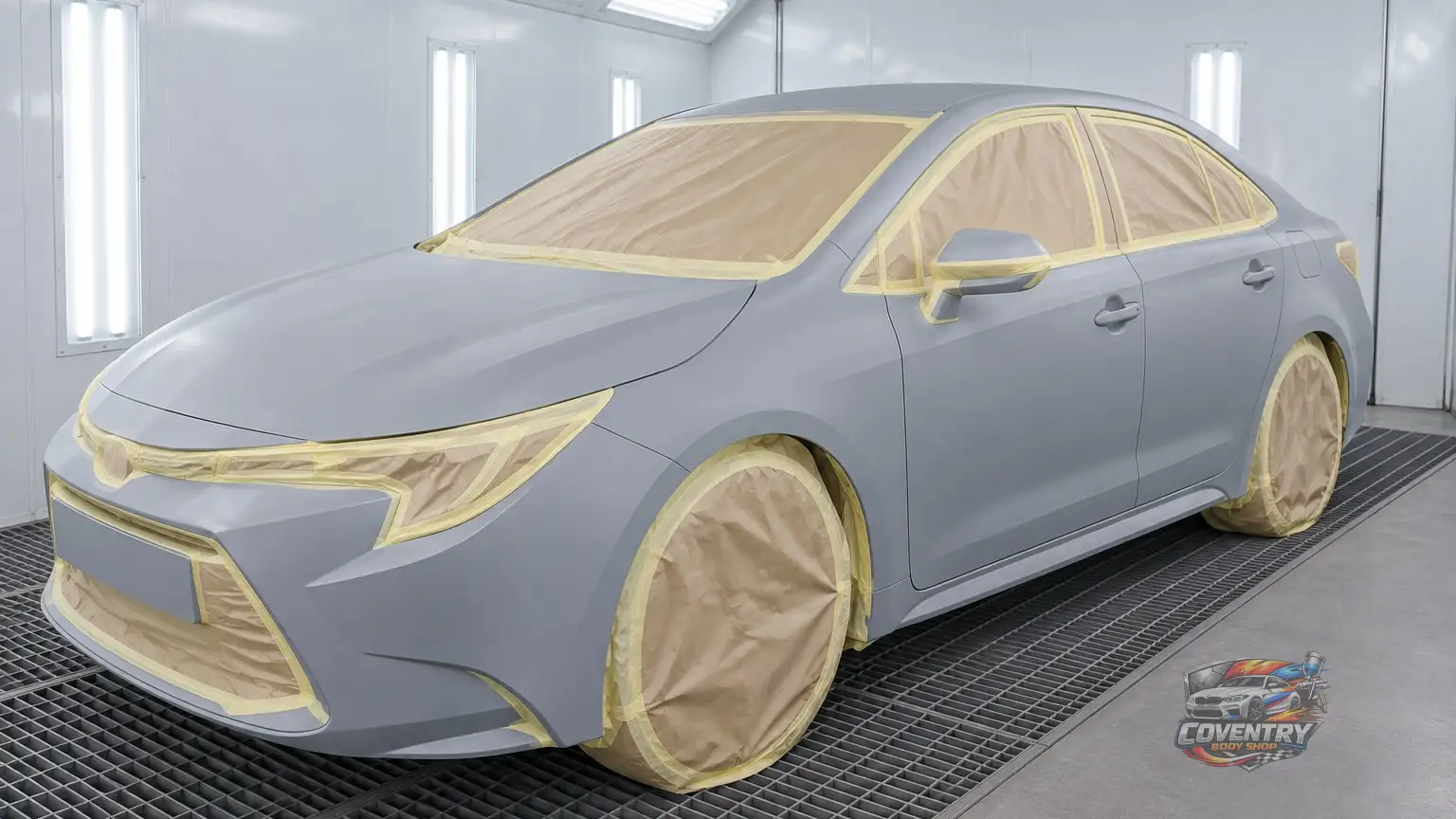
Understanding the Full Car Respray Process
Much of the work in a full respray happens before any colour is sprayed, and that preparation is a large part of what you pay for.
The car is cleaned so that no dirt or residue stops the paint from bonding, and small dents may be pushed out first with paintless dent repair. If the paint is only marked on the surface, scratch removal and machine polish may deal with it without a respray.
Primer goes wherever the old paint has been taken back or repaired, giving the colour an even base, and it is left for the time the paint maker sets before the colour goes on.
For the colour coat, we mix the paint to the manufacturer's paint code and check the colour with a spectrophotometer. For more on what paint does to a car's value, see our post on paint and resale value.
On a modern car, a clear lacquer usually goes over the colour coat to give the gloss, and it needs time to harden before the car goes back on the road.
Before you collect the car, look over the paintwork in daylight for runs, dust marks and colour differences.
Factors Influencing the Cost of a Full Car Respray
The price of a full respray depends mainly on the size of the car, the type of paint and how much work the body needs first.
A large SUV or van usually takes more paint and more hours than a small hatchback, which tends to raise the price. Our full body respray starts from £1,495 plus VAT (£1,794 including VAT); the final price is set after an inspection.
Metallic and pearlescent finishes usually cost more than solid colours, so weigh the look you want against your budget.
Repairs needed before painting add to the cost. A colour change can too, since areas such as the door shuts may then need painting as well.
The bodyshop you choose also affects the price. When comparing respray estimates, check exactly what work each one includes, and ask about exclusions so you can compare the same scope of work.
Quality Assurance and Longevity Considerations
How long a respray lasts depends partly on the products and partly on the conditions the car is sprayed in.
Primer, colour and lacquer from one paint system are made to work together, and using them as the paint maker sets out helps the finish last. The paint should be sprayed in an enclosed spray booth, which helps keep dust off the wet paint.
Fresh paint keeps hardening for some time after the car leaves the booth, so it is softer and easier to mark at first.
Once it has cured, regular washing and waxing, or a paint protection product, help keep the shine. Ask the bodyshop how long to wait before waxing or polishing new paint.
Respray work is covered by our 6-month workmanship guarantee from collection.
Technical Insights into Paint System Selection
The finish you choose changes the price, and it also affects how easily the paint can be repaired later.
Solid paint gives a plain finish with good coverage and usually costs less than the others. Metallic paint contains tiny metal flakes that catch the light and give a shimmer, and it costs more.
Pearlescent paint contains pearl pigments, often made with mica, which give depth and a slight colour shift as the light changes. It takes more skill to apply and repair, which can raise the cost.
Think about where the car is kept, too. A car parked outside all year gets more sun and weather, so ask the bodyshop what it would suggest.
It's also worth asking whether the paint system suits your car's original finish and whether the repair follows the vehicle maker's methods, as this can matter for its warranty and resale value.
Workshop-Level Insight: Preparation and Priming
A dent left under new paint will still show, so the panels are repaired and filled until the surface is smooth and even before any primer goes on. If only one or two panels are damaged, a panel dent repair and respray may be all the car needs.
Trim and parts that are not being painted are either removed or masked, to keep overspray off them and leave clean edges.
All paintwork is sprayed in our spray booth. Temperature and damp both affect how primer dries, and getting them wrong can cause bubbling or peeling later.
Blending, Curing, and Finishing Techniques
A full respray takes 3 to 7 days at our workshop, depending on the work, and part of that time is spent waiting for the paint to dry.
Blending matters more when only part of the car is painted, as with a bumper respray, where the new paint may be faded into the panels next to it so the join is hard to see. All painting at our workshop is done by our director, a former Aston Martin technician and painter.
Between coats, each layer is given the drying time the paint maker sets, as paint that is rushed can stay soft and wear badly.
Where needed, the lacquer is polished at the end to bring up the shine.
Insurance and Legal Considerations
A respray can also involve your insurer, the DVLA and your car's warranty.
If the respray is part of an accident repair, check which painting costs your insurer has agreed to cover. We have repaired cars for customers claiming on their insurance and can provide a written, itemised estimate for your insurer.
If you change the colour, tell the DVLA so your V5C log book can be updated, as GOV.UK lists colour among the changes you must report. Tell your insurer about the change as well.
Check your warranty too, as some manufacturers attach conditions to paint repairs; the warranty terms or the dealer can tell you what they are.
Choosing the Right Bodyshop for Your Respray
When you compare bodyshops, reviews from past customers give an idea of the quality of a shop's work. Ask how many full resprays it has done and who will do the painting.
If the car also needs smaller jobs, such as a paint touch-up or alloy wheel refurbishment, ask whether the same shop can do them, which saves arranging the work elsewhere.
It is also worth checking whether it sprays in an enclosed booth and which paint system it uses.
If you are thinking about a full respray, contact our Coventry workshop to arrange an inspection.
Leave a Comment
Comments
No comments yet.